
The importance of a scuba regulator
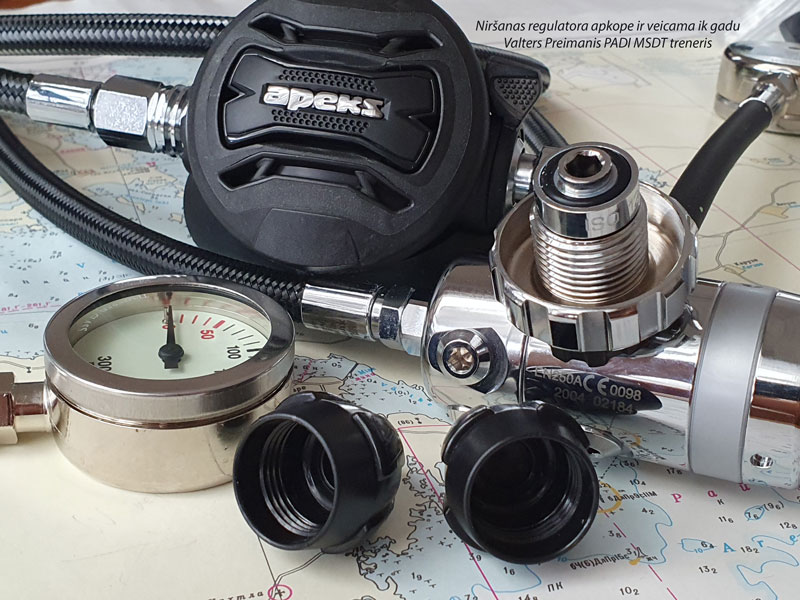
Diver's regulator is one of the most important components of the life support system underwater. It ensures that high-pressure air (200BAR) from a scuba tank is reduced to breathing safe pressure (9.5 BAR). However, sometimes divers encounter a phenomenon called “freeflow” – uncontrolled airflow from the second stage. This situation can be not only unpleasant, but also dangerous, as it quickly depletes air supplies. Understanding the diver's regulator, the causes of “freeflow” and their prevention are essential for the safety of every diver.
What is a “Freeflow” regulator?
“Freeflow” is a condition where the flow of air from the regulator’s second stage is not interrupted, even when the diver is not breathing. This manifests itself as a continuous flow of air bubbles from the mouthpiece. Essentially, it means that the regulator valve is unable to close completely, allowing air to flow freely through.
Causes of “Freeflow”
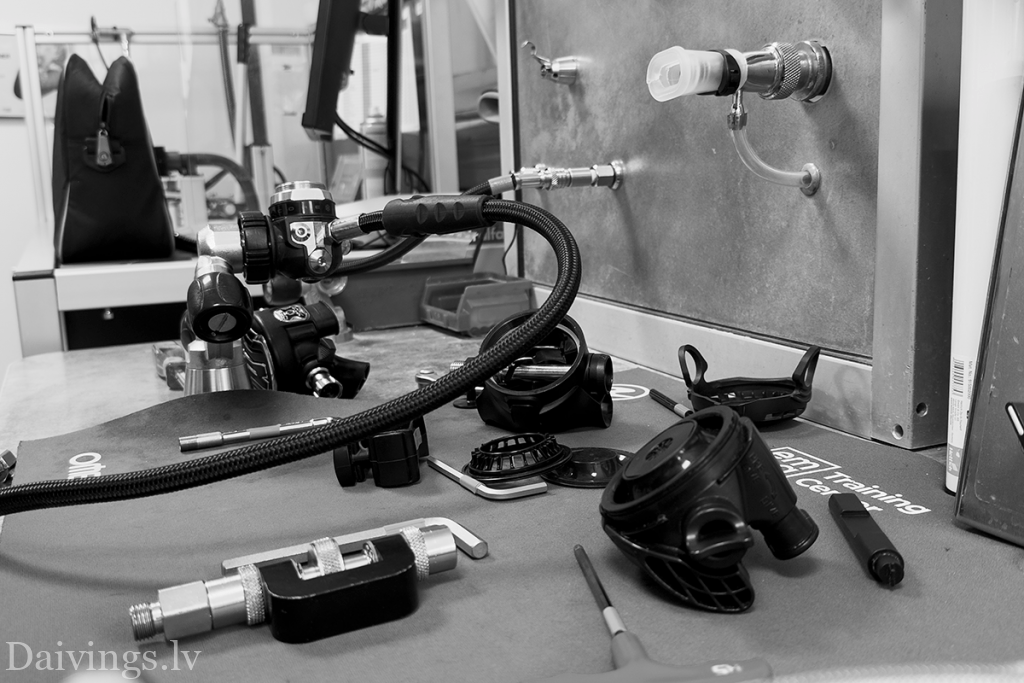
“Freeflow” can occur for various reasons, related both to the technical condition of the regulator and to external factors:
- Intermediate Pressure (IP) too high: The first stage reduces the high pressure air from the cylinder to an intermediate pressure (typically around 10 to 13 bar above ambient pressure). If the first stage delivers too high an intermediate pressure, this can cause the second stage valve to open and “freeflow”.
- Incorrect adjustment or wear of the second stage regulator: Changes in regulator performance are most noticeable if the second stage is improperly adjusted or requires maintenance.6 Incorrect adjustment can lead to insufficient “cracking effort” which causes “freeflow”.
- Insufficient spring tension: A second stage internal spring (bias spring) ensures that the valve is hermetically sealed when not in use. If the spring tension is too low, the valve may not be able to close completely, causing air leakage and “freeflow”.
- Lever height too high: The height of the second stage lever refers to its resting position relative to the body and diaphragm. If the lever is set too high, the valve may be on the verge of opening, making it susceptible to “freeflow” even with small pressure changes.5
- Venturi adjustment switch in “MAX” position: Many regulators have a Venturi adjustment switch that, in the “MAX” position, directs airflow to the diver’s mouth, reducing inspiratory effort.1 While useful for making breathing easier, this setting can increase the likelihood of “freeflow,” especially at the surface or in strong currents.1
- Damaged or worn sealing surfaces: The soft seat and orifice of the second stage valve form a hermetic seal.1 Minor defects, wear or insufficient sealing can cause air leakage and pressure build-up, leading to “freeflow”.2
- Icing in cold water: In very cold water, especially if the regulator is not designed for cold water or has not been properly maintained, ice can form on the valve inlet, causing “freeflow”.7
- Strong currents: Some regulator models have specially designed front cover openings that prevent “freeflow” in strong currents.7 This indicates that strong currents can create additional pressure on the diaphragm and cause the valve to open.
How to prevent and deal with “Freeflow”
Preventing and effectively dealing with freeflow depends on regular and proper equipment maintenance and understanding how it works:
- Regular and professional maintenance, performed by a certified technician:
- Always follow the manufacturer's recommendations for second stage adjustment and tuning.
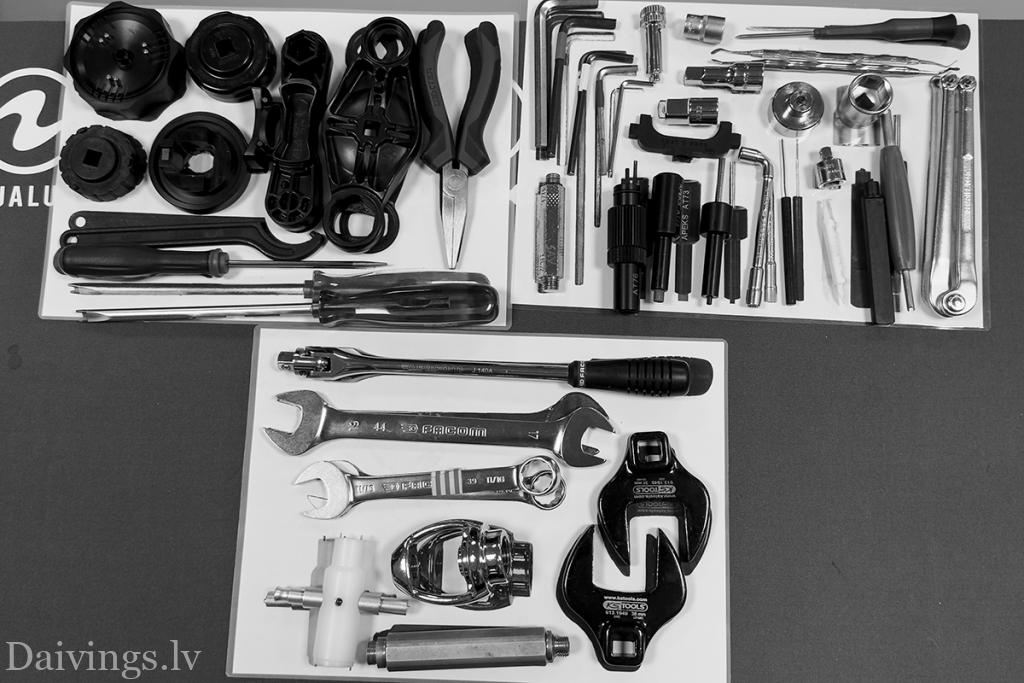
- Use the correct tools; avoid adjustable wrenches to prevent damage to parts.
- Make sure that the first and second stages are properly “cycled” to ensure the seats are properly secured.
- It is strongly recommended that routine maintenance and repairs be performed by factory-trained and authorized technicians.
- Always check that the first stage intermediate pressure (IP) is stable and within manufacturer specifications before adjusting the second stage.
- Second stage adjustment:
- Venturi adjustment: On the surface or while submerged, use the “MIN” or “Pre-dive” position to prevent unwanted “freeflow”.
- Adjusting the cracking effort: Adjusting the actuation effort (e.g., with an external knob or internal seat adjustment) can reduce the risk of “freeflow.” Higher actuation effort can prevent “freeflow” in turbulent environments.
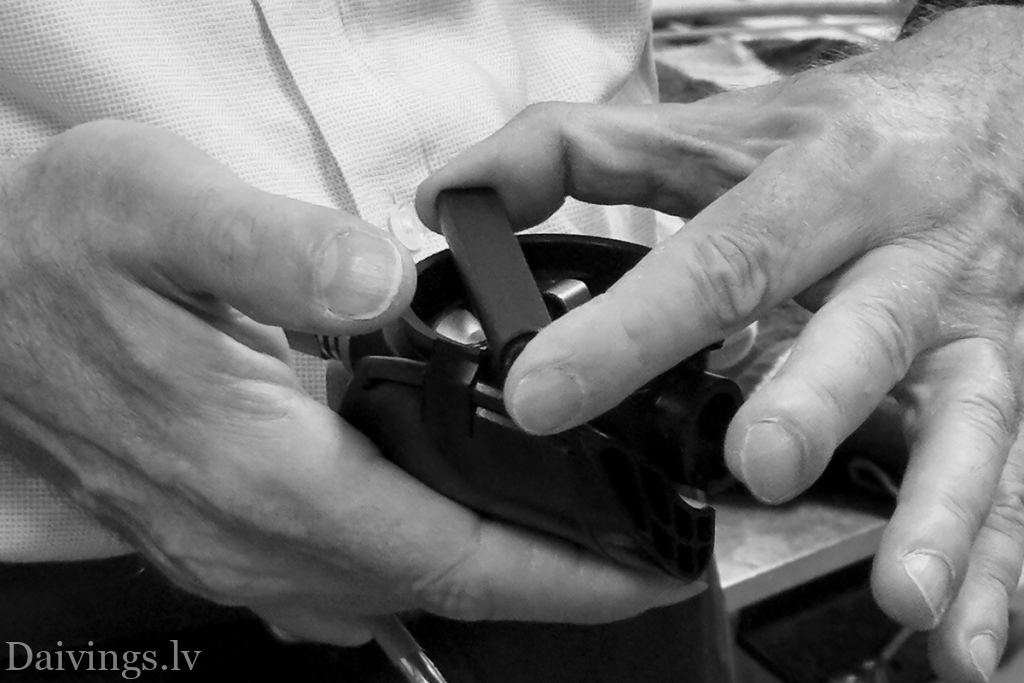
- Lever height adjustment: Adjusting the lever height (using the orifice position) affects the risk of “freeflow”. Setting it too high can cause “freeflow”. Specialized tools are used for this purpose.
- Seat adjustment (orifice position): Turning the orifices “in” increases spring tension and actuation effort, reducing the risk of “freeflow.” Turning “out” decreases tension and actuation effort, increasing the risk of “freeflow.”
- Action in case of freeflow:
- If freeflow is caused by purging, it can be stopped by slightly blocking the mouthpiece.
- If freeflow occurs due to too high an intermediate pressure, the second stage will start to flow uncontrollably. In this case, it is important to immediately stop the dive and perform a safe ascent.
- General care:
- Flush the regulator while it is under pressure and connected to the cylinder to prevent water from entering the valve.
- Allow the regulator to dry completely before storing; shake the second stage to help remove any trapped water.
- Do not leave the regulator in direct sunlight.
- Use only original manufacturer parts for repairs.
Conclusions
Freeflow is a serious problem that can affect diving safety. Understanding its causes and proper regulator maintenance are essential. Accurate regulator adjustment and maintenance, performed by trained and authorized technicians using specialized tools, is not only about optimizing performance, but also about ensuring diver safety in the underwater environment. Never attempt to make internal regulator adjustments unless you have the proper training and tools.


