
Closed-circuit rebreather diving (CCR – Closed Circuit Rebreather) is the next step in the development of technical divers, offering longer underwater time, lower gas consumption and the ability to access objects with minimal noise levels. High-quality training programs are available in the Baltic countries, especially Latvia, to master these complex systems.
🚀 The path to CCR training in Saliena, Mārupe
One of the most well-known and advanced training centers offering rebreather courses is located in In Saliena, Mārupe CountyThe center, closely associated with the local diving company “DAIVINGS.LV” (the leading diving center in the region, providing over 100 training courses per year), provides all the necessary infrastructure for world-class training.
Training steps and gaining experience:
- Getting Started – Getting to Know Rebreather: Before starting CCR training, you must be an experienced diver, often with PADI Advanced Open Water or equivalent certification, and preferably with experience in technical diving (deco diving).
- Theoretical training and Certification: The training begins with an in-depth theory of rebreather operating principles, gas physiology (especially management of oxygen toxicity (CNS and OTU) and nitrogen narcosis) and emergency procedures. Depending on the rebreather platform chosen (e.g. JJ-CCR) and certification agency (TDI, IANTD, PADI TecRec, etc.), you will gain specific CCR Diver certificate.
- Practical lessons in the Pool/Closed Water: The Mārupe Municipality pool in Saliena serves as an ideal environment for learning skills. Here you will learn CCR assembly, pre-testing, gas analysis, bailout management and a number of specific skills in a calm environment.
- Specialized “Rebreather Room” Visit: A quality center will offer access to a specialized “Rebreather Room” (Rebreather Room). This room is equipped with the necessary tools and gas mixing equipment to:
- Perform detailed maintenance on the rebreather.
- Obtain and mix the necessary diluent and oxygen gases.
- Change regularly scrubber (CO2 absorbent material).
- Open Water Diving in the Baltic Sea: After learning skills in the pool, you will dive in open water, often in the Baltic Sea. Here you will practice your knowledge by performing decompression dives and longer, deeper underwater routes, gaining world-class experience.
🎯 More than 10 skills to learn when working with CCR:
CCR diving requires a complete understanding of the system. During training you will learn:
- Complete system assembly and disassembly.
- Internal and external pre-dive check (Pre-Dive Checklist).
- Gas analysis and labeling (Diluent, O2, Bailout).
- Scrubber replacement and CAN (canister) preparation.
- Automatic (solenoid) and Manual gas injection control (Manual Adds).
- Maintenance and regulation of PPO2 (Partial Pressure of Oxygen).
- Emergency procedure: Transition to Open Cycle (Bailout).
- Rebreather Flooding Management and Prevention.
- CNS (Central Nervous System) and OTU (Oxygen Units) monitoring.
- Inverted Rebreather Drill.
- System error diagnosis and troubleshooting.
🌊 Most Popular CCR Rebreather Manufacturers and Models (2024 Trends)
The choice of which rebreather to learn is critical. The best training centers offer courses on world-renowned and robust devices. The most popular models encountered in the Baltic region and the world:
| Manufacturer/Model | Type | Main Feature |
| JJ-CCR | Backpack | Known for its robustness, reliability and easy handling. Very popular for technical and wreck diving in the Baltic Sea. |
| AP Diving Inspiration (AP) | Backpack | One of the oldest and most widely used models in the world. Available in different versions (EVO, X-CCR). |
| Revo Rebreathers | Backpack | Compact, with two independent PPO2 controls. Good for travel. |
| SF2 (GO) | Backpack/Sidemount | Modular, with modern electronics. SF2 is also available Sidemount in a configuration that is becoming increasingly popular in tight spaces (caves, wrecks). |
| KISS Rebreathers | Backpack/mCCR | Known for its manual or hybrid design (mCCR – Manual CCR), which means fewer electronics. |
❓ What rebreather do you want to learn? Share in the comments!
The choice depends on your goals:
- JJ-CCR is a great choice if the main thing is reliability and diving in the Baltic Sea. Order an introductory dive with JJ CCR, here!
- Revo or AP Inspiration is a good choice if you are looking for long-tested and widely supported platforms.
- Sidemount Rebreather (such as the SF2 Sidemount) is ideal if you plan on cave diving or diving in narrow wreck sections.
Training in Saliena provides an opportunity to gain not only certificate, but also deep understanding and real-world experience, which is the most important ingredient for safe CCR diving.
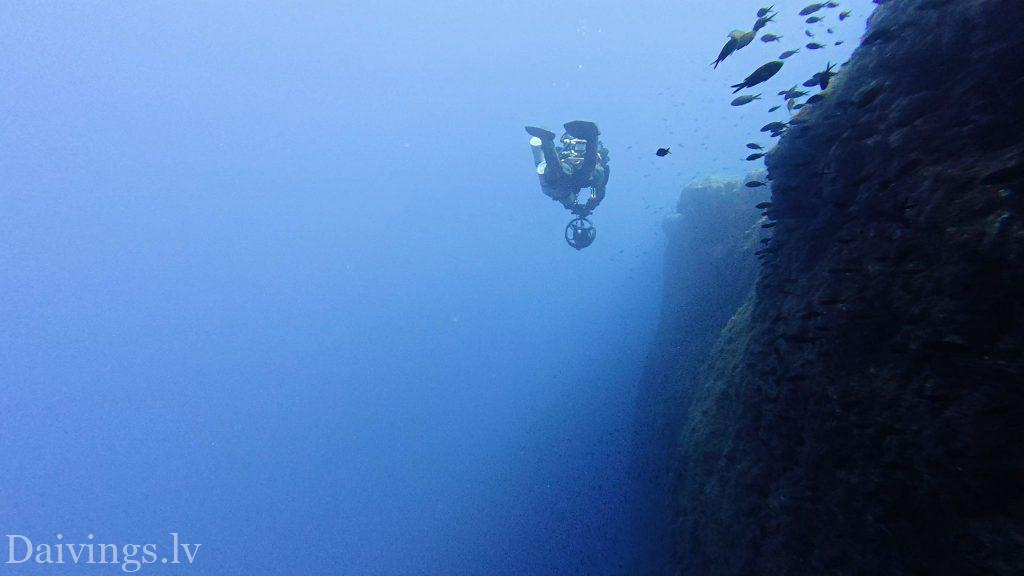
Yes, it is specific. prerequisites (prerequisites) that must be completed before starting a closed-circuit rebreather (CCR) training course, for example, TDI (Technical Diving International) or IANTD (International Association of Nitrox and Technical Divers).
These prerequisites ensure that the trainee is sufficiently experienced and capable of mastering the complex skills of operating the CCR system.
📄 General Prerequisites for CCR Training (TDI, IANTD)
To start CCR Air Diluent Diver (gas solvent air) or equivalent basic course, which is the first step in CCR diving, usually requires the following conditions to be met:
1. Certification and Experience
- Minimum Certification: Must be certified as Advanced Open Water Diver (AOWD) or equivalent (e.g. PADI, CMAS 2 stars, etc.).
- Nitrox Certification: Often requested Enriched Air Nitrox Diver (EANx) certificate.
- Depth Certification: Sometimes (depending on the specific program) it may also be required Deep Diver certificate or experience in diving to approximately 30-40 meters.
- Minimum Number of Registered Dives: Usually required at least 50 up to 100 Open cycle (OC) dives recorded.
2. Age
- Minimum Age: Must be at least 18 years old.
3. Health
- Must be submitted completed and possibly signed by a doctor Medical form (Medical Form) confirming good health and no contraindications for diving.
🛠️ TDI Specific Prerequisites (Example: TDI CCR Air Diluent Diver)
TDI is one of the most popular technical diving organizations. To start a standard TDI CCR Air Diluent Diver course (air solvent diving training, maximum depth 40–45 meters), the prerequisites are usually as follows:
- Certification: Must be certified as TDI Nitrox Diver (or equivalent) and TDI Advanced Open Water Diver (or equivalent).
- Experience: Must be at least 50 for logged open cycle (OC) dives.
- Technical Understanding: Previous experience in technical diving or decompression diving (e.g. TDI Decompression Procedures or PADI Tec 40) is recommended, but not necessarily required.
⚓ IANTD Specific Prerequisites (Example: IANTD CCR Diver)
IANTD programs may be similar, but they may have some nuances, especially regarding depth and gas use at a basic level:
- Certification: Usually requires IANTD Advanced EANx Diver or IANTD Advanced Open Water Diver (with Nitrox certification).
- Experience: Usually requires 50 recorded dives, a certain number of which must be deeper than 27 meters.
- The intended CCR model: Your certification will be tied to a specific rebreather model (e.g. JJ-CCR, SF2, Inspiration).
Important: Prerequisites may vary depending on specific rebreather model (e.g. JJ-CCR, Revo) and course level (basic Air Diluent, advanced Normoxic Trimix, Trimix).
Before booking a course, always contact the training center in Saliena directly or your chosen instructor to confirm the exact requirements for your chosen rebreather model and certification level.
Indeed, obtaining a basic CCR certification is just the beginning. After CCR Air Diluent Diver (usually max. 40–45m) your path to technical rebreather diving will only accelerate once you complete the course.
The next steps will focus on gaining experience, diving deeper and learning more complex gas mixtures to reduce nitrogen narcosis.
🗺️ Next steps after basic CCR certification
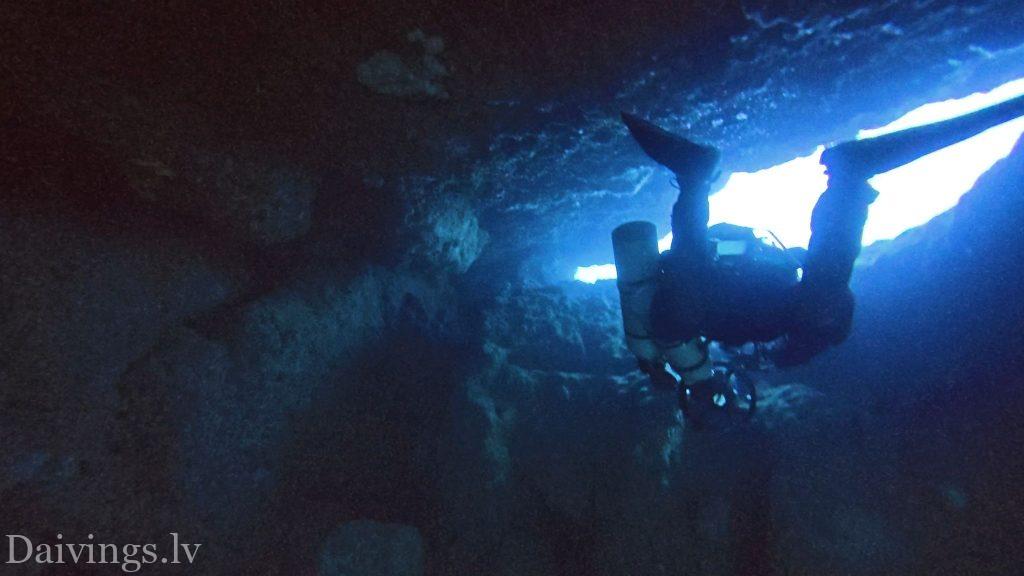
1. Experience Accumulation and Number of Dives (The Experience Build)
Before moving on to the next level, the most important thing is to become competent and comfortable with your specific rebreather model.
- Minimum Number of Dives: Certification agencies (TDI, IANTD) usually require a certain amount of experience, for example: 20–30 registered CCR dives and a certain number of hours before starting the next course.
- Practical Skills: You must dive with a rebreather in a variety of conditions (visibility, water temperature) and be able to perform all emergency procedures (e.g. transition to bailout open cycle) without any assistance from an instructor.
- Maintenance Routine: Scrubber replacement, gas testing, battery charging, and other maintenance processes must be fully mastered.
2. Progressive Certifications – Depth and Trim (Trimix)
The next formal steps lead to deeper and safer diving using helium (He) in a solvent (Trimix) to reduce the effects of nitrogen narcosis (N2).
A. Normoxic Trimix / Helitrox
- Purpose: Deep diving training up to 60 meters.
- Changes: The diluent is no longer air (21% O2 / 79% N2), but a Trimix mixture in which helium has been added, and the oxygen partial pressure (PPO2) has been maintained within normal limits.
- Skills: More complex gas planning, calculation of Trimix mixtures and bailout gas selection.
B. Hypoxic Trimix
- Purpose: Diving deeper than 60 meters (up to 100 meters or even more).
- Changes: The solvent contains so little oxygen (e.g. 10% O2, 70% He, 20% N2) that it not breathable on the surface (hypoxic).
- Skills: This is the highest level of technical diving. It requires very precise gas mixing, multiple bailout use of tanks and detailed decompression planning. Training includes simulated failure management at depth and complete dependence on the rebreather.
3. Specialization Courses
To broaden your application, you can also choose specialization courses with CCR:
- CCR Cave Diver: Special skills for rope use, orientation, separation from buddy for simulation and solving complex emergency situations in a confined space.
- CCR Wreck Penetration Diver: Skills for entering wrecks, wiring, navigation and equipment management in narrow passages.
- CCR Advanced Wreck: Training for diving in deep or complexly structured wrecks using Trimix.
4. Equipment Improvement
With experience, you will likely want to upgrade your equipment:
- Customization: Advanced monitoring systems, additional oxygen sensors, off-board gas input systems.
- Sidemount CCR: If you started with Backmount (back-mounted) rebreather, Sidemount (side-mounted) CCR can be the next step for cave or wreck diving.
Brief summary: After the basic course, you need to gain experience (20-30+ dives), and then you can move on to Normoxic Trimix (up to 60m) and later on Hypoxic Trimix (60m+).
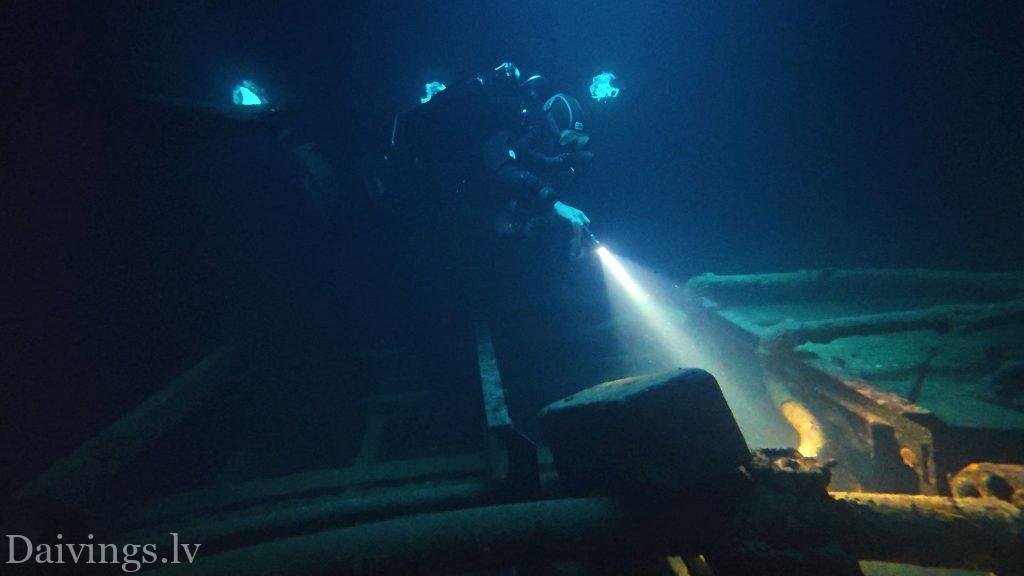
Since you are interested in gas mixture calculations and the specific requirements for TDI Trimix courses, I will provide an overview of both of these technically important issues.
1. ⚗️ Trimix Gas Mixture Calculations
Trimix is a breathing gas that contains three components: oxygen o2, nitrogen n2 and helium (He)Helium is added to reduce the risk of nitrogen narcosis at depth, as helium is less narcotic than nitrogen.
The purpose of the calculations is to determine the correct o2 and Heh percentage to ensure safe and efficient diving at a given maximum depth.
Basic Principles and Formulas
Trimix calculations are based on partial pressure (Partial Pressure, PP) laws, because the effect of a gas depends on the pressure it exerts at a certain depth.
A. Maximum Working Depth (MOD) and Equivalent Air Depth (EAD/END)

B. Gas Mixture Selection (Problem Reversal)
The most typical calculation is to determine the required FO2 and FHe percentage for a specific planned depth (D) and desired maximum END:

2. 📚 TDI Trimix Course Specific Requirements
TDI offers progressive courses. Here is an overview of the two main CCR Trimix levels:
A. TDI CCR Normoxic Trimix Diver
This course expands your CCR Air Diluent Diver knowledge by introducing helium into the mix.
| Category | Requirements |
| Certification | Must be certified as TDI CCR Air Diluent Decompression Procedures Diver (or equivalent). |
| Experience | At least 50 recorded CCR dives on the rebreather used for training, with 50 hours or more, of which 10 hours deeper than 30m. |
| Depth | The depth of training is up to 60 meters. |
| Gases | Training with Normoxic Trimix ($\text{FO}_2 \geq 0.18$) as a diluent and for improved decompression gases (bailout). |
| The aim | Learn Trimix gas calculations, better management of nitrogen narcosis, and decompression diving with helium mixtures. |
B. TDI CCR Hypoxic Trimix Diver
This is the most advanced level of CCR, preparing the diver for very deep diving.
| Category | Requirements |
| Certification | Must be certified as TDI CCR Normoxic Trimix Diver (or equivalent). |
| Experience | At least 100 recorded CCR dives on the rebreather used for training, with 100 hours or more, of which 10 hours deeper than 40m. |
| Depth | The depth of training is up to 100 meters (in some cases up to 150m, depending on the course). |
| Gases | Training with Hypoxic Trimix ($\text{FO}_2 < 0.18$) as a diluent that is not breathable at the surface, and for several bailout decompression gases. |
| The aim | Complete gas management at depth, handling complex emergency scenarios with hypoxic diluents and planning very long decompression stops. |
Remember: These requirements are minimum requirements and an experienced instructor may recommend additional dives or practice before embarking on these advanced courses. Safety is paramount!
Do you want to know what the TDI minimum time limits are between different CCR training levels?


