
The Treasures of Caesarea, the discovery of gold coins from the Fatimid Caliphate and its historical significance
The waters of the eastern Mediterranean have been home to countless historical mysteries for centuries, intertwined with trade routes, military conflicts, and natural disasters. One of the most impressive and historically significant finds in the region was recorded in 2015, when a massive deposit of gold coins was discovered off the coast of the ancient Israeli port city of Caesarea.
What began as an accidental discovery by amateur divers quickly became an international archaeological sensation, providing untold insights into the economic and political landscape of the 11th century Mediterranean. By analyzing this event along five key dimensions, it is possible to understand not only the physical value of the find itself, but also its deeper impact on the study of the region's history.
Gold coins discovered at the site of “Panna”, the legendary status of the port of Caesarea
The port of Caesarea Maritima, originally built in the first century BC by King Herod the Great of Judea, has been one of the most important hubs on the eastern shore of the Mediterranean for over a thousand years. Although technically located at the eastern end of the Mediterranean Sea, this location has acquired legendary status among European and global diving circles due to its rich underwater archaeological heritage. For divers, this place is often associated with the hope of finding something more than simple pottery shards or the remains of anchors, and the 2015 event confirmed these hopes to the highest degree.

Diving in this region is closely linked to the study of history. Amateur divers who regularly visit the waters of Caesarea National Park often come across ancient artifacts, but finding gold treasures is a rare phenomenon, usually remaining only at the level of stories and legends. In February 2015, this legend became reality when, instead of the usual search “pans” and detectors, the bed suddenly appeared to be covered in a sheen of pure gold, untouched by a thousand years of exposure to salt water.
Historical chronology of the port of Caesarea in relation to the treasure period
| Period | Historical significance | Impact on maritime trade |
| 1st century BC – 1st century AD | The construction of the port by Herod the Great. | The largest artificial harbor in the region. |
| 9th – 10th century | Aghlabid and early Fatimid period. | Establishment of Palermo and North African trade networks. |
| 10th – 11th century | The golden age of the Fatimid Caliphate. | High monetization and massive circulation of gold dinars. |
| 1101 | Crusader invasion and capture of Caesarea. | Possible reason for hiding treasure or shipwreck. |

Accidental discovery by amateur divers in 2015
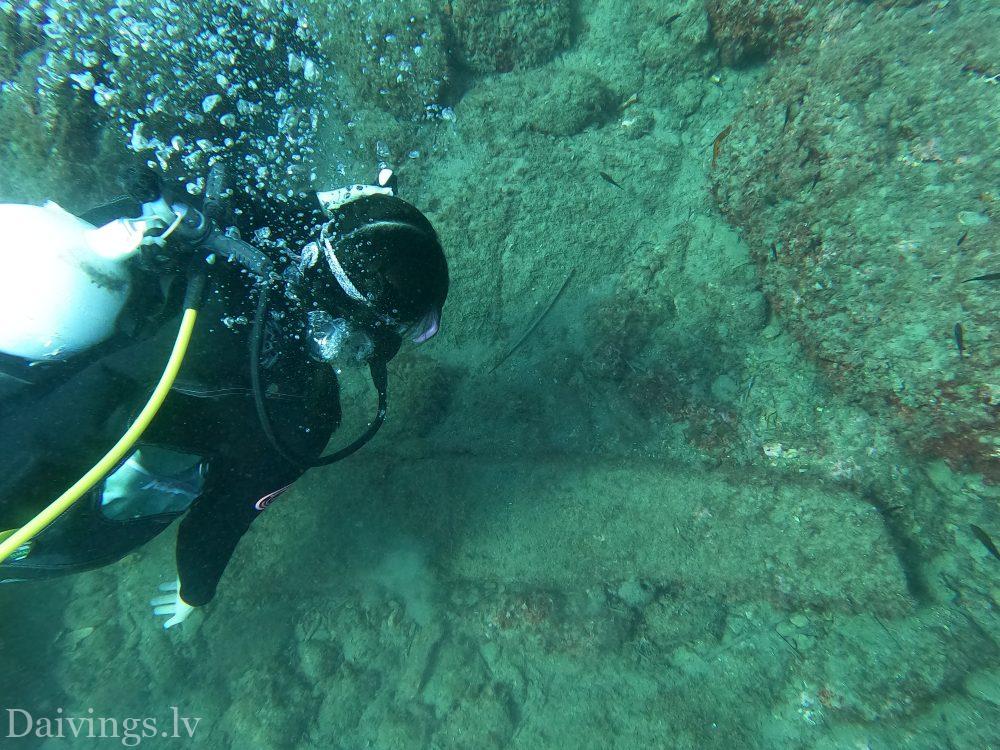
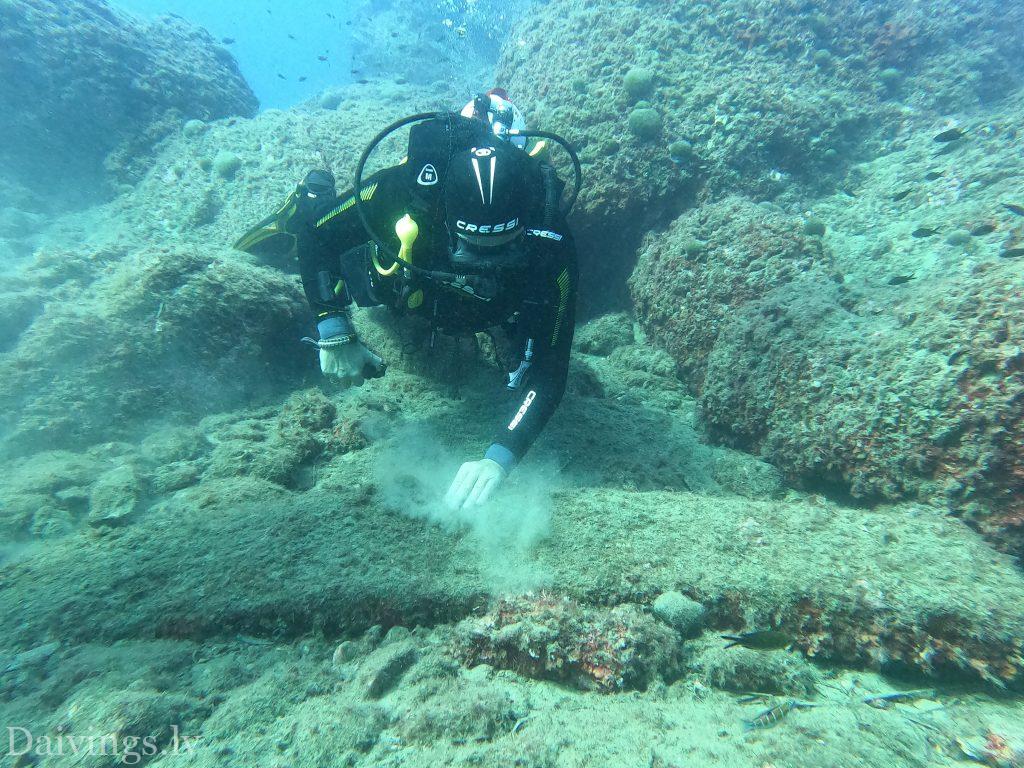
Events unfolded in early February 2015, when a group of six amateur divers — Zwick Fajer, Kobi Twin, Avivita Fischler, Yoav Lavi, Joel Miller, and Shai Milner — went on their regular Saturday dive in the waters of Caesarea National Park. The dive took place on a cloudy day, shortly after the region had been hit by severe winter storms, including a storm known in regional meteorology as “Huda.” These storms played a crucial role, as the strong currents and waves had stirred up the seabed sediments, exposing what had been hidden under the sand for centuries.
At a depth of approximately 12 to 12.5 meters, Zwick Fajer noticed something shining on the seabed. The object initially appeared to be a simple piece of metal or modern-day trash. The discovery site is located about 300 meters offshore, near the ancient ruins of Herod's Pier. The location is known for its complex underwater topography, which alternates between rocks, sand, and ancient structures.

Initial misunderstanding and realization of reality
In underwater archaeology, first impressions can often be deceiving. Fajer and his colleagues initially assumed the shiny objects were children's toys, metal caps from drink bottles, or even gold-foiled chocolate coins popular during the Hanukkah holiday. This skeptical attitude is understandable, as finding pure gold in such quantities seemed unlikely even in a place as historic as Caesarea.
However, upon lifting the first coin and clearing the sand from it, the divers noticed the characteristic heaviness of gold and Arabic script on both sides. Surprise turned to excitement when they realized that the seabed was literally strewn with such coins. Realizing the scale of the find, the divers collected about 60 coins to present as evidence and immediately went ashore to report the find to the director of the diving club and the Israel Antiquities Authority (IAA).
Gold of the Fatimid Caliphate from the 10th and 11th centuries
Upon receiving the report, the Israel Antiquities Authority's Maritime Archaeology Unit, led by Kobi Sharvit, immediately began salvage excavations. Archaeologists, together with the original discoverers and using metal detectors, pulled an impressive collection of treasures from the seabed over several diving sessions. The final number of coins exceeded 2,600 units, and their total weight was approximately 7.5 to 9 kilograms of pure gold.
Numismatic characteristics and origin
Numismatic examination of the find, conducted by IAA expert Robert Cool, revealed that the coins belong to the Fatimid Caliphate, which at the time ruled over vast territories in North Africa, Egypt, and the Levant. This find is particularly valuable because it consists only of gold coins, without any impurities from other dynasties, which allows it to be defined with complete confidence as a Fatimid treasure.
| Coin type | Nominal value | Characteristics |
| Dinar | Full unit | Weight around 4 grams, high gold purity (95-99%). |
| Half dinar | 1/2 unit | A rarer denomination in this deposit. |
| Quarter dinar | 1/4 unit | Weight around 1 gram, often used in everyday trade. |
Most of the coins were minted in Egypt and North Africa, but the oldest coin in the deposit was a quarter dinar minted in Palermo, Sicily, in the second half of the 9th century. Most of the treasures, however, date from the reign of the two Fatimid caliphs:
- Al-Hakim (996–1021 CE): A caliph known for his ambivalent ruling style and during whose reign significant gold reserves were minted.
- Al-Zahir (1021–1036 CE): Son of Al-Hakim, during whose reign the monetary system reached a high level of stability.
The purity of the gold in the coins was astonishing—ranging from 93% to 99%, which is equivalent to 24-karat gold. Thanks to the properties of gold as a noble metal, the coins did not oxidize and did not require laboratory cleaning even after a thousand years at the bottom of the sea. Teeth marks were found on some coins, suggesting that ancient traders tested the authenticity and softness of gold by biting.
Historical hypotheses and theories of the origin of treasures
The presence of such a large amount of gold in one place suggests a major economic or military operation that was suddenly interrupted by a disaster. IAA experts have put forward several theories as to how this gold ended up on the coast of Caesarea.
Official treasury ship and tax revenue
One of the most plausible theories is that the gold was on an official treasury ship of the Fatimid Caliphate. This ship may have been on its way to the central government in Cairo, carrying taxes collected from cities in the Levant. Historical sources, such as the writings of the traveler Ibn Jubayr, confirm that during Fatimid rule, residents were required to pay significant taxes, including a poll tax and a portion of agricultural produce, which was often converted into gold for transportation purposes.
Military funding and garrison salaries
Another possibility is that this gold was intended for the military garrison of the city of Caesarea. The Fatimid Caliphate maintained strong military units in its border cities, and regular payment of wages in gold dinars was essential to ensure the soldiers' loyalty to the caliph. Considering that the value of the coins corresponded to the monthly salary of approximately 2,000 soldiers, this deposit could have been a monthly payment for the entire city defense unit.
Merchant ship disaster
The third theory suggests that the treasures belonged to a large merchant ship that traded with the cities of the Mediterranean coast. The Fatimid era was characterized by intense maritime trade, and Caesarea was one of the main ports in this network. The ship could have sunk during a storm while trying to enter the harbor or while seeking shelter at the pier. This is confirmed by the fact that five iron anchors, iron nails, and wooden remains from the ship's hull were found along with the coins.
Happy endings and national heroes
The story of the find has become an example of successful cooperation between the public and government authorities. The divers who initially found the coins acted immediately and in accordance with the law by reporting their find. This action was particularly criticized because often finds of this magnitude disappear into private collections, denying science the opportunity to study the historical context.
Eli Escozido, director of the Israel Antiquities Authority, and Kobi Sharvit, head of the marine archaeology department, called the divers "national heroes." Although, according to Israeli law, the finders did not receive financial compensation, their contribution to historical preservation was recognized internationally. The law clearly states that all antiquities belong to the state, and their illegal appropriation is punishable by imprisonment.
The impact of the find on modern archaeology and society
This find is still considered the largest underwater treasure trove in the region and has sparked renewed interest in the underwater archaeology of Caesarea. At the end of 2015, a special exhibition, “Gold from the Sea: Newly Discovered Treasure from Caesarea,” opened at the Israel Museum in Jerusalem, allowing the public to view these unique artifacts in person for the first time.
The find not only added to museum collections, but also provided important data on:
- Mediterranean trade routes: Coins from Palermo and Cairo confirm the close economic ties between the different parts of the Fatimid Empire.
- Gold circulation: Evidence that Fatimid gold coins continued to circulate after the Crusader invasion indicates their high level of reliability in the economy of the time.
- Historical sources: Records of taxes and ransoms found in the Cairo Genizah documents can now be viewed in conjunction with physical artifacts.
The case of the Caesarea gold treasure serves as a reminder that the underwater world still holds immeasurable riches, the value of which exceeds the price of the precious metal. It is a story about the continuity of history, the influence of natural forces on archaeology, and the honest actions that have allowed this heritage to be preserved for future generations.


