
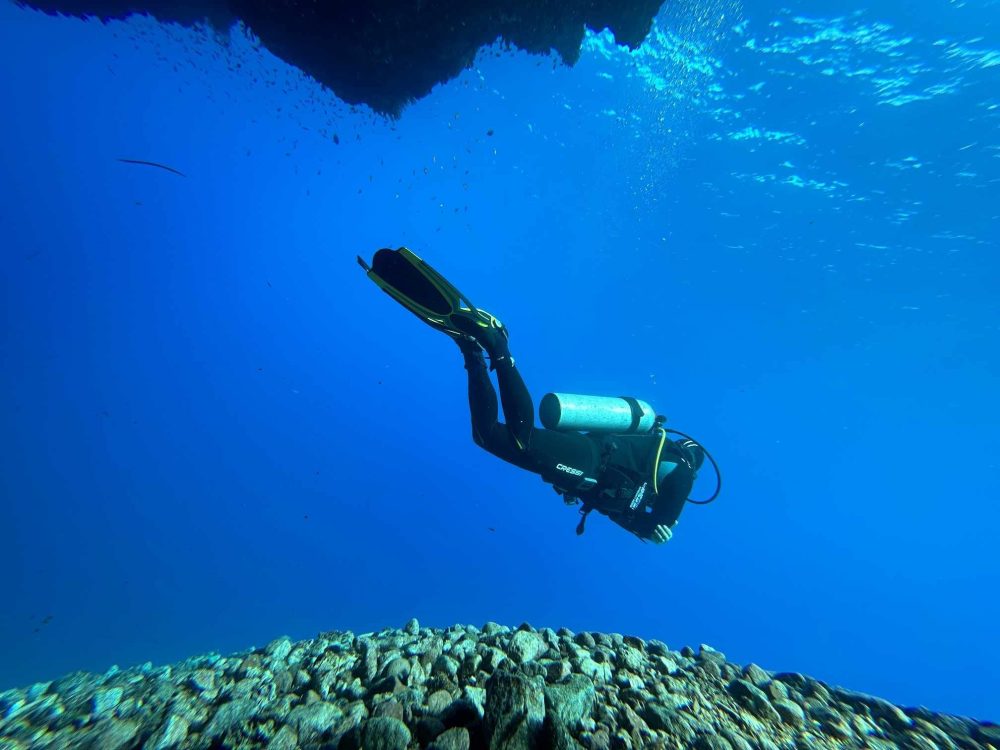
“Hello, colleagues and underwater enthusiasts!
Over the years, while conducting training and exploring wrecks in the Baltic Sea, I have heard countless discussions about whether diving alone is recklessness or aerobatics. As an instructor, I will tell you straight: Solo diving is not about ignoring the 'buddy system'. It's about being maximally prepared.“
— Valters Preimanis, SDI/TDI instructor
Solo diving is no longer a taboo subject, but it requires a completely different level of responsibility and preparation. Unlike recreational diving with a buddy, where a “buddy” system serves as a safety net, a solo diver must be his own lifeguard. In this article, we will look at the most important aspects that anyone considering diving on their own should consider.
1. Psychological preparation
The first and most important step in solo diving is not equipment, but mindset. The SDI Solo Diver standards emphasize that a diver should begin their dive with Comprehensive Understanding about your gas consumption and dive plan. You can't afford a "rough idea" - every liter of gas and every minute underwater must be calculated.
2. Gas Planning Mathematics: SAC vs RMV
To accurately plan a dive, it is necessary to understand the difference between two key terms:
- SAC (Surface Air Consumption): This is a measure of your surface air consumption, usually measured in units of pressure (such as bars or psi per minute). In the context of solo diving, SAC is considered constant – this is your baseline at rest on the surface.
- RMV (Respiratory Minute Volume): This is variable a value that represents the actual volume of gas (in liters) you consume at a specific depth and load.
Calculation example:
If your SAC is 14 liters/min and you plan to dive to a depth of 30 meters (4 ATA pressure) with a “Dive Factor” of 1.5 (taking into account the load or safety margin), your required RMV will be:
14 (SAC) × 4 (ATA) × 1.5 (Factor) = 84 liters per minute.
3. The Rule of Thirds
Gas management is critical in solo diving. The safest and most recommended method is “Rule of Thirds”:
- One third – to dive in and achieve the goal.
- One third – for the return journey and re-emergence.
- One third – the inviolable reserve for emergency situations.
Important to remember: if you have a spare cylinder (pony bottle), its gas not included in this calculation. The reserve cylinder gas is intended solely for emergency situations to ensure safe takeoff after the primary system failure.
4. Redundancy: Pony Bottle and independent systems
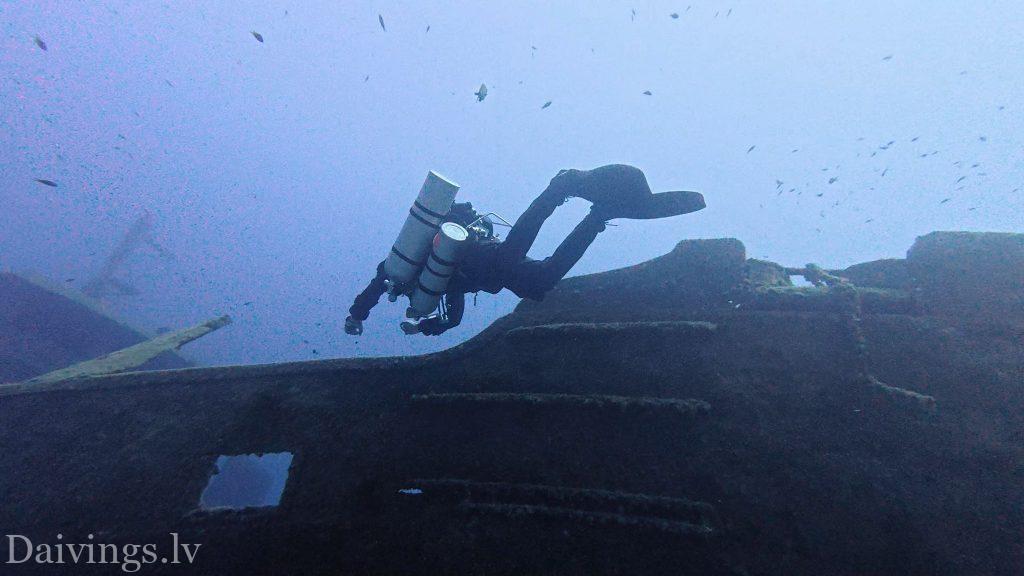
A solo diver may not dive with a single air supply. Pony bottle is a fully autonomous, redundant gas system. It includes a separate cylinder, first and second stages.
- Why is this necessary? If your primary regulator starts to free-flow or the high-pressure hose breaks, you have a few minutes (depending on depth) before your tank is empty. The redundant system allows you to simply switch to the other regulator and finish the dive in peace.
5. Emergency response
A solo diver must be prepared to solve problems that would normally require the help of a buddy:
- Mask: If the mask strap breaks, a solo diver must have a spare mask with them that they can put on and clean without the aid of vision.
- BCD refusal: If the inflator starts to blow air arbitrarily (free-flow), the immediate action is to disconnect the hose and release excess air to avoid uncontrolled buoyancy.
- Gas loss: Studies have shown that at a depth of 30m, a complete loss of gas through a ruptured LP hose can empty a cylinder in less than 2 minutes. This again emphasizes the need for an independent backup source.
Conclusion
Solo diving is not for everyone. It requires experience, calmness, and technical precision. Before you go underwater alone, make sure your equipment is in working order (annual maintenance!), your planning is based on facts, not guesswork, and your skills are honed to the point of being automatic.
Dive safely and always remember – you are the only guarantor of your safety underwater!
Prepared based on Solo Diver training materials.


