
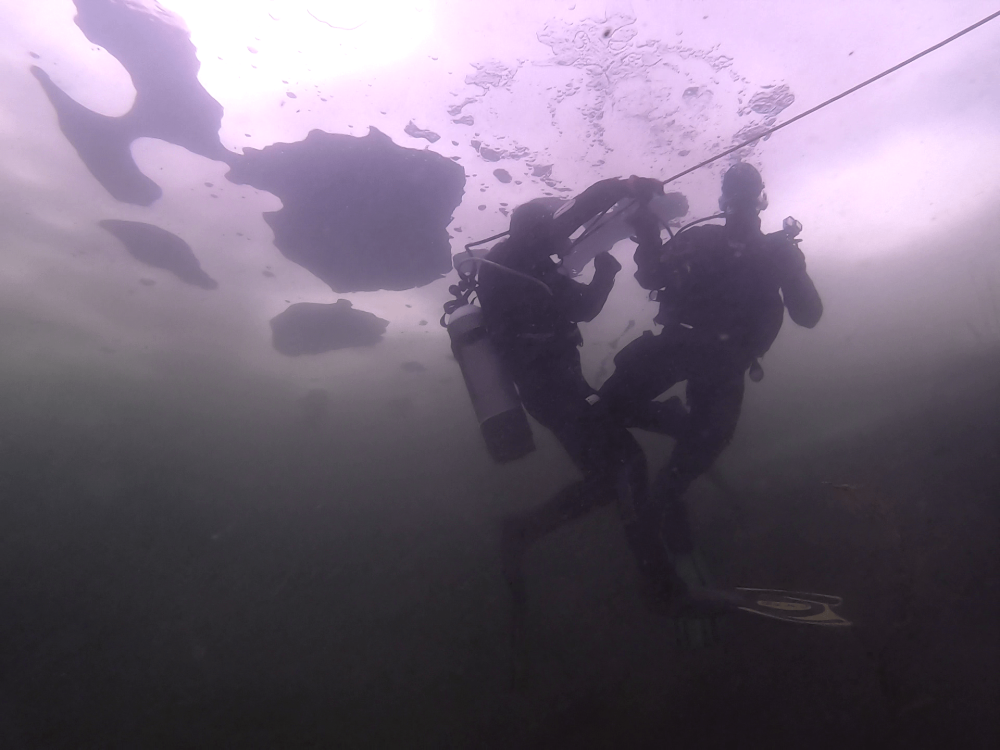
Ice diving is not just a hobby; it is a discipline that requires mental toughness, top-level equipment mastery, and strict teamwork. Unlike open water, there is always only one “way out” – back into the same hole you entered.
What is an Ice Diver certificate?
Ice diving course (e.g. PADI Ice Diver or SDI Ice Diver) is designed for experienced divers who want to push their limits.
Prerequisites
To begin training, the following is usually required:
- Minimum age: 18 years old.
- Certification: Advanced Open Water Diver (or equivalent).
- Experience: Recommended at least 30-50 logged dives, preferably experience with a drysuit.
What is taught in the course?
The course is not just about surviving the cold. It focuses on:
- Environment and planning: Types of ice, measuring thickness and choosing a location.
- Equipment: Preparing regulators for operation below zero.
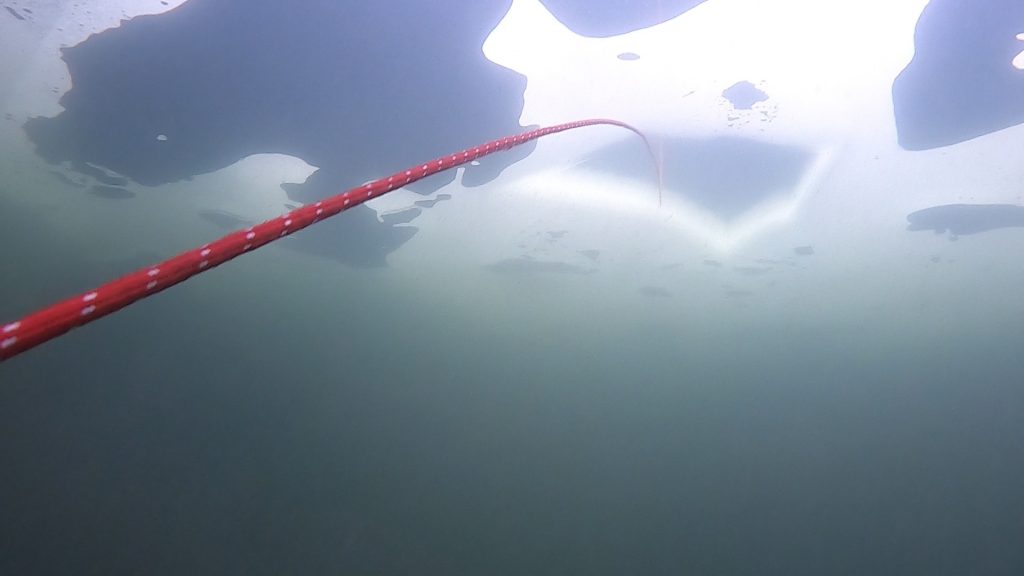
- Line management: How to work with safety rope and knots.
- For emergencies: Action in case of freezing of the regulator or loss of the rope.
Technical equipment and free-flow risks
In ice diving, conventional equipment can be disappointing. The main enemy is freezing.
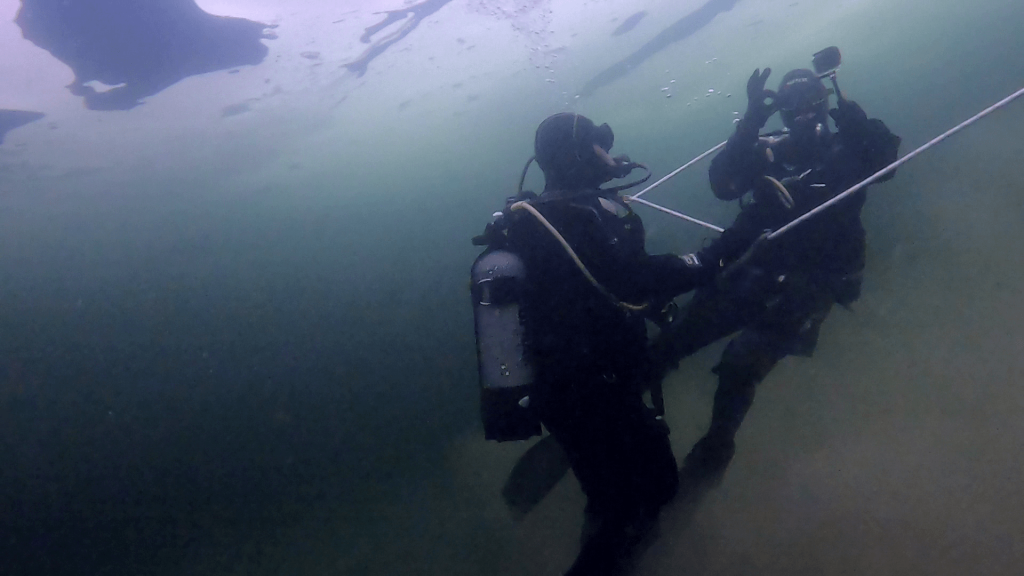
Regulators and first stage
Only use regulators that are certified for cold water (e.g. with an environmental isolation kit or Environmental Seal).
Important: Moisture in exhaled breath or poor quality air in the cylinder can cause first or second degree frostbite in the open position (Free flow).
Dry suits and thermal insulation
- Drysuit: Mandatory requirement.
- Underwear: Layers of activated carbon or merino wool combined with 400g/m² thick “bears”.
- Gloves: Dry gloves are often used (Dry gloves) to maintain finger dexterity for rope manipulation.
Dive site organization (Analysis by scheme)
The scheme shown in the picture is a classic Ice Dive Site layout. Let's look at its main elements:
| Element | Function and meaning |
| Triangle | Usually triangular in shape to make it easier to get out (based on the corners). |
| Diver's Lifeline | The main link between the diver and the surface. It is not only for safety, it is a communication channel. |
| Standby Diver | A backup diver who is fully equipped and ready to go into the water within 60 seconds. |
| Wind Break | Downwind is critical for the surface team and the diver, who emerges wet from the water. |
| Shore Line Ropes | Ensures that the entire camp is securely anchored and nothing (even in gusts of wind) gets into the abalone. |

Rope Communication (Tug Signals)
Since radio communications are often unavailable under ice, OATH system (rope jerks):
- 1 jerk (O – Okay): “I'm fine” or “Are you okay?”
- 2 jerks (A – Advance): “Give me the rope” or “I’m moving on.”
- 3 jerks (T – Take up): “Pull the rope” or “I’ll be back.”
- 4 jerks (H – Help): EMERGENCY SIGNAL. The surface team immediately pulls the diver out.
PS The meaning of signals may vary for different tasks.
Why become a certified Ice Diver?
Ice diving offers a unique visual experience – crystal clear visibility (up to 50+ meters) and unreal light plays through the ice. However, without certification and an experienced team, it is dangerous.
Certification provides:
- Skills in leading a ground team (Tender).
- Knowledge of how to prevent regulators from freezing before diving.
- Psychological preparation for working in a confined space (Overhead environment).
Next step?
Are you ready for your first cut in the ice? Contact your instructor or the nearest dive center on the daivings.lv listto sign up for theoretical classes before the lakes freeze!
Would you like to apply today? Order a course here


