

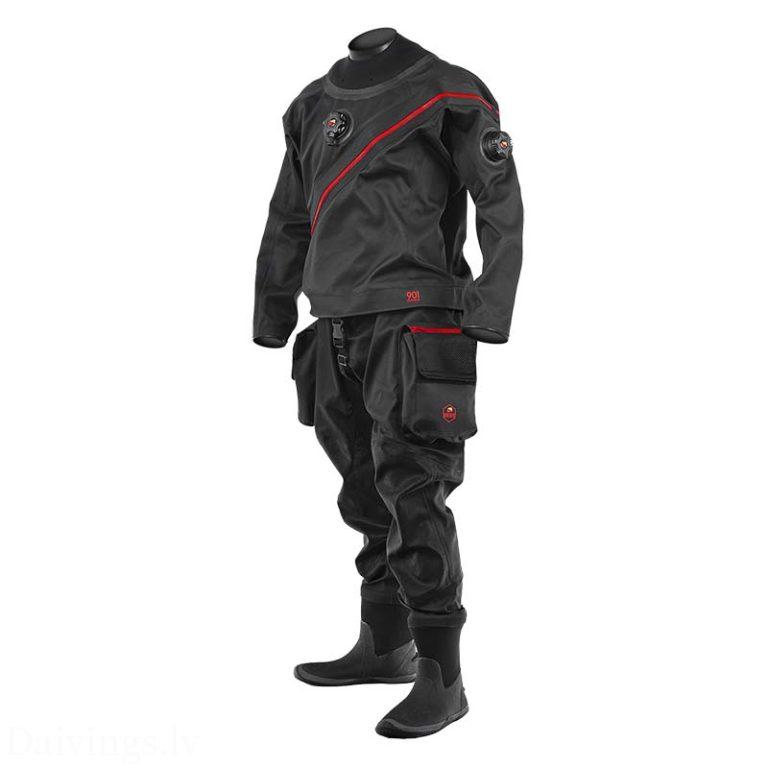
A drysuit allows you to dive in the Baltic Sea, lakes and under ice all year round, but only if it stays dry. The two parts it depends on the most are the waterproof zipper and the neck and arm seals (cuffs). These are also the most expensive and sensitive parts of the suit. Replacing a zipper can cost several hundred euros, but a torn latex seal can ruin your dive right before you dive.
In this article, Daivings.lv instructors explain how to care for your drysuit's zipper, seals, and valves so that your suit lasts a long time and doesn't cause any unpleasant surprises.
Waterproof zipper care
A drysuit zipper is not your average clothing zipper. It is gas and watertight, and its teeth are precisely matched to each other. Sand, salt, and dryness gradually wear them down.
Cleaning
- Rinse the zipper in fresh water after each dive, both open and closed.
- If there is sand or mud in your teeth, use a soft toothbrush and brush along the teeth, not across them.
- Allow the zipper to dry completely before lubricating.
Lubrication
- Metal zippers (brass teeth) are lubricated with a zipper wax or paraffin pencil applied to the outside of the teeth, in the closed position.
- Plastic zippers (e.g. TiZip) are usually lubricated with the manufacturer's recommended silicone lubricant.
- Always follow the suit manufacturer's instructions, as the wrong lubricant can damage the zipper seal.
- Lubricate several times per season and always before long-term storage.
Usage
- Pull the zipper evenly and in a straight line, never pull at a corner or with force.
- Check to see if any underwear or hair is stuck between the teeth.
- Never fold a garment over the zipper. If you must fold a garment, roll it so that the zipper remains straight.
Care of latex and silicone gaskets
The seals (cuffs) fit tightly around the neck and wrists and prevent water from entering the suit. Latex seals are cheaper and more flexible, but are sensitive to UV radiation, ozone, oils and grease. Silicone seals last longer, but are more sensitive to sharp objects and tears.
Daily care
- After diving, rinse the seals in fresh water and let them dry in the shade.
- After drying, lightly treat latex gaskets with fragrance-free talcum powder to prevent them from sticking and make them easier to put on.
- Before putting on the suit, remove rings, bracelets, and watches, which can tear the seal.
- Do not use oil or petroleum jelly-based products on the seals. Do not allow the seals to come into contact with sunscreen, hair products, and repellents, as these will dissolve the latex.
When to replace the gasket
- When you stretch the gasket, you will see small cracks or discoloration.
- Latex is sticky, hard, or has lost elasticity.
- There is a cut, tear, or hole in the gasket.
- After diving, there is wet clothing around the neck or arms.
A latex gasket typically lasts 2-4 years, depending on frequency of use and care. If the gasket is damaged, we offer hand gasket replacement and repair, as well as silicone gaskets, such as Waterproof Silicone WristsealIf you want to do it yourself, our drysuit gasket bonding guide.
Valve and boot care
- After diving, rinse the fill and drain valves by pressing and turning them several times under a stream of water to rinse out salt and sand.
- Before diving, check that the fill valve does not stick and that the exhaust valve opens smoothly.
- Dry the boots and the foot area separately, as this is where moisture remains the longest.
Drying and storage
- Dry the garment inside out first, then turn it inside out.
- Use a special dry suit hanger, such as Daivings drysuit hanger, which holds the weight of the suit and allows water to drain from the boots.
- Store the suit in a cool, dry and dark place, away from the sun, heating appliances and electric motors.
- If the suit needs to be folded, roll it from the feet up, keeping the zipper straight.
- Refer to the garment manufacturer's instructions for whether to keep the zipper open or closed.

Professional drysuit maintenance
If water gets into your suit and you can't find the cause, if the zipper is worn or the valves are working unevenly, it's time for professional maintenance. Daivings.lv offers drysuit repair and maintenance: checking for leaks, replacing seals and valves, and checking the zipper. It is recommended to check the suit before the winter and spring seasons, not the day before diving.
Contact us by phone 220-77-202 or email [email protected].