
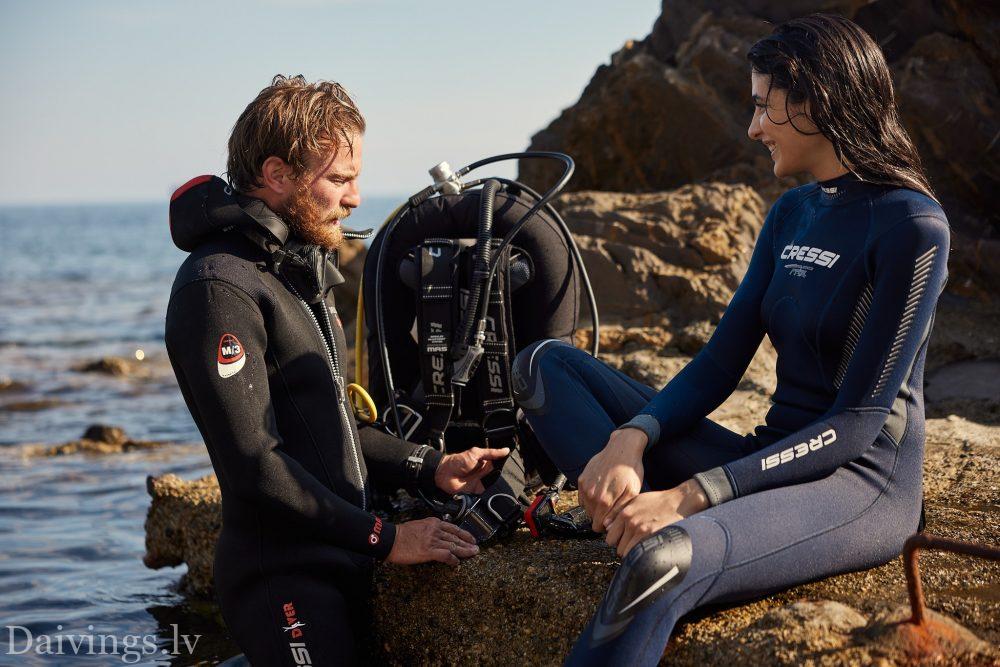
A wetsuit is one of the most expensive and important pieces of equipment for a diver. It keeps you warm, protects your skin from chafing, and affects how comfortable you feel throughout your dive. Neoprene doesn’t last forever: salt, chlorine, sun, and improper storage gradually harden it, and the suit no longer provides as much warmth. With proper care, a quality wetsuit will last for many seasons.
In this article, we have compiled recommendations from Daivings.lv instructors on how to rinse, wash, dry, and store a wetsuit, as well as when it needs repair.
Why neoprene needs care
Neoprene is a foam rubber with thousands of tiny gas bubbles, and it is these that retain heat. Salt crystals, chlorine and UV radiation from the sun gradually damage these bubbles and the structure of the rubber. The suit becomes harder, thinner and less warm. Sweat and bacteria also remain inside the suit, which causes an unpleasant odor.
After each dive: rinsing in fresh water
- After diving in the sea or pool, rinse your wetsuit in fresh water as soon as possible, both inside and out.
- Use cool or lukewarm water, no hotter than about 30°C. Hot water makes the neoprene stiff and can loosen glued seams.
- Rinse the zipper especially carefully so that no sand or salt remains in the teeth.
- After diving in the lake, it is also worth rinsing off the mud and algae, as they contribute to the smell.
Washing a wetsuit
How to wash
Wash your wetsuit every few dives or at the end of the season with a special neoprene shampoo or a mild, neutral soap solution. Soak the suit in lukewarm water, gently wring it out, especially around the armpits, neck and legs, and rinse thoroughly.
What not to do
- Do not use bleach, solvents or aggressive detergents.
- Do not wash in a washing machine unless specifically permitted by the manufacturer.
- Do not cut the suit as this may damage the seams and the structure of the neoprene.
- Use a special enzymatic cleaner to combat odors, not scented products that only mask the odor.
Proper drying
Most wetsuits are damaged precisely because of improper drying.
- Dry the garment inside out first, then turn it over and let it dry inside out.
- Dry in the shade and in a well-ventilated area. Direct sunlight will damage neoprene and fade colors within a few hours.
- Use a wide, rounded hanger. A thin wire hanger will leave permanent indentations on your shoulders.
- Do not dry on a radiator, in a sauna, or with a hairdryer.
- Do not hang the suit by the legs or by the sides over a rod, as the weight of the wet neoprene will stretch the material.
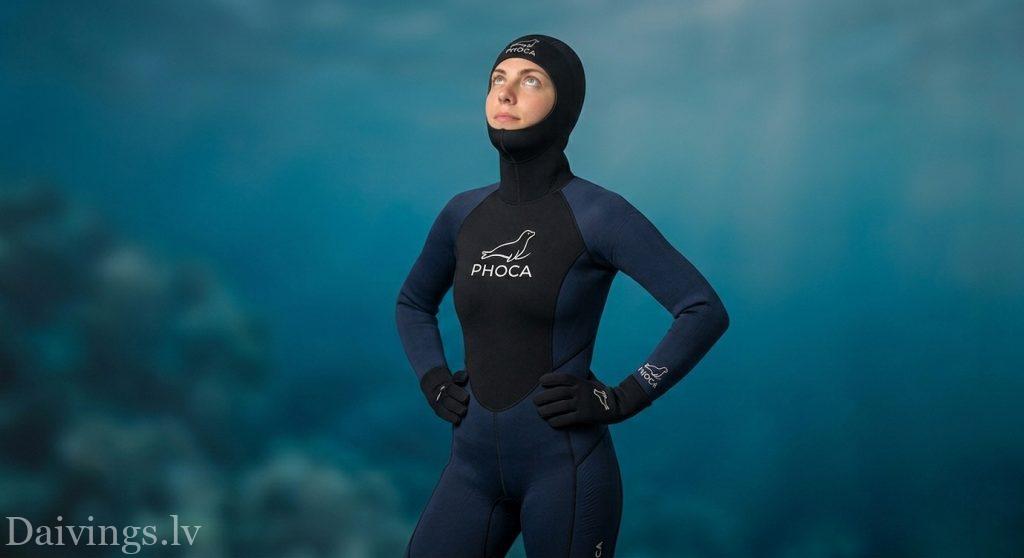
Storage between seasons
In Latvia, many divers use a wetsuit from May to October, but spend the winter in the closet. To make it as warm in spring as in autumn:
- The suit must be completely washed and dry before storage.
- Store it on a wide hanger or loosely rolled. Do not fold it in sharp creases, as the neoprene will crack at the folds.
- The place should be cool, dry and dark. Do not place the garment under heavy objects.
- Do not store it next to electric motors, compressors or boilers, as ozone and heat accelerate rubber aging.
- Clean and lubricate the zipper with zipper lubricant at the end of the season.
When a wetsuit needs repair
Small tears and loose seams can be repaired, and this should be done in time before the damage increases. The most common signs:
- there are holes or cuts in the neoprene, for example from rocks, knives or an anchor chain;
- the seams start to come unstuck or the thread breaks;
- the zipper is stiff or the teeth no longer engage;
- The outer fabric has worn down to the neoprene at the knees and buttocks.
Read more about how to repair damage in the article Wetsuit repairIf the neoprene has become thin and hard and no longer warms even after repair, it is time to think about a new suit.
How to choose a new wetsuit
The thickness of the wetsuit should be chosen according to the water temperature. For Latvian summer waters, most divers choose a 5–7 mm suit with a hood and gloves. Daivings.lv store offers, for example, Cressi Fast 5 mm and Cressi Castoro Plus 7 mm, as well as 7 mm neoprene hoods and neoprene glovesIf you want to try it first, use wetsuit rental.
If you have any questions about the condition of your wetsuit, bring it to us or call us. 220-77-202.