
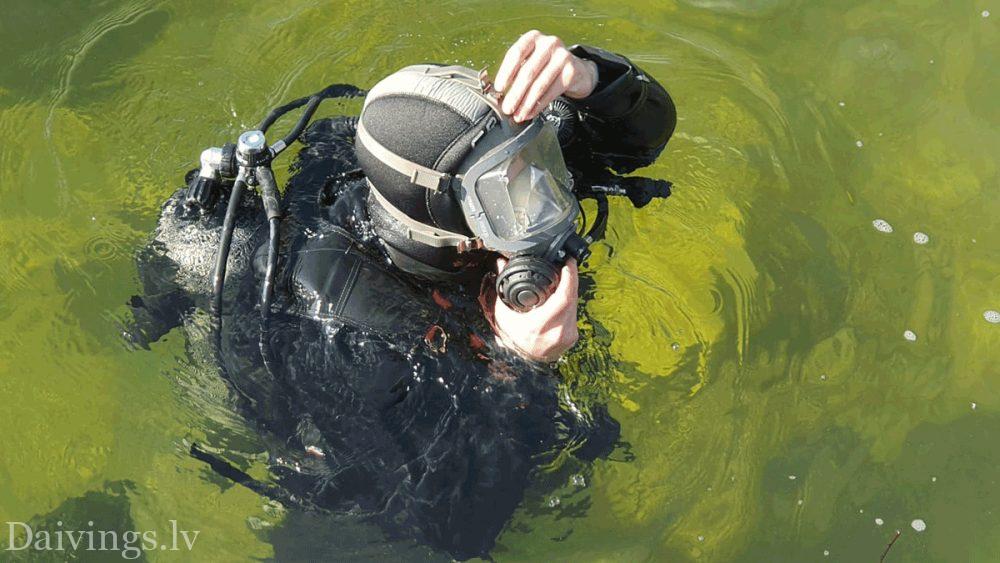
Operational capacity and management competence
Daivings.lv diving team provides full-cycle underwater exploration and technical work solutions in the Baltic Sea region. Combining top-class technical diving expertise with innovative marine technologies, the team offers a strategic partnership in the implementation of complex, deep-sea and historical research expeditions.
Operations are led by a technical diving instructor, Valters Preimanis – internationally certified shipmaster, technical director of Dronelab SIA, as well as a technical diving instructor with extensive experience in military and rescue structures (former operational officer of the National Armed Forces and VUGD). This versatile experience guarantees the discipline of military precision, the highest safety standards in difficult hydrological conditions and the ability to make operational decisions in critical situations.
Survey and archaeological research of historic shipwrecks
Researching the cultural and historical treasures lying beneath the Baltic Sea requires a delicate and methodical approach. The Daivings.lv team works closely with Latvia's leading historical researchers and institutions to ensure accurate, non-invasive mapping and documentation of wrecks.
- Research expeditions: Systematic search, identification and recording of the technical condition of historical sunken objects (including participation in such high-profile projects as the survey of the steamer "Arniston").
- 3D photogrammetry and visualization: High-resolution underwater video and photo capture in low visibility, creating accurate 3D wreck models for researchers and cultural heritage authorities.
- International cooperation: Ability to participate in international archaeological and oceanographic missions, providing a base of both divers and technical equipment.
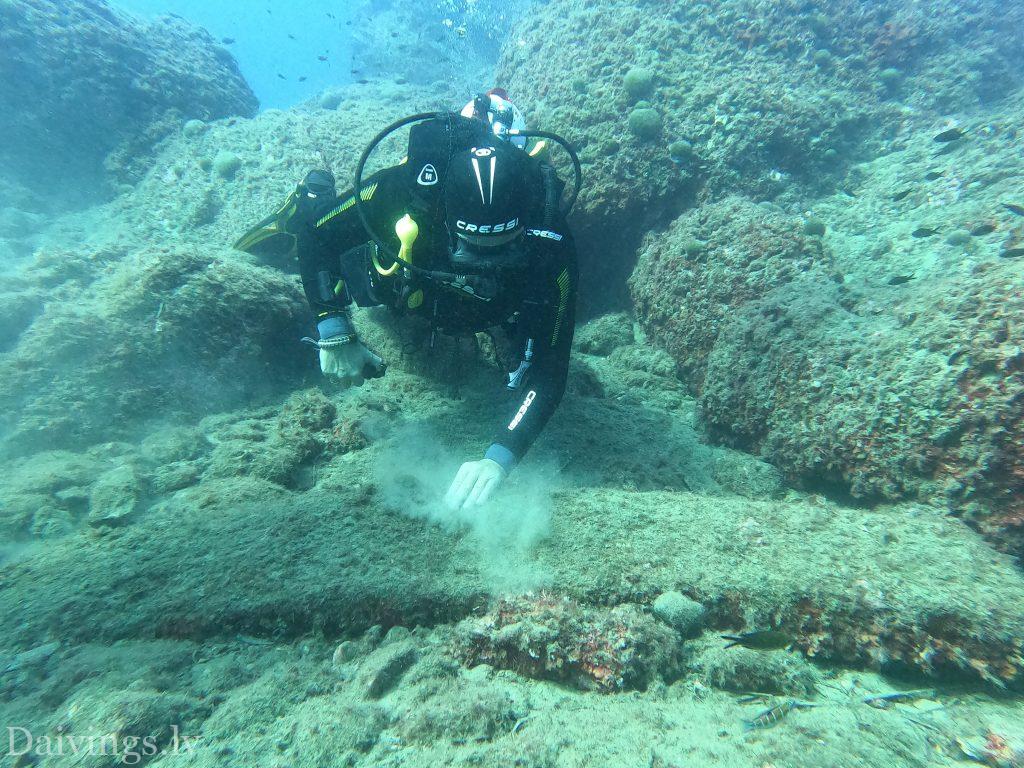
Deep-sea exploration and a 6-person technical diving team
To realize the most challenging historical and industrial underwater projects, Diving The team has the largest and most modern technical diving facility in the region. The core of the operation is made up of top-notch professionals whose capabilities far exceed the limits of traditional commercial diving.
- TDI/SDI and PADI technical instructor expertise. The Team and Exploration Operations Manager is a certified PADI and TDI/SDI Technical Diving Instructor, ensuring that every dive and procedure is planned to the world’s strictest technical diving standards. This qualification allows not only to lead complex operations, but also to continuously train and prepare the support team for specific tasks.
- JJ-CCR and rebreather operations to a depth of 100 meters. Thanks to the most modern closed-cycle (CCR – Closed Circuit Rebreather) systems, especially those recognized worldwide and used in the military JJ-CCR apparatuses, the team is able to perform safe and prolonged operations at extreme depths of up to 100 meters. Rebreathers ensure optimal gas consumption (using helium and oxygen mixtures – Trimix), significantly extend the possible working time on the bottom and prevent the formation of bubbles, which is critically important for the study of fragile archaeological sites and work in confined environments or in poor visibility.
- The potential of a team of 6 divers. The harsh conditions of the Baltic Sea – cold water, strong currents, complete darkness at great depths and unpredictable weather – require perfectly synchronized teamwork. The base provides a permanent team of 6 highly qualified and technically trained divers, who are able to work as a single mechanism:
- Synchronized task distribution. While part of the team (Deep Team) performs primary work or exploration at maximum depth, the remaining divers provide the necessary safety support (Support and Safety divers), decompression gas supply, and perimeter control at various depth levels.
- Continuity and efficiency. The six-person crew allows for rotations, ensuring long-term and continuous work at the site, even for several days, which is vital for large-scale wreck surveys, photogrammetric data collection, or extensive engineering work.
- Multidisciplinary approach. Each team member is trained not only to survive and navigate in the dark depths with DPVs (underwater scooters), but also masters specific skills – underwater lighting and camera operators, archaeological surveyors, and rigging specialists for lifting heavy objects.
This unique combination of infrastructure, equipment and human resources makes Diving Club as a leading partner in the Baltic Sea for researchers, institutions and companies that require uncompromising safety and technological solutions in extreme underwater conditions.
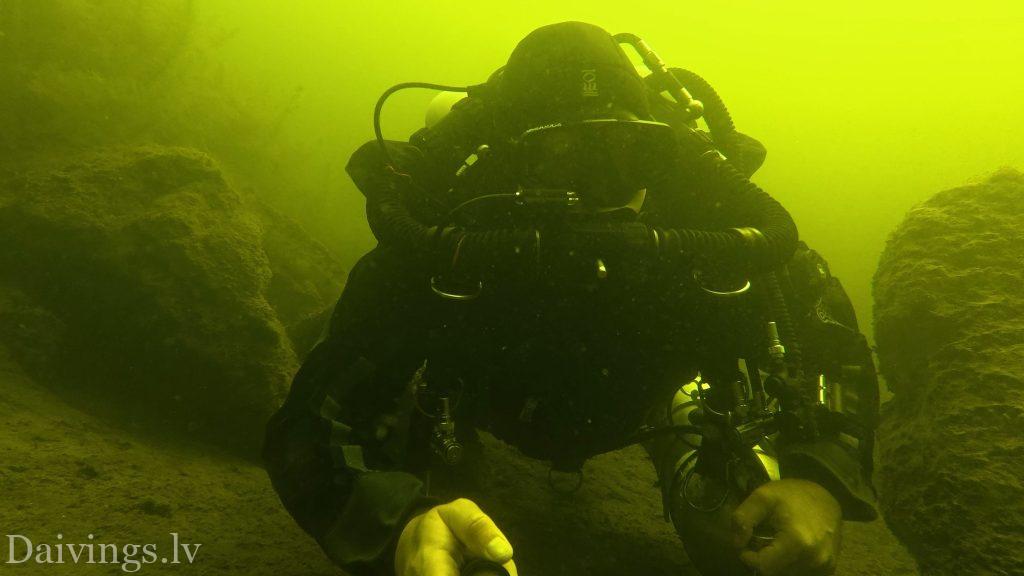
Technical diving infrastructure and gas management
To ensure great depths and long-term underwater operations, the most advanced breathing and thermoregulation equipment is used, for which the company's technical management is directly responsible.
- Closed-loop breathing systems (CCR)In-depth expertise in the use and maintenance of JJ-CCR rebreathers, allowing divers to remain at significant depths without air bubbles and with maximum gas efficiency.
- Logistics of CO2 absorbents and dry suits. Accurate Sofnolime (carbon dioxide absorbent) management, as well as the use of argon systems for thermal insulation of dry suits in the cold waters of the Baltic Sea.
- Gas mixing station. Autonomous ability to produce and analyze specific gas mixtures (Helitrox, Trimix, Nitrox) according to decompression procedures. Precise dosing and pumping of helium and oxygen into high-pressure cylinders.

Underwater bathymetry and infrastructure survey
The company integrates diver work with modern remote sensing tools, providing comprehensive engineering data to public and private sector clients.
- Autonomous and remote-controlled drones. Use of industrial ROV (Remotely Operated Vehicles) and USV (Unmanned Surface Vehicles) platforms for initial exploration and sonar of dangerous or inaccessible areas.
- Bathymetric measurementsReal-time mapping of waterbed relief using multibeam echosounders and integrating the obtained data into NMEA networks and geospatial databases.
- Inspection of civil engineering structures. Professional assessment of the technical condition of bridge piers, hydraulic structures, water intake facilities (including fish farm infrastructure) and cable lines, issuing detailed technical inspection reports and conclusions.
Maritime logistics, equipment and safety protocols
Successful execution of operations on the high seas depends on a reliable surface base and ironclad logistics, which are one of the team's main advantages.
- Operational naval fleet. Operation of commercial RIBs (Rigid Inflatable Boats) and workboats equipped with modern navigation, AIS and VHF/DSC communication systems for the safe transportation of crew, deep sea explorers and heavy technical equipment.
- Military-level planning. Each expedition is planned with the precision of an operational service – from risk analysis and decompression plans to emergency evacuation protocols (Emergency Action Plans).
- Continuous autonomy. Ability to mobilize and maintain technical base (compressors, gas stations, generators and communication equipment) in remote ports or at sea on ships during long-term research missions.
Latvian diving teams The combined resources form a strong technological and human resource base, open to cooperation with scientific institutes, historians, environmental researchers and commercial partners in the Baltic Sea and beyond.