
Latvian winters and late autumns often come with humidity, wind and dampness. For water sports enthusiasts, divers, fitness enthusiasts and anyone staying in nature or in cooler country homes, effective warming is a basic requirement for health and well-being.
Unlike the Western approach, which traditionally seeks to heat the entire volume of air in a room, the Japanese philosophy, honed over centuries, is based on a different principle: heat not the entire air in the house, but the body itself, direct contact surfaces and create local thermal microclimatesThis approach is energy efficient, prevents unnecessary air drying, and is perfectly suited to Latvian conditions.
Micro-heating of the living area
Instead of expensively and slowly heating high ceilings and uninsulated walls, the Japanese use focused local heat.
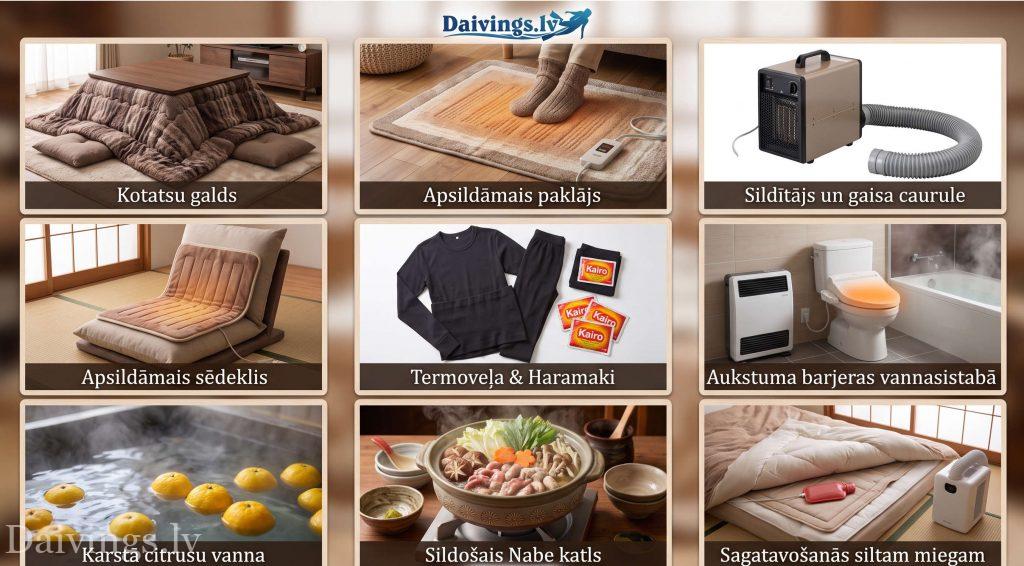
- Focused heater (kerosene or infrared air blower): Provides an immediate, strong flow of heat directly to the area where the person is, without waiting for the entire building to heat up.
- Heated mat (Hot Carpet): Since warm air rises, the floor is always the coldest surface. An electric heated mat warms your feet and body from below, creating an immediate feeling of comfort when sitting or relaxing on the floor level.
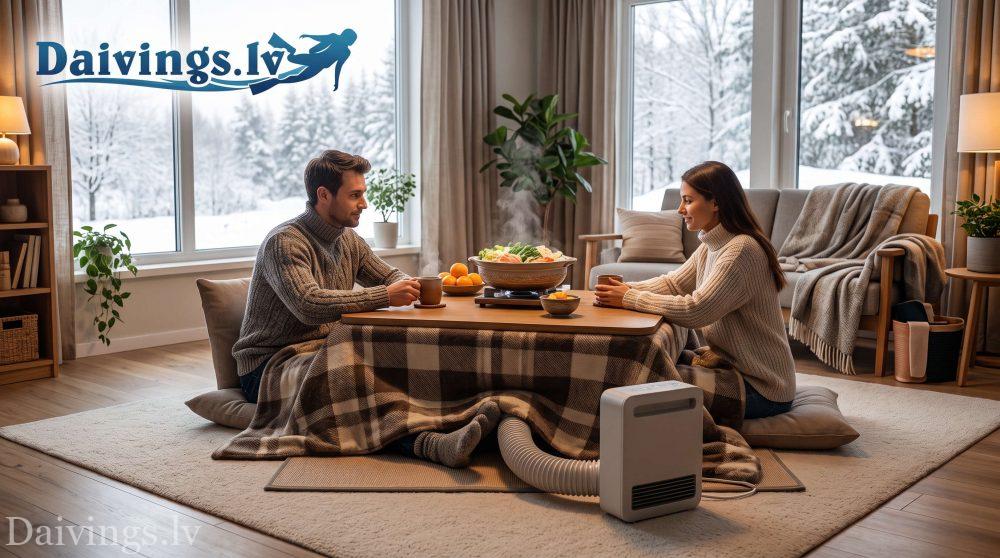
- Traditional Kotatsu table: A low table with an integrated heating element underneath and a thick blanket that seals in warmth around the feet and lower body. It serves as a family gathering place for meals, work and relaxation.
- Warm air discharge corrugated pipe: A special flexible air duct system is placed at the heater outlet and directed directly under the table cover. This way, the warm air already produced is directed directly to the seat, without wasting energy.
- Electric blanket on floor chair (Zaisu): Supplements body heating from the back while the legs are under the table, preventing the back from cooling from the cool background air of the room.
Functional thermal clothing and personal microclimate
Indoor clothing is perceived as a personal thermal barrier, not simply home clothes.
- Multi-layer thin thermal underwear (HeatTech): Thin, flexible high-tech fabrics that absorb body moisture and convert it into heat without restricting movement or creating a heavy feeling.
- Warm leggings (Momohiki): A snug layer of underwear for the legs that protects the joints and leg muscles from the cold pull of the floor.
- Abdominal girdle (Haramaki): A stretchy, warming fabric band around the waist and abdomen. It warms the body's core and internal organs, and prevents shirts from being pulled up and exposing the lower back to the cold while sleeping or moving.
- Adhesive chemical heaters (Cairo / Haru Cairo): Thin, adhesive-backed heating pads that slowly release heat over several hours. They are placed on the waist or abdomen, effectively stimulating blood circulation throughout the body, both indoors and outdoors.
Sanitary safety and thermal shock prevention
Moving from a warm room to a cold bathroom causes a sudden jump in blood pressure (so-called thermal shock). In Japanese homes, special attention is paid to this:
- Heated toilet seat: Prevents unpleasant cold contact and helps maintain muscle relaxation.
- Compact heater in the toilet room: A small convector or infrared heater that quickly warms the air at foot level in the morning and evening hours.
- Bathroom air and floor heating system: Built-in ceiling/wall ventilation and heating system that fills the room with warm air before washing, as well as warm water floor circulation to prevent feet from coming into contact with icy tiles.
- Bath water recirculation and heating system (Oidaki): An automatic device that maintains a constant hot water temperature and allows it to be reheated without pouring new water.
Deep Warming: Water Rituals and Warming Nutrition
Restoring internal warmth after a cold day is an essential part of immunity and body regeneration.
- Hot tub (Ofuro): Soaking in hot water for 10–15 minutes after a thorough shower warms the muscles deeply, dilates blood vessels, and maintains the body's thermal inertia long after you get out.
- Citrus bath (Yuzu Bath): It is a winter solstice tradition to bathe whole yuzu citrus fruits in the bath. The essential oils from the peel stimulate blood circulation, moisturize the skin, and fill the room with a relaxing aroma (in Latvia, natural citrus oils or local bath herbs can be used as an equivalent).
- Common hot water boiler (Navel): A hearty soup/stew with vegetables, mushrooms, tofu, and meat that simmers slowly in a pot on the table. The food warms you from the inside, the steam pleasantly humidifies the air in the room, and eating together creates an extra sense of coziness.
Healthy and warm sleep
Preparing your bed before going to bed guarantees quick sleep and peaceful rest without muscle tension.
- Electric blanket for bed: It is turned on 10-15 minutes before going to bed under a regular blanket so that the mattress and blanket are fully warmed up.
- Hot water bottle / hot water bottle (Yutanpo): A traditional and safe solution for warming the foot area in bed.
- Futon and bedding hot air dryer (Futon dryer): A specialized device with a tube that blows hot air directly between the mattress and the blanket. It not only warms up the bed before nightfall, but also completely dries the room and air moisture from the fabric, creating a dry, warm and fluffy environment.
Practical conclusions for everyday life in Latvia
| Japan's solution | Alternative in Latvian conditions | Health benefit |
| Local heat (Kotatsu, heated carpet) | Low table with warm rug and electric foot warmer | Less electricity consumption, warm body without dry room air |
| Abdominal girdle (Haramaki) | Wool or elastic merino waist bandage | Protected kidneys, stable internal organ heat |
| Heated toilet | Small programmable convector in the bathroom | Prevents blood pressure spikes and risk of colds |
| Heating and dehumidifying bed air | Electric blanket or cloth warmer before bed | Falling asleep faster, relaxed muscles and better sleep quality |