The Baltic waters hide countless secrets in their depths. – from historic shipwrecks and unique ecosystems to ever-changing bed topography and water quality.
Uncovering and understanding these secrets is essential not only for scientists and industry representatives, but also for every diver who wants to explore the underwater world safely and excitingly. Until now, obtaining detailed data has often been expensive, time-consuming and difficult.
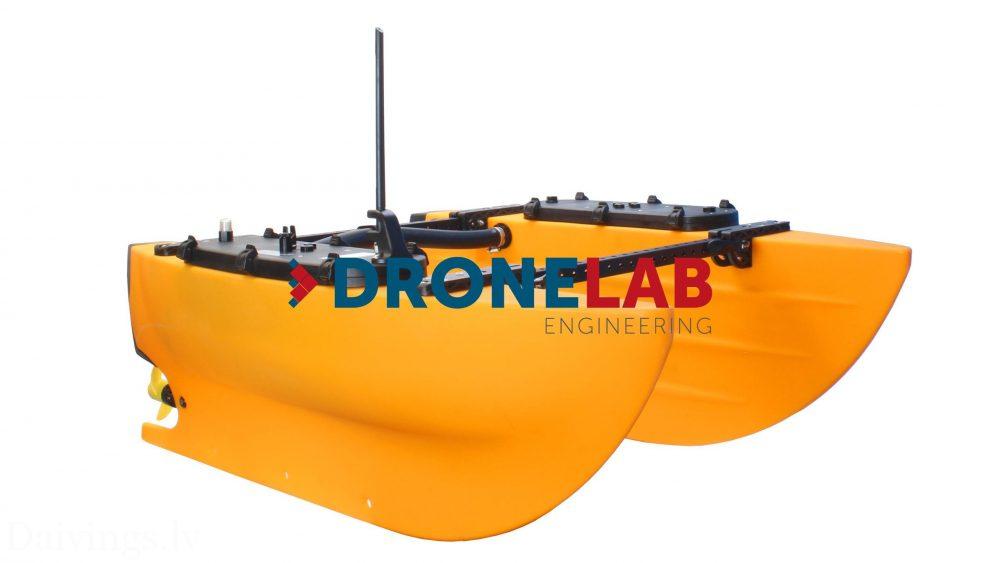
However, technology does not stand still, and the Latvian technology company “Dronelab” SIA offers an innovative solution – an autonomous unmanned surface vessel (USV), a hydrograph equipped with the most modern technologies for hydrographic measurements, autonomous system development and water quality monitoring.
At the same time, the company “Dronelab” also provides wide range of services range above water using traditional but modern solutions. These combined technologies open up new opportunities for underwater and surface exploration in all Baltic States.
What is a Standalone UPS?
Imagine a small but powerful boat (USV “Sea Wolf” 100cm or USV “Sea Lion” 200 cm long), which is able to move independently, without a human presence on board, along a certain route, while simultaneously making precise measurements below the water surface. It is an unmanned surface vessel or USV (Uncrewed Surface Vessel)The USV developed by Dronelab is special with several features:
- Autonomy: The vessel is capable of operating autonomously, following a pre-programmed route or even responding to environmental changes in real time. This reduces the need for a large crew and allows measurements to be made over long periods of time and in difficult conditions.
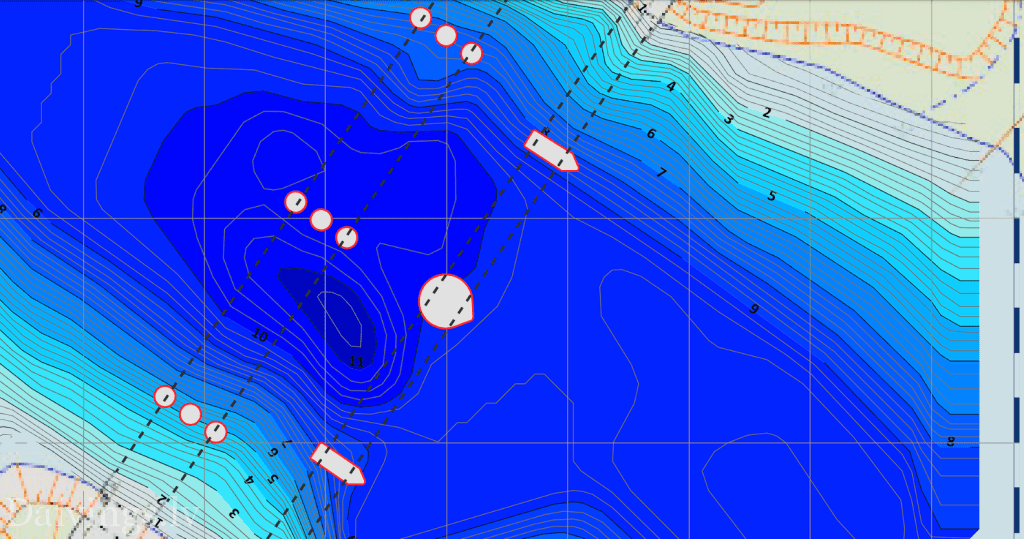
- Precise sensors: The USV is equipped with high-resolution echo sounders for bathymetry (mapping the depth and relief of the seabed), as well as various sensors for determining water quality parameters (temperature, salinity, turbidity, oxygen level, etc.).
- Open-Source software: The use of open source software provides system flexibility, adaptability to specific needs, and potentially lower costs compared to closed commercial systems. It also opens up opportunities for collaboration with research institutions and other developers.
- Versatility: The platform is suitable not only for data collection, but also for testing and developing new algorithms and sensors for autonomous systems.
In addition to innovations, certified surface services
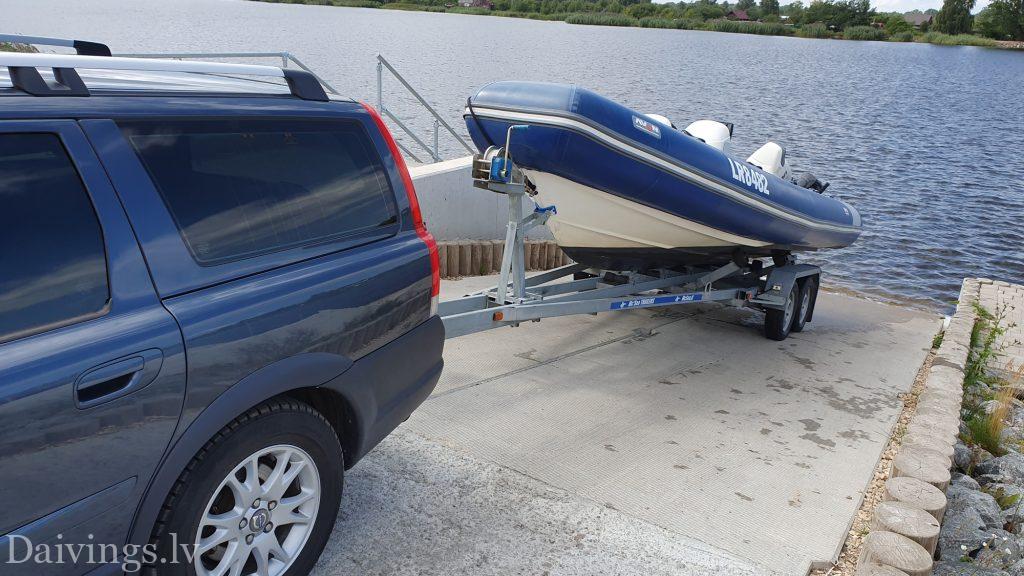
Aware that not all tasks can be performed autonomously and sometimes require human presence or specific equipment, “Dronelab” SIA also offers a wide range of services. above water, using its own fleet of certified watercraft. The company has versatile motorboats at its disposal - one 4 meters long and another, more spacious, 6.2 meters long.
These boats can be equipped according to the customer's needs and work specifics:
- Flexible drive type: Boats can be powered by either quiet and environmentally friendly electric motors, which are ideal for working in specially protected natural areas, shallow waters or tasks requiring silence (e.g. ornithological observations, environmental monitoring in sensitive areas), both with for powerful internal combustion engines, which provides more speed and power to quickly reach remote locations or work in more difficult weather conditions.
- Professional management: All trips and work are done under the guidance of a certified and experienced captain, ensuring not only navigation safety in accordance with all requirements, but also a professional approach to completing any task on the water.
- Additional services: These human-powered watercraft not only complements UPS capabilities (for example, ensuring its launch, lifting, escorting or operation in more complex conditions requiring direct human intervention), but also allows Dronelab to offer a variety of independent services, which requires a more traditional approach to working on the water – from visual inspections and sampling to transporting equipment, supporting divers and assisting with various aquatic projects.
Dronelab USV application possibilities in the Baltic States (Latvia, Lithuania, Estonia)
Dronelab's USV technology offers a wide range of applications for the specific conditions of the Baltic Sea and inland waters:
- Hydrographic measurements and bathymetry:
- Detailed mapping of diving sites: For divers, this means much more accurate and up-to-date maps of shipwrecks, underwater reefs or other interesting features. USV can “scan” the object from all sides, creating a 3D model and identifying potential hazards or interesting features before diving. This improves dive planning and safety.
- Discovering new dive sites: Systematic exploration of certain water areas with USV can help discover previously unknown objects – new wrecks, rock piles, interesting terrain that could become popular diving spots.
- Monitoring of port and berth infrastructure: Accurate data on the depth and condition of the seabed is critical for port operations, marina maintenance and new construction planning. USVs can perform routine measurements quickly and efficiently.
- Navigation safety: Maintaining and mapping the depth of shipping lanes is essential for safe navigation in the Baltic Sea, which is relatively shallow in places. USV can help identify new obstacles or changes in the seabed.
- Submarine cable and pipeline route survey and inspection: Before laying new communication or power transmission lines, a detailed subsoil survey is required. USV can provide this data, as well as perform periodic inspections of existing lines.
- Coastal erosion monitoring: The Baltic coast is subject to erosion. Regular bathymetric measurements help to understand the processes and plan coastal protection measures.
- Exploration of mineral resources (e.g., sand, gravel): USV can help assess the volume and availability of underwater resources.
- Water quality monitoring:
- Environmental monitoring and pollution detection: USVs can systematically collect data on water temperature, salinity, pH, dissolved oxygen, chlorophyll concentration (which indicates algal blooms), and turbidity in specific water areas or near pollution sources. This is important for environmental authorities and scientists.
- Evaluating diving conditions: For divers, up-to-date information about water temperature layers (thermocline), visibility (turbidity), and potential algal blooms can help them better prepare for diving and choose the most suitable equipment.
- Aquaculture (Fish Farm) Monitoring: USV can help ensure optimal water quality conditions for fish farming by regularly monitoring key parameters.
- Scientific research: Oceanographers and marine biologists can use the USV platform to collect data for long-term studies on the impacts of climate change, the state of ecosystems, and other processes in the Baltic Sea.
- Development and testing of autonomous systems:
- Integration and testing of new sensors: The Dronelab platform serves as an excellent testing ground for new underwater sensors or measuring instruments in real-world conditions.
- Development of navigation and collaboration algorithms: The ability to develop and test algorithms that allow USVs to navigate more accurately, avoid obstacles, or even cooperate with other autonomous vehicles (e.g. underwater drones – ROV/AUV).
- Research platform for universities: Technical universities and research institutes can use this USV as a base for their projects in the fields of robotics, autonomy and marine technology.
Why are underwater measurements and technologies important?
Although many of the applications mentioned seem more industrial or scientific oriented, the benefits to the diving community provided by both Dronelab USV and surface services, it is obvious:
- More accurate underwater maps = Safer diving: Knowing the exact location of a wreck or reef, its depth and surrounding terrain makes it easier to plan your dive route, decompression stops and avoid unexpected obstacles or nets. The USV provides this data.
- Discovering new diving sites: What could be more exciting than the chance to be one of the first to dive on a newly discovered wreck? USV technology increases the likelihood of such discoveries.
- Better understanding of the environment: Data on water quality and temperature helps not only to choose the right wetsuit, but also to understand the conditions under which underwater inhabitants live and how environmental changes affect them.
- Support for diving expeditions: Dronelab motorboats with a captain can provide transportation to dive sites, serve as a safety and support platform during diving, especially in more remote or difficult-to-reach locations.
- Environmental protection: By monitoring pollution and the state of ecosystems (both with USVs and by taking samples from a boat), we can better protect the underwater world that is so important to divers. Technologies like Dronelab’s USVs and professional surface services provide the data to make such decisions.
Advantages of a professional technology company
By choosing Dronelab services, customers in the Baltic States gain several advantages:
- Integrated solutions: Ability to offer both autonomous USV measurements and human-guided surface services, ensuring a comprehensive approach to any project.
- High accuracy and data quality: Advanced sensors in the USV provide reliable underwater data.
- Speed and efficiency: Autonomous operation allows for faster survey of large underwater areas. Maneuverable motorboats provide quick access to the work site above water.
- Cost effectiveness: USV reduces the need for a large crew in underwater measurements. The surface services offered are competitive and adaptable to a specific budget.
- Safety: USV allows you to avoid exposing people to risk in underwater exploration. Surface work is performed by a certified master in accordance with all safety requirements.
- Flexibility: Open-source approach to USV and selection of different engines for motorboats allows adaptation to specific customer needs and environmental requirements.
- Local expertise: A Latvian company with an understanding of the specifics of the Baltic Sea and the needs of the region.
About the latest technologies
Technological developments are opening up new opportunities to explore and understand the underwater and surface worlds of our planet. “Dronelab” SIA with its autonomous USV platform and professional surface services provided by certified motorboats, is one of the driving forces behind this development in the Baltic region. By offering accurate, efficient and versatile underwater surveying and surface support services, the company makes a valuable contribution not only to industry and science, but also to the diving community, helping to make the depths and surface of the Baltic Sea and inland waters more accessible, understandable and safer for research and work.
If you need detailed underwater mapping, water quality monitoring, a platform for developing autonomous systems, or professional transport and support on water in Latvia, Lithuania or Estonia, Dronelab is ready to offer innovative, effective and safe solutions.
Contact “Dronelab” SIA
To learn more about "Dronelab” For USV and surface services and options, visit their website dronelab.lv or contact directly via contact form.
- Professional inspection of the underwater part of the ship
- Underwater surveys with autonomous vehicles
- Tritex NDT Ultrasonic Underwater Metal, Fiberglass and Plastic Thickness Gauges
- Successfully completes autonomous boat "Sea Wolf"
- Bathymetry and surveying the bed of water bodies