
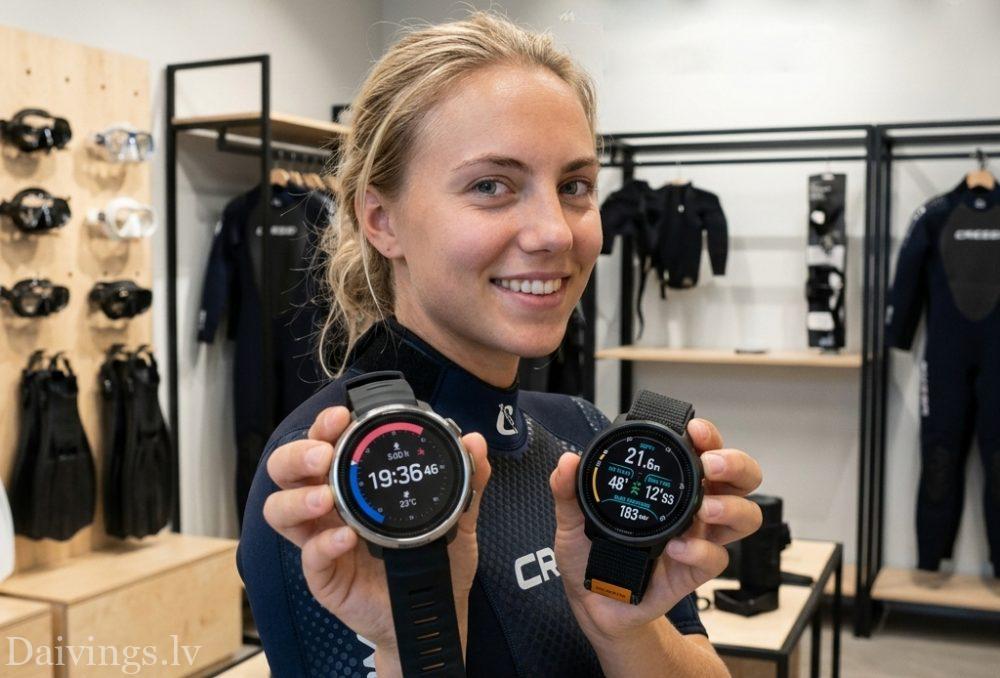
Suunto's technological evolution and the specifics of Baltic diving
Historically Finnish manufacturer Suunto was known for his conservative, proprietary RGBM algorithms, which often caused controversy among active divers due to the inflexibility of the devices and sudden locking after relatively small ascent rate violations. However, in recent years the company has experienced a technological renaissance, integrating the globally recognized Bühlmann ZHL-16C decompression model and introducing high-end AMOLED screens. These changes are most clearly embodied in two relatively recently launched computers: a hybrid multisport smartwatch Suunto Ocean and a thoroughbred dive computer Suunto Nautic S.
Although the two computers appear similar visually and in terms of screen technology, their internal philosophy and target audience are drastically different. Suunto Ocean is designed as a universal device for an active lifestyle, which serves equally well underwater, as well as for hiking, running and daily health monitoring. In turn Suunto Nautic S is designed as a specialized, ascetic underwater measuring instrument.
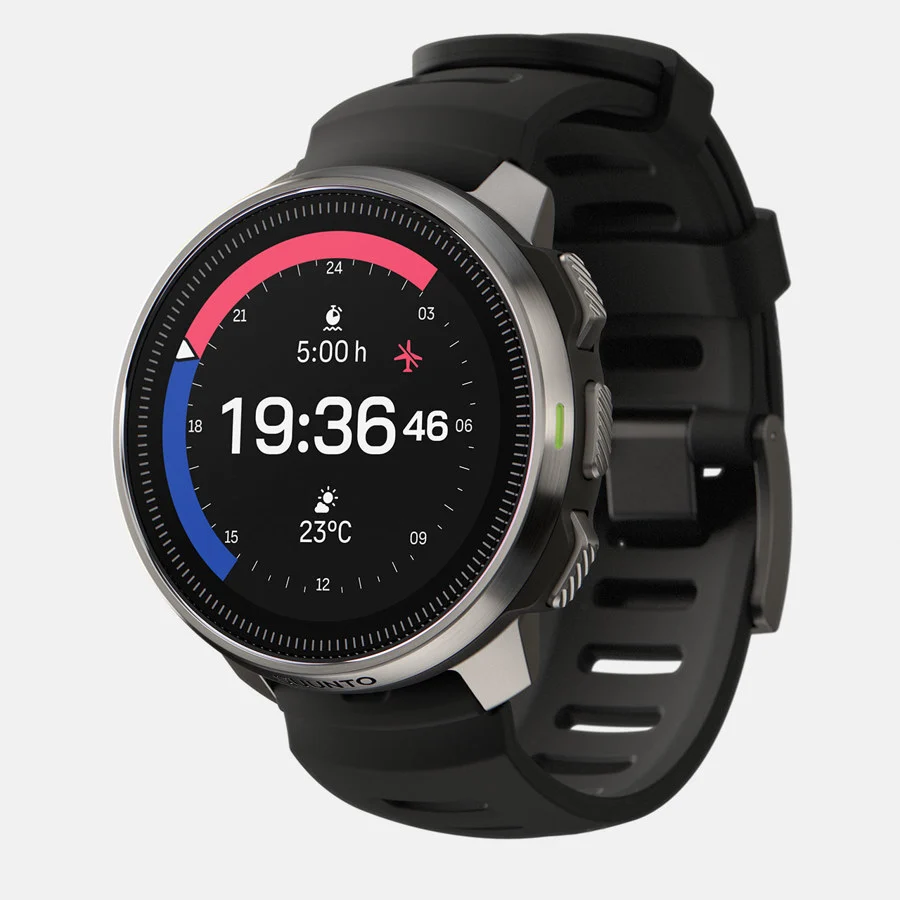 | 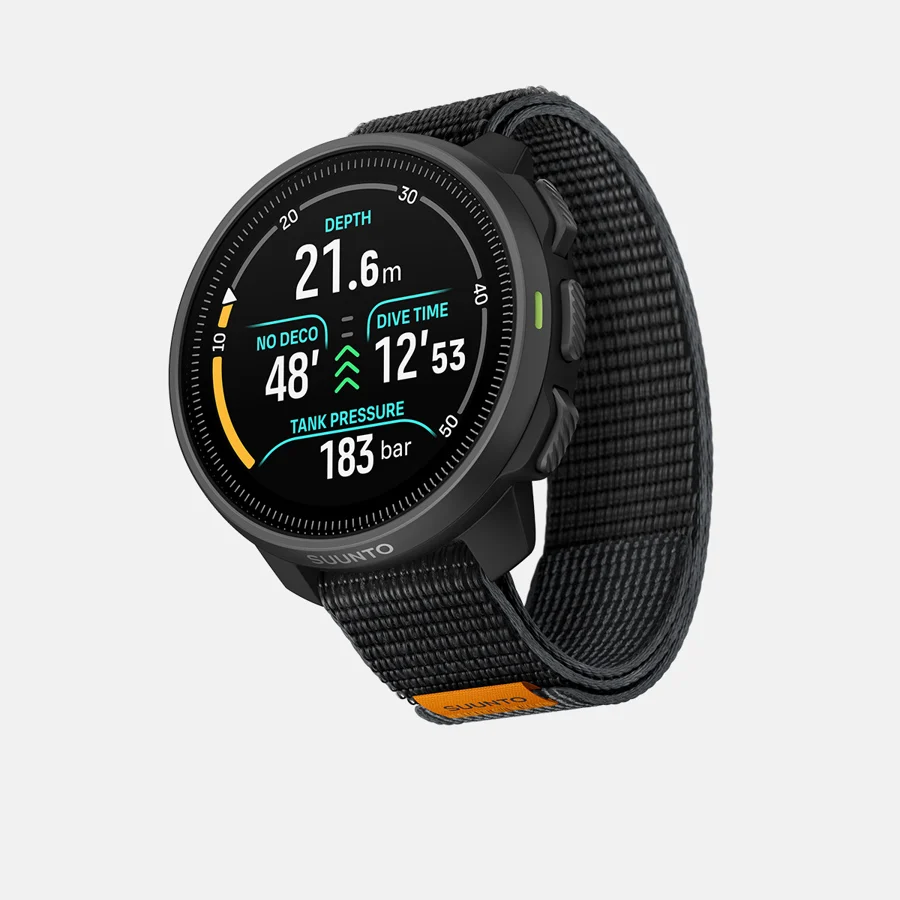 |
| Suunto Ocean | Suunto Nautic S |
Comparison of technical parameters and physical architecture
Both computers are built using durable, corrosion-resistant materials and high-end optics. Both devices have identical diameter and thickness bodies, as well as the same screen size and resolution. However, significant differences lie in their weight, manufacturing origin, maximum working depth and sensor placement.
| Technical parameter | Suunto Ocean | Suunto Nautic S |
| Primary positioning | Multisport smartwatch and dive computer | Specialized diving and freediving computer |
| Case dimensions | 49.9 x 49.9 x 13.2 mm | 49.9 x 49.9 x 13.3 mm |
| Weight | 99 g | 81 g |
| Housing materials | Sapphire glass, steel case, polyamide | Sapphire glass, steel case, polyamide |
| Country of manufacture | China (CN) | Finland (FI) |
| Screen type | AMOLED touchscreen | AMOLED touchscreen |
| Screen size and resolution | 1.43 inches, 466 x 466 pixels | 1.43 inches, 466 x 466 pixels |
| Strap material and type | Silicone strap (quick change, 22 mm) | Elastic textile strap (quick change, 22 mm) |
| Water resistance (case) | 100 m | 100 m |
| Max. working depth (EN 13319) | 60 m | 80 m |
| Optical heart rate sensor | Yes (built into the back of the case) | No (only supports external Bluetooth strap) |
| Land sports modes | Yes (over 95 sports) | No (only diving, free diving, snorkeling) |
| Decompression model | Suunto Bühlmann 16 GF | Suunto Bühlmann 16 GF |
| Sidemount air integration | Limited (up to 5 Tank PODs, no dual view) | Full (simultaneous display of two transmitters) |
| Battery life (Diving) | 40 to 60 hours (depending on GPS and AI load) | Up to 60 hours |
| Battery life (Daily) | Up to 16 days (heart rate on), up to 26 days (off) | Up to 26 days in standby mode |
| Built-in lamp | No | Yes (LED flashlight, activated in menu) |
| Average market price | Around 799 EUR | Around 549 EUR |
One of the most significant differences that affects physical architecture is the origin of manufacturing and development. Suunto Nautic S is entirely designed and manufactured in Finland using strict testing protocols for underwater measuring instruments. On the contrary Suunto Ocean Production has been moved to China, which allows for reduced production costs despite the fact that significantly more sensors are integrated into the device.
Weight loss of 18 grams for the better Nautic S This is achieved thanks to the absence of an optical heart rate sensor and its protective glass elements on the back of the case, as well as the use of a lighter textile strap. This weight reduction makes Nautic S as an invisible instrument on the wrist, while Ocean The massiveness is felt in everyday use.
Challenges of the Baltic waters, cold, visibility and ergonomics in a drysuit
Diving in the Baltic region, whether it's practical training in the Sloka dolomite quarry under the PADI system or deeper exploration of TDI technical wrecks in the Baltic Sea, places extreme demands on equipment. Typical environmental conditions include low water temperatures, which even in summer below the thermocline are usually in the range of 2 °C to 6 °C, limited visibility of 1 to 5 meters, and the need to use thick drysuits with massive neoprene or dry gloves.
Temperature as a risk factor for decompression
Low water temperatures, below 20°C, are officially classified as a risk factor for DCS (decompression sickness). In the cold, peripheral blood vessels constrict, which slows down the removal or desaturation of inert gas (nitrogen) from the body's tissues during the ascent phase. Therefore, the precise configuration of the decompression algorithm is a matter of life and health. Both devices have integrated into their core Suunto Bühlmann 16 GF algorithm. However Nautic S offers expanded setting options and deeper customization specifically for underwater environments.
The default setting for gradient factors (GF) on both computers is moderately conservative (GF 40/85). For the cold waters of the Baltic and heavy physical exertion in counter-current conditions daivings.lv Experts strongly recommend using a high conservatism setting (GF 35/75), which provides a greater safety buffer by increasing the depth of the first decompression stops and extending shallow stops before ascent. Conversely, when making shallower and more dynamic dives in good conditions, you can choose the most aggressive setting (GF 45/95), which extends the no-decompression limit (NDL) to the maximum.
Decompression profile selection and safety ceiling
A big advantage of both computers is the ability to choose between a traditional stepped decompression profile and a continuous profile. The Baltic Sea is often subject to strong waves, which makes it difficult to maintain an accurate depth during a safety or decompression stop. The step model strictly requires being at fixed depths (e.g. 6 m, 3 m). The continuous profile, on the other hand, calculates the real decompression window between the “ceiling” and the “floor”. This allows the diver to decompress gradually, ascending in a smooth, natural curve. This flexibility provides additional safety because even if waves break within the diver's decompression window, the computer continues to efficiently calculate gas release without triggering sudden alarms.
Ergonomics, button control and textile strap
Underwater visibility in the Baltics tends to be critically low. The AMOLED touchscreens on both devices provide excellent contrast and vibrant colors, allowing you to read data clearly even in the darkest conditions. However, physical control and secure fixation on the suit are different. Suunto Ocean The silicone strap is flexible, but when compressed by the drysuit material at depth, it tends to loosen, which can cause the computer to start spinning around your hand or slip off. Suunto Nautic S is equipped with an innovative, reinforced elastic textile strap. This material dynamically adapts to the compression of the drysuit sleeve, maintaining a constant and tight grip throughout the dive, a significant safety benefit in cold water environments.
When diving with thick gloves, using the touchscreen becomes impossible. Both computers have three mechanical buttons, but Nautic S The software interface is optimized for fast and intuitive navigation without the aid of a touchscreen. Additional advantage Nautic S The model has a built-in LED light. While it cannot replace a primary dive light, it provides invaluable assistance in emergency situations or when checking equipment on board a ship before a night dive.
Gas management and technical potential: Sidemount and Multi-Gas functions
As you progress in your diving skills and learn TDI technical diving or side cylinder assembly (side mount) configuration, air integration and gas management become a critical part of the system. Suunto Ocean and Suunto Nautic S offers wireless air integration using Suunto Tank POD transmitters. However, the nuances of their visualization and compatibility differ.
Suunto Nautic S the maximum working depth is set to 80 meters, compared to Suunto Ocean 60 meters EN 13319 limit. This parameter clearly indicates the Nautic S suitability for deeper technical research, although both computers have a maximum water resistance limit of 100 meters.
In terms of gas management, both devices support up to five gas mixes (Nitrox/Oxygen from 21% to 100%), allowing gas switching during takeoff based on pre-configured partial pressure (pO2) limits between 1.0 and 1.6. For inexplicable reasons, neither of these two models fully supports Trimix or Closed Cycle Rebreather (CCR) modes in the basic factory configuration, although Nautic S The series has been promised software updates for CCR compatibility in the future.
The superiority of the “Sidemount” configuration
The biggest Suunto Nautic S The trump card is a full-fledged two-transmitter (dual transmitter) support in one screen view. Sidemount divers use two independent side-mounted cylinders. Nautic S allows you to see the pressures of both cylinders simultaneously, visualized with clear, color-coded elements directly on the primary dive screen.
Suunto Ocean also able to connect to up to five Tank POD transmitters, but its interface does not offer the ability to display two pressures simultaneously in real time on one screen without the need to switch between views. This limitation makes Suunto Ocean less suitable for serious side mount for divers for whom continuous pressure monitoring of both cylinders is a primary safety requirement.
Tropical Travel and Active Lifestyle: Smartwatch Features and Land-Based Workouts
A completely different usage scenario opens up when heading to warm waters. Such trips usually combine several dives a day with active land activities – cycling, running, or simply staying in shape in the hotel gym. In this environment Suunto Ocean is an unrivaled leader.
Life above water: the versatility of Suunto Ocean
Suunto Ocean is a full-fledged smartwatch. Thanks to the built-in optical heart rate sensor on the back of the case, it continuously measures pulse and blood oxygen saturation (SpO2). It has more than 95 integrated sports modes that allow you to accurately track your exercise and calorie consumption.
One of the most valuable Ocean features include sleep and recovery analysis based on heart rate variability (HRV). Diving for several consecutive days places a significant strain on the body, and fatigue combined with dehydration is a direct path to DCS. HRV indicators help a diver objectively assess his body's readiness for the next deep dive.
Suunto Nautic S is a purely underwater-oriented device. It completely lacks a built-in heart rate sensor and any land sports modes. Out of the water, it serves only as a simple watch with support for time, date, offline maps, and navigation tools. If you want to record your heart rate while diving, you need to connect your computer to an external Bluetooth chest strap. , which is an inconvenient and impractical solution in hot tropical climates on land.
Suunto app and 3D dive trajectory visualization
Both devices integrate perfectly with Suunto App smartphone app via Bluetooth. This platform offers a unique opportunity to record the exact entry and exit point thanks to the built-in GPS, and visualize the real underwater path on a three-dimensional (3D) map using internal sensors and accelerometers. This solution has received widespread acclaim and makes dive log maintenance an exciting process, allowing for precise reconstruction and analysis of each underwater route after surfacing.
Battery operation, charging and safety guarantees
Reliability and power resources are critical when going on longer dive trips where access to electricity may be limited. Both devices use rechargeable lithium-ion batteries and come with a modern magnetic USB charging cable.
In dive mode, both computers demonstrate excellent energy efficiency, providing 40 to 60 hours of continuous underwater operation, which is more than enough for even the most intensive multi-day dive tours without the need for charging every evening. However, their energy consumption in standby and daily use modes differs due to the functional loads of the devices.
Suunto Ocean provides up to 16 days of operation in everyday smartwatch mode with continuously turned on heart rate measurement and notifications from your smartphone. If the optical heart rate monitor is turned off, the battery life in standby mode is extended to up to 26 days.
Because Suunto Nautic S Not equipped with energy-intensive daily sensors and background screen processes, its standby time stably reaches up to 26 days, making it an extremely reliable backup measuring instrument that can simply be turned off or left in the bag and activated only before the dive itself.
Another aspect that experienced technical divers emphasize is the device's longevity and safety against damage. Using a smartwatch on a daily basis exposes it to constant shocks, scratches, and mechanical stress on land. Choosing Nautic S, the diver obtains a tool designed purely for decompression calculations and underwater navigation, which is not subject to daily wear and tear, thus significantly reducing the risk of unexpected technical failures or loss of tightness at depth.
Conclusions and a selection guide for daivings.lv readers
Suunto Ocean and Suunto Nautic S The comparison clearly confirms that both computers are technically excellent measuring instruments that successfully continue the best traditions of the Finnish brand. The final choice between the two models depends on the diver's personal priorities, training level, and planned diving conditions.
Why choose Suunto Nautic S?
Suunto Nautic S is the most suitable choice for dedicated and demanding divers whose primary focus is cold water and technical wreck diving in the Baltic Sea or local quarries. Its advantages are:
- Manufactured and tested in Finland, guaranteeing the highest quality of assembly and materials.
- Greater working depth reserve (up to 80 m).
- Full-featured and real-time visualized sidemount dual transmitter pressure support on one screen.
- The included elastic textile strap automatically compensates for the compression of the dry suit at depth.
- Integrated LED light for extra safety and convenience in the dark.
- More affordable and affordable price (approximately 250 EUR lower than Ocean).
This model will be ideal for those who already use another smartwatch on a daily basis and want a serious, reliable, and independent underwater computer that won't be unnecessarily worn out by daily activities on land.
Why choose Suunto Ocean?
Suunto Ocean is the best choice for active recreational divers who often travel to warm waters and are looking for one universal device for all life situations. Its main advantages are:
- Two-in-one functionality: a high-end dive computer and an excellent multisport smartwatch with over 95 sports modes.
- Optical heart rate monitor and blood oxygen sensor for health monitoring.
- Sleep, stress and heart rate variability (HRV) analysis for optimal recovery control and DCS risk reduction.
- Elegant and versatile design with a wide range of silicone, leather or metal straps for everyday style.
Diving club daivings.lv The instructor team reminds us that choosing the right gauge that matches your planned dive profiles and personal configuration is an essential step towards safe, comfortable, and exciting underwater adventures, regardless of whether you are diving in near-zero visibility conditions in the Baltics or in magnificent coral reefs in the distance.


