
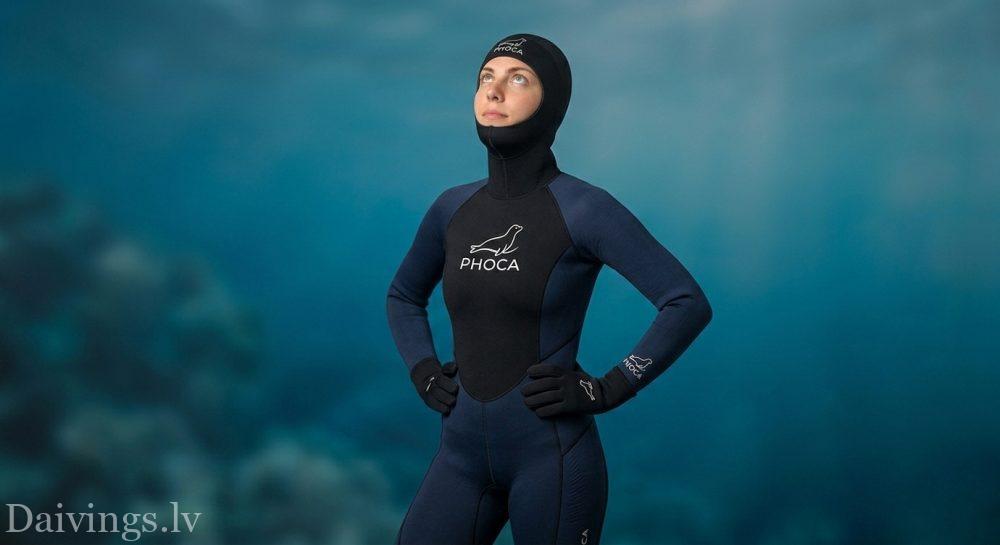
The Baltic Sea, with its changing temperatures and visibility, is a real challenge for any diver. To help you navigate the modern world of neoprene, we invited you to a conversation From Seal, who works with diving equipment on a daily basis and is well-versed in the specifics of our coastline.
What's inside a modern neoprene suit?
Gatis (Phoca): “Nowadays, neoprene is no longer just 'rubber'. If in the past the main thing was thickness, today we are talking about technologies that provide warmth without sacrificing freedom of movement. The main trend is the transition from traditional, petroleum-based neoprene to more environmentally friendly and efficient materials.”
Main materials today:
- Limestone neoprene: It has replaced petroleum products. This material is lighter, warmer and absorbs more 95% less water than the old type of materials. In the conditions of the Baltic Sea, this means that the suit does not remain heavy after coming out of the water and dries faster.
- Yamamoto #40 and #41: These are premium Japanese neoprene. They are distinguished by their incredible elasticity. Gatis states: “The measure of a good suit is its ‘memory’ – its ability to return to its original shape after being compressed to depth. Yamamoto materials do this brilliantly, ensuring longevity.”
- Yulex (natural rubber): An increasingly popular choice for those who care about the environment, it is derived from Hevea trees and is a great alternative for people with allergies to synthetic neoprene.
Optimal thickness for accessories
Baltic Sea Even in summer, it can be cold at depth ($4-8$ °C), so gloves and hats (hoods) are not just accessories, but a matter of survival.
| Equipment | Recommended thickness | The insights of Phoca |
| Gloves (5 fingers) | 5mm | The golden mean. Provides sufficient heat and allows you to operate a computer or lamp. |
| Mittens (three-fingered) | 7 mm | For extreme cold or long dives. Warmest, but less maneuverable. |
| Hood (hat) | 5 – 7 mm | The head loses heat the fastest. We recommend it for the Baltics 7 mm with a 'smooth skin' finish on the inside to prevent water from circulating. |
Gatis adds: "The most important thing is not the millimeters, but the 'seal' at the palm and face. If water leaks in there, even 10 mm of neoprene won't help."
Latest insights from leading traders and manufacturers
Looking at brands like Scubapro, Cressi and Bare, the trends for the 2026 season are clear:
- Hybrid technologies: Manufacturers are starting to combine panels of different thicknesses and densities in one suit. The chest area uses denser neoprene for protection against wind and cold, and the armpits use super-stretchy material to keep your arms in place while paddling or working underwater.
- Thermal Liners: Modern clothing incorporates infrared-reflective fabrics (e.g. Omni-Heat analogues) that retain body heat much longer than regular nylon.
- Seam sealing: The “Glued and Blind Stitched” (GBS) seams are now additionally taped with elastic tape (Powerseams), making the suit virtually waterproof.
Tip from Phoca: If you plan to dive in the Baltic Sea outside the peak summer season, choose 7 mm thick suit or even consider semi-dry a suit that combines the comfort of a wetsuit with the thermal insulation of a drysuit.
What should you consider when going to a depth of 20 meters?
Neoprene compression (compression)
At this depth, the pressure is 3 atmospheres (1 above water + 2 from the water column). This means that regular, soft neoprene will compress in half.
- Ready conclusion: “If your suit is made of low-density neoprene, in 20 meters it will go from 7 mm to a 3-4 mm thin ‘film’. The thermal insulation disappears when you need it most. That’s why we recommend high-density neoprene suits, which are more resistant to pressure.”
Thermocline – temperature difference
In the Baltic Sea in summer, the surface temperature can be +18°C, but at a depth of 20 meters the temperature drops rapidly to +4°C or +6°C.
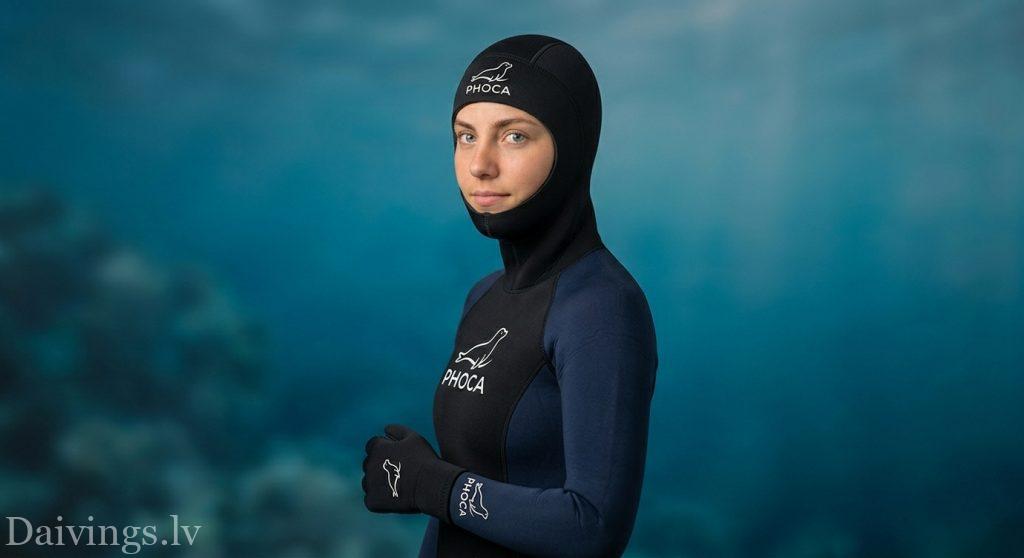
- Recommendation: Even if it's hot on the shore, 20 meters without 7 mm suit and mandatory hoods Rapid cooling will occur. At this depth, we at Phoca recommend using a suit with an integrated hood or a very dense separate hood to prevent the “cold water collar” effect.
Gloves and maneuverability
Fingers freeze faster at depth.
- Optimal choice: 20 meters would be ideal 5 mm mittens with a double cuff. If you plan to stay there for more than 20-30 minutes, consider 7 mm three-finger glovesThis is essential so that you can still safely operate your equipment (inflate your life jacket, control your computer).
Expert checklist for a 20m dive:
- Costume: 7 mm (preferably with internal thermal coating).
- Downward: A 2-3 mm neoprene vest under the base layer will provide additional 30% warmth to the core (torso).
- Boots: At least 5 mm with a hard sole, because the feet move the least and cool down first.
Gatis (Phoca): “Remember, 20 meters is where the fun ends and the serious diving begins. Your equipment should work for you, not against you.”
Find out more about For Phoca products


