
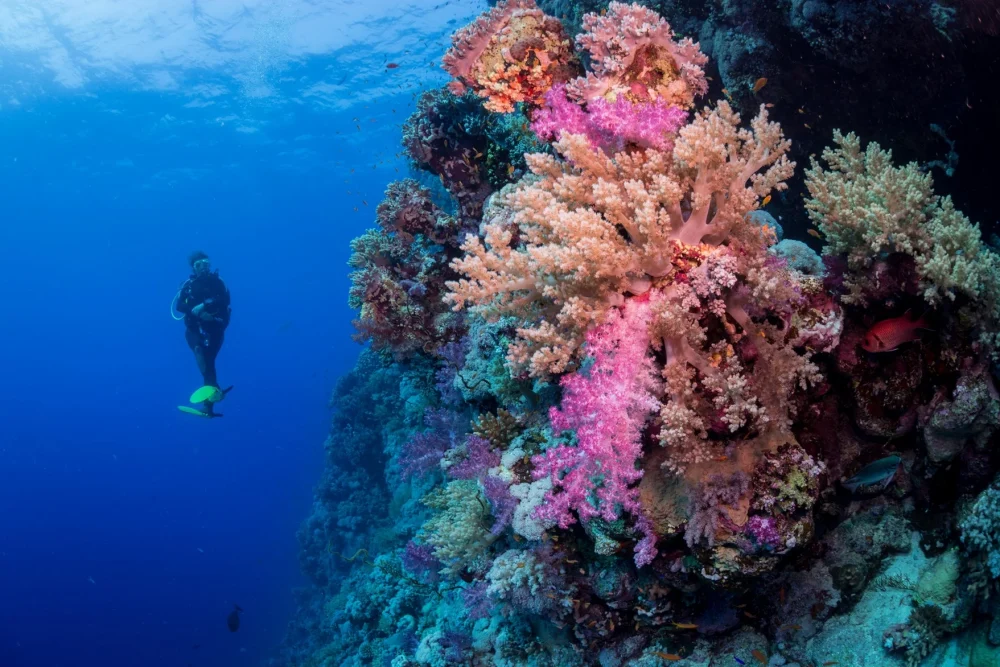
The Maldives are often called the jewel of the Indian Ocean, promising tourists an endless dream of turquoise water and white sand. However, beneath this paradise surface lies a complex reality where luxury tourism, ecological challenges and strict Islamic religion collide. Daivings, one of the main tourist attractions, is taking place in the Maldives on the border of conservation and cultural conflicts.
Underwater world and coral reefs
The Maldives boasts one of the largest coral reef systems in the world. The underwater world here is home to hundreds of coral species and countless magnificent ocean inhabitants. Divers can encounter both protected sea turtles, whose population has declined dramatically over the past century, and rays and even sharks. Coral reefs not only delight tourists, but also serve as a natural shield, protecting the islands from the powerful waves of the Indian Ocean.
Artificial islands and the ecological price
While the diving remains spectacular, the Maldives' environment faces serious threats. Over the past decade, millions of cubic meters of sand have been dredged from the ocean floor to expand existing islands or create entirely new ones, artificial islands for resort constructionThis process, called “land reclamation,” causes irreversible damage to the ecosystem.
Huge dredgers suck up sand from the depths, creating clouds of sediment that spread for tens of kilometers. This sediment settles on coral reefs, depriving them of light, causing them to lose their color and die. While marine biologists are trying to move corals before work begins on some projects, thousands of others are buried under the sand. Local residents report dead fish and rays washed ashore as a result of the work.
Daivings in a Muslim country – rules and restrictions
Maldives is an Islamic republic., which is governed by Sharia law, and this directly affects the tourist experience. The difference between luxury resorts and locally inhabited islands is huge:
- Resort “bubble”: Private resorts, which often occupy entire islands, allow tourists to enjoy a Western lifestyle of drinking alcohol and wearing swimsuits. Resorts often hire staff from other countries to serve alcohol, as local residents are prohibited by law from having any contact with these beverages.
- Local islands: If you choose to dive from the local islands, be aware of the strict regulations. Outside of designated “bikini beaches,” swimwear is prohibited, and tourists must cover their shoulders and knees. There have been cases of tourists being detained for inappropriate clothing in public places.
Social and security situation
Religious radicalism is on the rise in the country, creating tensions between locals and the tourist crowds, who number three times the local population. The capital, Male, is one of the most densely populated places in the world, where residents face skyrocketing living costs and overcrowding while luxury resorts flourish.
In addition to its environmental problems, the Maldives is also struggling with a waste crisis. Much of the waste from resorts and inhabited islands is transported to the artificially created Thilafushi Island, or "garbage mountain", where tons of plastic and other trash are blowing in the sun, posing a pollution threat to the surrounding waters.
The Maldives offers a world-class diving experience, but it is increasingly important for tourists to understand that this splendor comes with an ecological and social price. A trip to this land is not just about relaxing in turquoise water, but also about encountering a strong religious culture and a country struggling for its future in a changing world.
Daivings in the Maldives, compared to diving in Egypt, Malta or Cyprus
Diving in each of these destinations offers a drastically different experience, determined by both geographical location, historical heritage and ecosystem. Here is a comparison to help you choose the right one for you:
Maldives – Ocean majesty and exoticism
The Maldives is a destination for the “big fish.” Unlike the Mediterranean, diving here mainly takes place in open ocean currents.
- Main advantage: The opportunity to see giant sea creatures – mantas, whale sharks, reef sharks and turtles – very close and in large numbers.
- Water: Warm all year round (28–30°C), which allows you to dive even in just shorts and a T-shirt.
- Type: Mainly drift diving along coral walls and atolls.
- Disadvantages: High costs, long flight and relatively few historic wrecks.
Egypt (Red Sea) – Coral Garden of the World
The Red Sea is considered one of the best diving destinations in the world in terms of price-quality ratio.
- Main advantage: Incredibly beautiful and healthy soft corals, as well as a huge variety of fish species in one place. The world's most famous wreck is also located here - SS Thistlegorm.
- Water: Clarity (visibility often exceeds 30 m) and accessibility from both shore and “safari” ships.
- Type: Suitable for all levels – from calm reefs for beginners to deep walls for experienced divers.
- Disadvantages: The most popular places can be crowded with tourists.
Malta – A paradise of wrecks and caves
Malta and its sister island of Gozo offer a completely different aesthetic – the main thing here is not coral, but terrain and history.
- Main advantage: The best place in Europe for diving on wrecks (sunken warships, airplanes, ferries) and unique natural formations, such as: Blue Hole.
- Water: The Mediterranean Sea is characterized by bluish, very clear water, but in winter it is cool (around 15°C), a thicker wetsuit is required.
- Type: Shore and cave diving. Malta is a popular spot for technical divers.
- Disadvantages: There are no gorgeous corals and tropical fish; the ecosystem is “quieter”.
Cyprus – A combination of history and peaceful relaxation
Cyprus offers comfortable diving with an emphasis on one specific world-class site.
- Main advantage: Wreck Zenobia – a huge cargo ferry that sank in 1980 and is still full of trucks. It’s a must-see for any wreck lover.
- Water: The longest diving season in the Mediterranean; the water remains warm until November.
- Type: Easy diving, ideal for taking courses and for those who want to combine diving with a beach holiday.
- Disadvantages: Fewer fish than in Egypt or the Maldives; outside the main wrecks, the underwater landscape can be monotonous.
Comparison summary
| Criterion | Maldives | Egypt | Malta | Cyprus |
| Main attraction | Sharks, stuff | Corals, fish colors | Wrecks, caves, rocks | Wreck of the Zenobia |
| Complexity | Medium/High (currents) | Low/Medium | Medium (depth, caves) | Low |
| Water temperature | Tropical (warm) | Warm | Moderate (cool in winter) | Moderate |
| Cost | High | Low/Medium | Medium | Medium |
Would you like me to help you choose a route to one of these places? Write to us


