
The article was written together with Valters Preimani, MSDT (Master Scuba Diver Trainer).
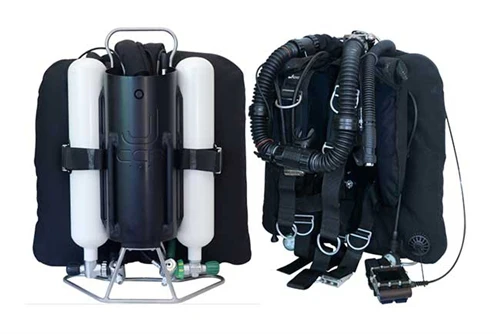
Today I want to address a topic that often raises questions for both my students and experienced divers: nitrox in a rebreather/ closed-loop rebreather (CCR) – what it looks like versus open-cycle scuba. It is a crucial step in understanding how we can dive deeper and longer using modern technology.
The biggest difference is how the rebreeder is managed. partial pressure of oxygen (PO2)Open-cycle diving (Paddy in the OWD course) with nitrox means you are breathing a gas with a fixed percentage of oxygen (e.g. 32%). Your PO2 increases as you go deeper. For example, with 32% nitrox at a depth of 20 meters your PO2 is 0.96 ATA.
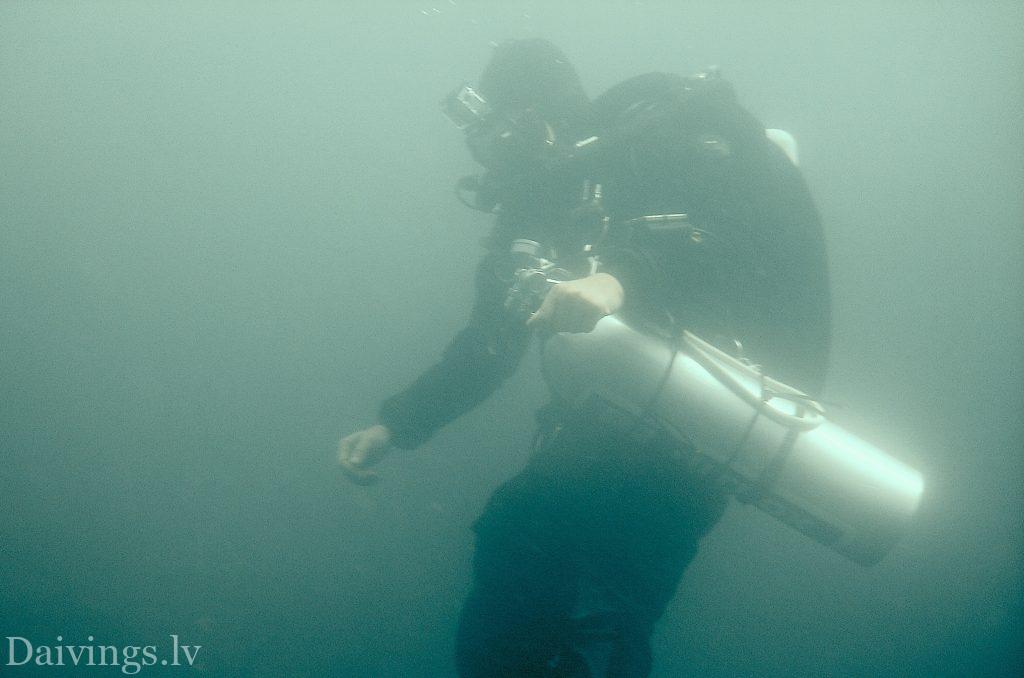 | 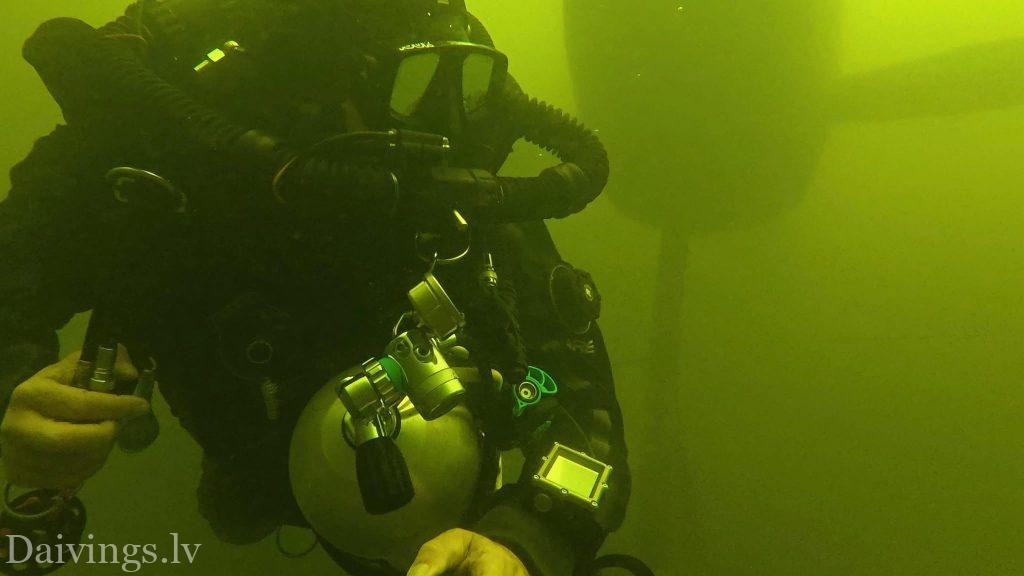 |
| JJ CCR rebreather training at Sloka quarry | JJ CCR rebreather training with BA cylinder |
But a rebreather works differently. It's like your own personal gas blender underwater. You set your desired PO2 (e.g. 1.4 ATA), and the rebreather's computer automatically adjusts the percentage of oxygen to keep that value constant regardless of depth. It's constant PO2 diving.
What percentage of nitrox is breathed at various depths if PO2 is kept constant?
Let's look at some examples using our formulas:
FO2=P amb PO2
Where P amb (absolute pressure) is 1+10 depth
PO2 = 0.9 (Decompression Setpoint)
This setting is commonly used during decompression stops to effectively get rid of nitrogen.
- 4 meters (1.4 ATA): The rebreather adds oxygen to the mixture to make it 64.3% nitrox.
- 6 meters (1.6 ATA): The amount of oxygen is reduced to 56.3% nitrox.
- 20 meters (3.0 ATA): Now you are breathing. 30% nitrox.
PO2 = 1.4 (Bottom Setpoint)
This is the maximum allowable PO2 at depth, ensuring maximum efficiency without risk.
- 4 meters (1.4 ATA): You are breathing. 100% oxygen.
- 6 meters (1.6 ATA): The rebreather reduces the amount of oxygen to 87.5% nitrox.
- 20 meters (3.0 ATA): You are breathing. 46.7% nitrox.
As you can see, the percentage of gas in a rebreather dive is not fixed. It changes to maintain your set PO2. This is the biggest advantage and difference. While an open circuit diver is forced to dive with a specific mix, a rebreather diver is always breathing the most optimal gas, which maximizes time underwater and minimizes decompression obligations.
What effect does 50% nitrox have on a person at a depth of 6 meters, how does it affect physiologically?
Diving to a depth of 6 meters with 50% nitrox (EAN50) is very safe, but it is basically used decompression stopsPhysiologically, the main effect is partial pressure of oxygen (PO2) impact and significantly reduced nitrogen (N2) quantity.

This PO2 level (0.8 ATA) is perfectly safe and even lower than the maximum allowable for recreational diving (1.4 ATA). It does not cause oxygen toxicity. Therefore, 50% nitrox mix is often used as a decompression gas, as it accelerates the elimination of nitrogen from the body while maintaining PO2 levels within safe limits.
Nitrogen removal
The main physiological benefit is a significantly reduced nitrogen absorption. Air contains 79% nitrogen, while a 50% nitrox mix contains only 50% nitrogen. As a result:
- Reduced nitrogen stress: The body absorbs much less nitrogen, which significantly reduces the risk of decompression sickness.
- Faster nitrogen removal: When this mixture is used for a decompression stop, the high oxygen content promotes the release of nitrogen from the tissues, which allows for a shorter decompression time.
In practice, at a depth of 6 meters with 50% nitrox there is very minimal nitrogen uptake during descent, but when used as a decompression gas after a deeper dive, it works very effectively to remove accumulated nitrogen.
We invite you to learn rebreather diving to discover these benefits and take your diving skills to a new level. Safe diving!
Valters Preimanis
PADI MSDT Trainer Daivings.lv


