
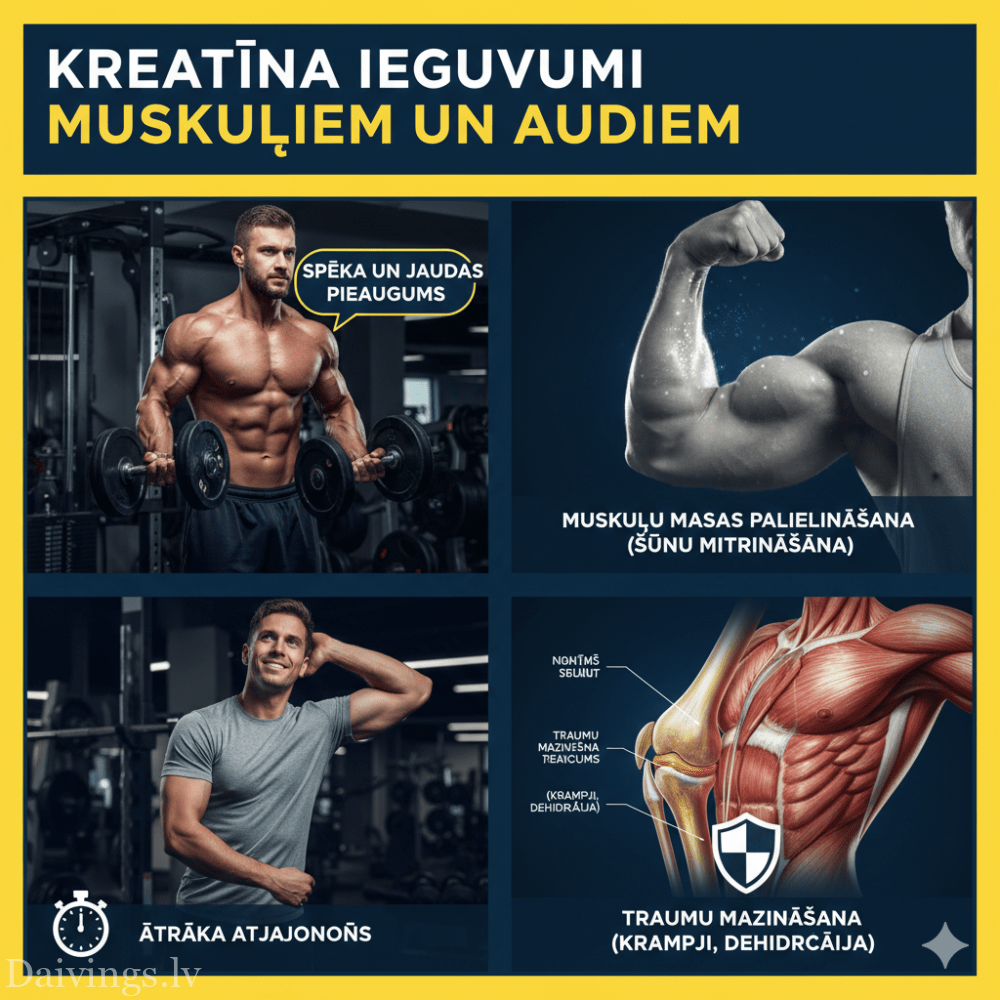
Creatine is one of the most researched and effective nutritional supplements, known for its positive effects on athletic performance, muscle growth and health. Its main function is quickly restore the main source of muscle energy — adenosine triphosphate (ATP) — during short-term, intense exercise.
Creatine benefits for muscles and tissues 💪
Creatine improves physical performance, especially during high-intensity activities with short rest periods.
- Strength and Power Gain: Creatine increases phosphocreatine stores in the muscles, which ensures rapid ATP regeneration. This allows for more repetitions with more weight or run faster over short distances, thus promoting greater gains in strength and power.
- Muscle Mass Gain:
- This increases amount of water in muscle cells (cellular hydration), which visually makes muscles bigger and fuller.
- This cell swelling can stimulate anabolic processes (protein synthesis), which promotes long-term muscle growth.
- Faster Recovery: Creatine helps reduce muscle fatigue and accelerates recovery processes after intense workouts, allowing you to train more often.
- Injury Mitigation: There are studies that show that creatine can reduce the incidence of muscle cramps, dehydration, and muscle tissue injury.
Creatine benefits for health and brain function 🧠
Creatine's effects aren't just on muscles; it also has significant benefits for overall health, especially in organs with high energy demands, such as the brain.
- Improving Cognitive Function: Creatine improves energy supply to brain cells. Research shows that it can improve memory, concentration and reaction speed, especially in cases of stress, lack of sleep or vegetarians (who consume less creatine through their diet).
- Prevention of Neurological Diseases: Creatine's ability to increase energy availability may be beneficial in the treatment of neurodegenerative diseases such as: Parkinson's and Alzheimer's diseases, in the case of, helping to reduce cell damage and slow the progression of the disease.
- Skin Health: Early research suggests that creams containing creatine may help reduce signs of skin agingsuch as wrinkles and sagging skin.
- Bone Health: May help reduce age-related skeletal muscle and bone mineral density decrease.
Creatine Monohydrate Overview
Creatine monohydrate is the most researched and popular form of creatine, scientifically proven to be effective and safe. The standard daily dose is usually 3−5 years per day.
- Operating Principle: Creatine monohydrate increases phosphocreatine stores in the muscles, ensuring rapid ATP regeneration.
- Usage: It can be used continuously if there are no medical contraindications.
Creatine monohydrate is safe, but it should be noted that it may cause a slight weight gain (from 0.9 to 1.8 kg) due to water retention in the muscles. Overdose can cause diarrhea. It is recommended to consult a doctor or nutritionist before starting to use creatine.
Some sources suggest that creatine can help prevent skin aging, which is a surprising benefit that isn't directly related to sports.
Creatine use after age 40
Taking creatine may be particularly beneficial because it helps combat age-related loss of muscle mass and strength (sarcopenia). The recommended dosage for older adults is generally the same as for younger adults – 3-5 g of creatine monohydrate per dayto maintain optimal muscle saturation. At this age, creatine not only helps maintain and increase muscle strength, but can also improve bone mineral density and cognitive functions, which are essential factors for healthy aging.
However, during periods of fasting (such as intermittent fasting or prolonged fasting), creatine supplementation may offer unique benefits. Fasting can affect muscle preservation, but creatine can help protect muscle tissue from breakdown, providing extra energy and reducing muscle catabolism. Additionally, since fasting can cause energy deficits, creatine can help maintain energy levels in the brain and muscles, which can improve cognitive clarity and physical performance by reducing fatigue during fasting. Of course, it is always advisable to consult a doctor before starting any nutritional supplements, especially during fasting or after the age of 40.


