
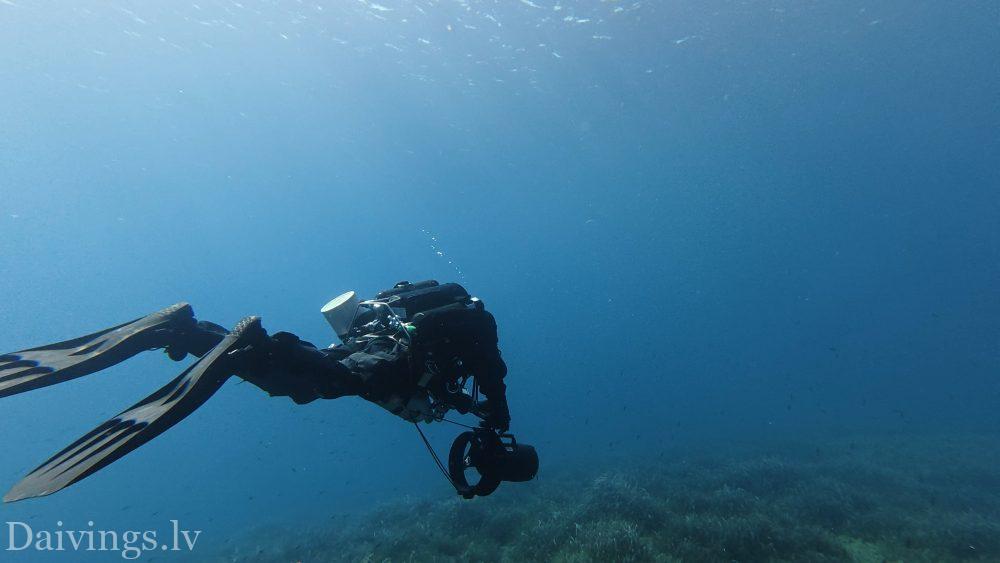
Basic diving courses provide a huge knowledge base, but as with any area of life, there are things that can only be learned through practice. Experience comes with time, and often it is the small, practical tricks that make the diving process more enjoyable, safer, and more comfortable. In this article, we have compiled 15 valuable tips that will help you solve the most common problems that divers face when improving their skills.
Ladders and flippers: how to free your hands
Getting out of the water using a boat ladder is often a challenge when you have to hold your fins in your hands. One of the easiest ways is to put the fins on your wrists like bracelets, pulling your hands through the fin straps. This way, the fins will not get in the way and your hands will be free to hold on to the ladder securely. Alternatively, you can use a special carabiner and strap to attach the fins to the D-ring of your buoyancy compensator (BCD).
Be careful with rings and jewelry
When diving, it is recommended to leave expensive or shiny rings on shore. First, fingers tend to shrink slightly in water, and there is a high risk of losing your jewelry. Second, shiny objects can attract the attention of curious fish, which can cause an unwanted “bite” on your finger. If you still want to wear a ring (such as a wedding ring), consider purchasing an inexpensive silicone band, which is safer and will not cause injury if it gets caught on ladders or other equipment.
Buoyancy control and leg position
Many divers complain that their legs are either too heavy or too light and consider buying new fins or ankle weights. However, before investing in new equipment, try changing your leg position. By bending your knees and pulling your fins closer to your body (similar to technical diving), you change your center of gravity and improve your horizontal position, or “trim.” Crossing your arms over your chest also helps you become more hydrodynamic and keeps your equipment from getting caught.
Mask and regulator after surfacing
A common mistake is to tear off your mask and remove your regulator from your mouth as soon as you surface. This can result in an unexpected wave splash in your face, causing you to choke or irritating your eyes with salt water. Keep your mask on your face and your regulator in your mouth until you are safely on board or on shore. Your regulator is designed for breathing underwater, so it is most useful in your mouth.
Modular BCDs or “Backplate and Wing”
Many experienced divers regret buying a regular BCD before learning about Backplate and Wing systems. These systems are modular, meaning that each part can be replaced or adjusted individually. They are often more durable and even cheaper in the long run because you don’t have to replace the entire BCD if one part breaks.
Jaw fatigue and regulator hoses
If you experience jaw pain after a dive, you may be biting too hard on the mouthpiece of your regulator. This is often caused by the hose pulling the regulator to one side. This problem can be solved by installing a special swivel or angle adapter between the hose and the second stage. This allows the hose to be at a more natural angle and reduces stress on your jaw.
How to open a “stuck” lamp or housing
If you have closed your camera body or dive light at home and can't open it after a flight or a change in pressure, a change in temperature will help. Place the device in cold water or the refrigerator for a short time. The materials will shrink slightly and the pressure will equalize, making it easier to unscrew the cap.
New equipment testing
Never go on a long dive trip with brand new or recently serviced equipment without checking it first. Even a simple visit to the pool will help the O-rings “set” in place. Regulators can sometimes leak a little (free-flow) after service, and it’s much easier to get this fixed at a local service center than to try to fix it on a boat in the middle of the ocean.
Equipment labeling and storage
In dive groups, several people often have similar equipment. To avoid misunderstandings, label your equipment. If the markers tend to wash away, get in the habit of placing your things in a very specific place, for example, always at the very end of the boat or near a specific support. This will help you quickly recognize your equipment even in a large crowd.
Zipper maintenance with wax
Regularly waxing your zippers will significantly extend the life of your wetsuit. Even if you rinse your suit, salt residue can make your zippers stiff. Use a special zipper wax or even regular candle wax to lubricate the mechanism. After applying the wax, zip and unzip the zipper several times to spread it evenly.
O-ring replacement tricks
When replacing O-rings, avoid using sharp metal tools that can scratch the surface. Instead, try pressing the seal on both sides and pushing it upwards until a loop forms that you can easily grab. When installing new seals on threads, you can use a small plastic tube or electrical tape to protect the rubber from the sharp edges of the threads.
Carabiners as an auxiliary tool
A carabiner (bolt snap) can be useful not only for attaching equipment. If you are wearing thick gloves and have difficulty gripping a thin rubber band or cord (for example, on a buoy), use a carabiner hook to hook and pull the necessary element. It's a little trick that saves time and nerves underwater.
Socks under diving boots
If your diving boots are chafing your feet, regular thin socks can solve the problem. In a humid environment, skin becomes sensitive and blisters heal very slowly underwater. Thin socks provide an extra layer of protection and reduce friction, allowing you to enjoy your dive without discomfort.
Daisy Chain knot for long cords
If you are using reef hooks or other long lines without a spool, learn the Daisy Chain knot. This allows you to pack a long line compactly so it doesn’t tangle, and when needed, you can untie it with a single hand movement by simply pulling on the end. It’s an indispensable technique for keeping your pockets or gear organized.
Conclusion
Diving is a continuous learning process. These little tips may seem like small things, but overall they make a significant difference in your comfort level. Remember, the best way to become a better diver is through regular practice and sharing your experiences with other like-minded people. See you underwater!


