
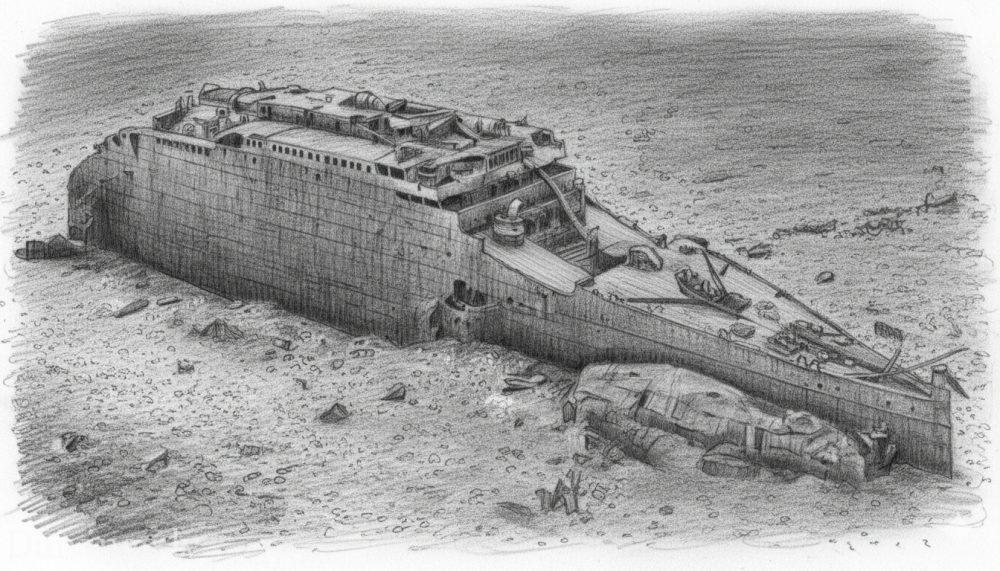
The discovery of the Titanic in 1985 opened a new chapter in maritime history, but it also created unprecedented legal and ethical challenges. From the moment Dr. Robert Ballard first saw the legendary ship, an international battle began for the rights to the wreck and its artifacts. This article explores the complex legal architecture of ownership of the Titanic and why the ship remains one of the most debated objects in the depths of the world's oceans.
Original legal status and “findor’s” rights
When Ballard discovered Titanic, his first thought was to protect the site by obtaining title to the wreck through the court system. Under 17th-century Admiralty law, which operated on the high seas, the ship was considered abandoned property. The court's initial ruling recognized the "finders-keepers" principle, but with one important proviso: to maintain ownership, the finder had to physically perform salvage work (salvage), highlighting at least one item and regularly returning for new ones.
RMS Titanic Inc. and Salvage Status
Contrary to Ballard's wishes to keep the wreck intact as a memorial, RMS Titanic Inc. took a different route. They removed the artifacts and were declared “salver in possession” by the court. This legal status not only gave them exclusive rights to explore the wreck and remove the artifacts, but also imposed a legal obligation to continue this process and care for the recovered collection according to museum standards.
Indivisibility of the collection and the consequences of bankruptcy
Over the decades, more than 5,500 artifacts have been unearthed, ranging from delicate porcelain vessels to a 15-ton hull fragment. However, legal regulations dictated that this the collection must be preserved as a single wholeThe crisis began when the parent company of RMS Titanic Inc. filed for bankruptcy. This created the risk that the collection, valued at more than $20 million, could be auctioned off piecemeal to private collectors, thus disappearing from public view forever.
The international battle for the home of artifacts
Two main interests emerged during the bankruptcy proceedings. On the one hand, a coalition of British museums wanted to return the artifacts to their homeland in Belfast, to ensure they would remain in the public domain forever. On the other hand, the company's shareholders and investors fought to retain control of the collection. The court's decision ultimately allowed the collection to remain in the hands of the shareholders, who raised concerns about its future and possible entry outside US jurisdiction, such as in China.
Physical deterioration and the impact of tourism
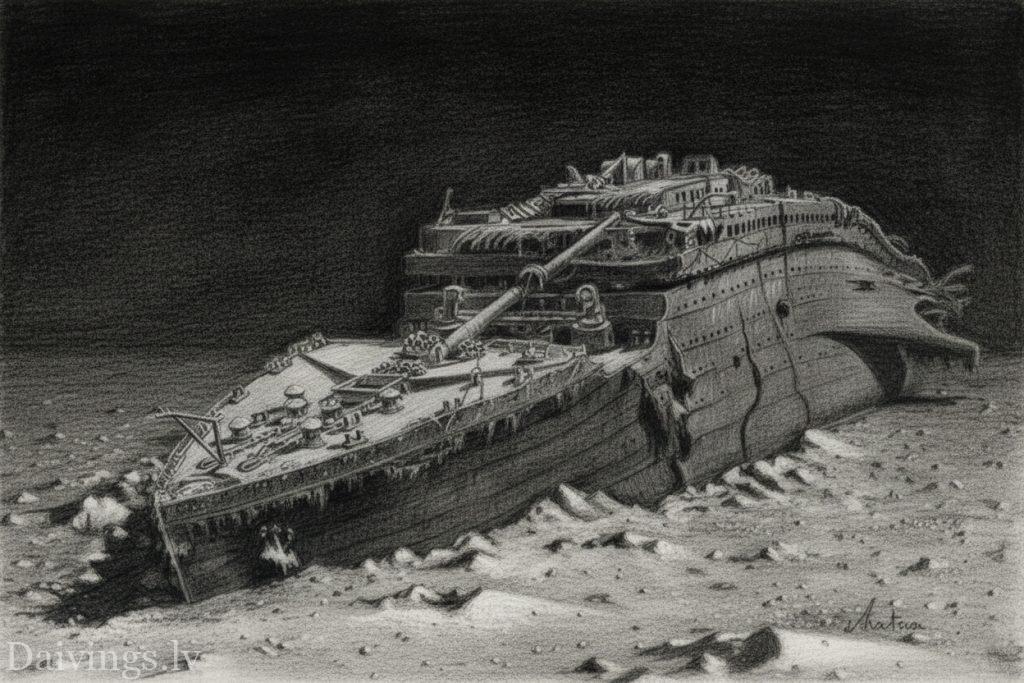
While the lawyers argue about the papers, myself the wreck suffers from physical impact. The lack of international protection agreements has contributed to the boom in expensive tourist expeditions. Each submarine landing leaves a mark - fresh damage and rust are visible on the ship's deck where the submersibles have landed. Ballard emphasizes that without proper security and a legally established protection mechanism, the Titanic is slowly turning into an underwater dump.
The human factor and the rights of descendants
The descendants of the victims are often forgotten in the debate over ownership. Many families still hold on to personal items – letters, tools and photographs – that are the only tangible link to the deceased. From a legal perspective, objects found on the ocean floor are considered artefacts, but for the families they are memorials. The question of whether someone has the right to buy an item, which belonged to a specific person at the last moment of their life, remains open and ethically burdensome.
Future Vision: Underwater Museum and Technology
The solution to protecting the Titanic could be “telepresence” and virtual reality. Robert Ballard proposes replacing the physical removal of artifacts with remotely controlled robotic systems that would serve as virtual guards. This would allow for the world to see the ship in its natural environmentwithout physically touching it. Technologies that allow access to the interior of a ship are now available, and could be used to create the first global underwater museum, where the entrance would be digital but the historical evidence would remain intact.
In conclusion, the Titanic has become “canary in the coal mine"regarding that, How will humanity deal with historic shipwrecks in the future?There are millions of sunken ships in the world's oceans, and the legal precedent of the Titanic will determine whether we consider these places a source of profit or an inviolable heritage of human history and memory.


