
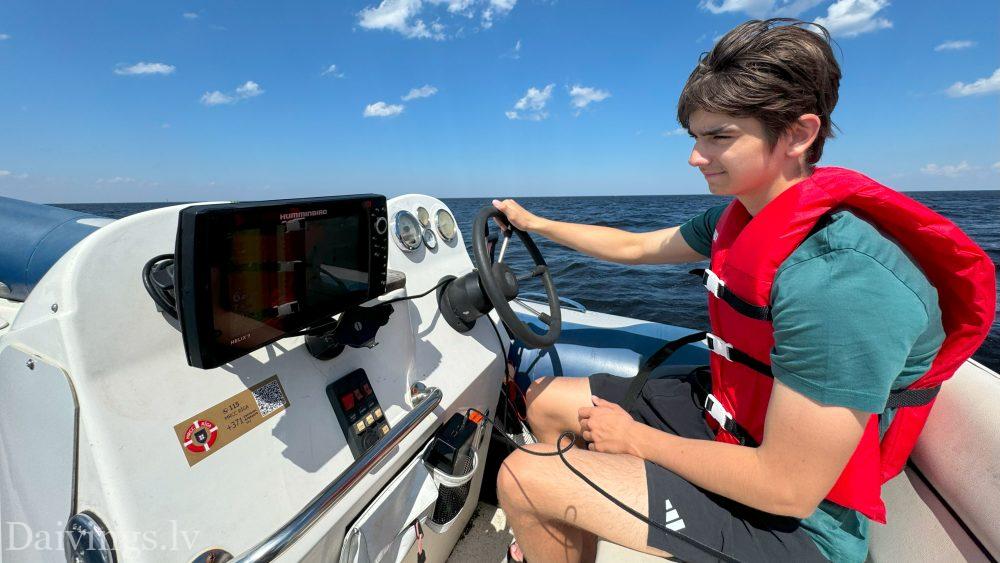
Tempting waters are fraught with risk for the unwary
Latvia is rich in water – picturesque rivers meander through forests and meadows, countless lakes sparkle in the sun, and the Baltic Sea coast beckons with its vastness. These natural resources have become a popular place to relax both on hot summer days and at other times of the year, when anglers, boaters and nature lovers seek peace and refreshment. However, behind this idyllic scene lies a harsh and unchanging reality – year after year Latvia ranks sadly high in the European Union in terms of the number of drownings, explains and tells the former Firefighter Valters Preimanis.
Statistics are relentless.
Every year, approximately 100 to 130 people lose their lives in Latvian water bodies. Data from the Center for Disease Prevention and Control (CDC) shows that 94 people drowned in 2022, but in 2023 this number again exceeded a hundred, reaching 111. The beginning of this year has not brought any improvements either – the State Fire and Rescue Service (SFRS) has already pulled several drowning victims from the water. These tragic numbers are not just statistics; behind each of them stands a human life, family pain and irreparable loss. One of the main reasons for this gloomy picture is the lack of public awareness about safe recreation on the water.
Unfortunately, despite the consistently high and regularly publicized drowning statistics, the behavior of many people suggests a low perception of personal risk or even a disregard for it. Risky behavior, such as not wearing life jackets on boats or swimming under the influence of alcohol, is still common. This indicates a significant gap between the objective danger, as evidenced by the numbers, and the subjective assessment of risk. The erroneous assumption seems to prevail:It won't happen to me.“.
This optimistic bias, combined with a lack of understanding of the real risks – the effects of cold water, the strength of currents, sudden health problems – and possibly outdated myths about the inconvenience of life jackets, creates a dangerous cocktail. Therefore, it is vital not only to inform, but also to influence this perception of risk, emphasizing that a life jacket is not just a legal requirement or a cumbersome accessory, but a potential lifesaver in a critical moment. Ignoring it can lead to tragedy, as concrete events in Latvian waters also painfully demonstrate.
Tragic reality as a warning
May 1st of this year was marked by a tragedy on the Daugava near Rumbula, which deeply shook not only the families involved, but the entire society, serving as a harsh reminder of the inexorability of the water element and the critical importance of safety measures. The boat, which contained three anglers – Jānis Gailītis, his childhood friend and his mother’s husband – set out to open the fishing season, as had been done for years. However, opposite Rumbas Street 88, the boat rocked dangerously and quickly filled with water. The possible cause could have been both the instability of the boat itself and the strong current, which was probably caused by the operation of the HPP locks nearby.
The situation developed rapidly. Two of the men on the boat managed to escape – one reached the shore under his own power, the other was pulled out of the water by rescuers. However Janis Gailitis, fighting the cold water and the current to reach safety on shore, disappeared under the water. His last words, remembered by eyewitnesses, were full of despair: “I can’t…”.
This tragedy is not just a story of an unfortunate coincidence. It is a story of how one, possibly preventable, accident has widespread and painful consequences. Jānis's family lost their breadwinner and loved one, and the children lost their father. Although available news sources do not directly confirm or deny the use of a life jacket in this particular case, information indicates that Jānis Gailītis was not wearing a life jacket. This fact, if true, makes the tragedy even more poignant, because it was the life jacket that could have given the decisive chance to survive. Similar cases, when anglers or boaters without vests fall into cold water and are unable to save themselves, are unfortunately not uncommon. Jānis Gailītis's story is a tragic reminder that ignoring safety measures on the water can cost the most.
A life jacket is a lifesaver
A life jacket is one of the most important personal safety equipment when on the water. Its primary function is to provide positive buoyancy, keeping a person above the surface of the water. However, its importance goes far beyond simply providing buoyancy. Quality life jackets are designed to turn a person in a prone position, face up, thus ensuring that the airway – mouth and nostrils – remain free for breathing even if the person has lost consciousness, is stunned after a fall or impact, or has sustained injuries. This function is absolutely critical in situations where there is a sudden fall into the water, such as when a boat capsizes, collides with an obstacle, or a person experiences cold shock or convulsions.
Modern the market offers a wide range of life jackets, which differ in their design, buoyancy and intended use. It is important choose the most suitable vest for the specific situation and user:
- Buoyancy aids (up to 50 N): These jackets are not technically classified as life jackets in the full sense of the word. They provide additional buoyancy but are not designed to guarantee the airway of an unconscious person or to turn them into the correct position. They are suitable for good swimmers in calm waters, close to shore, or for specific water sports where maximum freedom of movement is required. Examples include the Besto Fisherman 50N or the Aquarius Universal Standard 50N.
- Life jackets (100 N): These vests already belong to the class of lifesaving equipment and are suitable for use in inland waters, even for people who cannot swim, as long as the water is relatively calm. They often have a special collar that additionally supports the head and helps keep it above water. This category includes, for example, the Marinepool 100N or the Seago Waveguard Junior 100N children's vest.
- Life jackets (150 N and above): These are the highest safety class vests, designed for use in open or rough waters. They provide sufficient buoyancy to turn an unconscious person face up and keep the airway at a safe height above the water. Such vests often meet stricter international requirements (such as the SOLAS Convention for commercial ships). Examples are the Rapala Classic 150N or the Baltic Winner Auto 165N.
- Automatic/Inflatable life jackets: These vests are especially popular among fans of active activities, such as fishing or sailing, because until the moment of activation they are very compact, light and do not restrict movement. They inflate automatically when they come into contact with water (usually within a few seconds), or they can be activated manually by pulling a special cord. They often have high buoyancy (150N or more). It is important to remember that these vests require regular maintenance - manufacturers usually recommend having a certified dealer check the mechanism once a year to make sure it is working and replace the activation elements if necessary. The common myth that heavy rain can accidentally activate an automatic vest is usually not true, because the mechanisms are designed to react to immersion in water, not to raindrops.
- Special fishing vests: Recognizing the specific needs of anglers, manufacturers offer vests that combine safety features with practicality. They are often equipped with numerous pockets for fishing equipment, made of durable materials and designed to maximize the freedom of movement necessary for casting or handling fish. Some of them can also provide additional thermal insulation in colder weather. Examples include the Baltic Fisherman or the Besto Fisherman.
Despite the availability and effectiveness of modern vests, there are still several myths that discourage people from using them:
- Myth: Vests are uncomfortable and in the way. Truth: As already mentioned, modern technology has created very comfortable solutions. Automatic vests are practically not felt until the moment of inflation, and even solid-filled vests have become much more ergonomic and lighter than the old cork “block” models. The claim about discomfort is largely an outdated prejudice.
- Myth: I'm a good swimmer, I don't need a life jacket. Truth: Even an Olympic champion can find themselves in a situation where their swimming skills are not enough. Cold water can cause shock and rapid cooling of the body, unexpected muscle cramps can paralyze movements, sudden health problems (such as heart problems) can occur at any time, and hitting the side of the boat or the water during a fall can cause loss of consciousness. In such situations, a life jacket is the only salvation that keeps you afloat and allows you to wait for help or regain your ability to act.
- Myth: It is enough to have a life jacket on the boat, in an easily accessible place. Truth: Accidents on the water often happen suddenly and unexpectedly. When a boat capsizes or a person falls overboard, there may be a catastrophic lack of time to find and put on a life jacket on the boat. Wind or currents can quickly move the boat away from the person who has fallen into the water. The only sure way for a life jacket to perform its function is if it is put on and properly fastened before entering the water or while in the boat.
For a life jacket to be truly effective, it is important not only to use it, but also to choose and care for it correctly. The jacket must be the right size – a jacket that is too big can slip off, especially for a child, but too small can restrict movement and not provide sufficient buoyancy. For children's jackets, a collar to support the head and straps that go between the legs to prevent the jacket from sliding up are especially important. You should make sure that it complies with safety standards (look for EN ISO 12402 or equivalent marking, as well as the CE conformity mark). The jackets should be visually inspected regularly for damage to the straps, fabric, and fasteners. After use in salt water, the jacket should be rinsed with fresh water and dried in a shaded place, not in direct sunlight. Inflatable jackets require regular professional maintenance.
Technological advances have made life jackets a convenient and highly effective safety measure. The main obstacle to their wider use is no longer the properties of the vest itself, but rather people's attitudes, habits and risk perception. The choice not to wear a vest on the grounds of inconvenience is no longer justified today.
The power of law and common sense, rules and recommendations in Latvia
Water safety in Latvia is regulated by several regulatory acts, primarily the Cabinet of Ministers' "Regulations on the Traffic of Vessels in Inland Waters" and the "Regulations on the Safety of Recreational Vessels". These regulations define a life jacket as an industrially manufactured vest intended to keep a person afloat.20
The legislation establishes several mandatory requirements:
- Number of vests: Any vessel (boat, cutter, recreational craft) must provide a life jacket for each person on board. The captain of the vessel is responsible for fulfilling this requirement and the safety of all passengers in general.
- Mandatory wearing: The law clearly states that children under the age of 12 must wear a life jacket of the appropriate size when on a boat. Unfortunately, this requirement is often violated in real life. It is also mandatory for people who ride a jet ski, sail with a surfboard, engage in water skiing or similar water sports to wear a life jacket.
- Other requirements: For recreational craft, there are more specific requirements for life jackets, such as CE marking, reflective elements, ship name marking and a minimum buoyancy of 150 N for persons weighing more than 32 kg. Most boats (except rowing boats shorter than 4 meters) are also required to have at least one lifebuoy or horseshoe.
Failure to comply with these regulations, for example, if there are not enough life jackets on the boat for the number of people or if a child is not provided with a life jacket, may result in a fine ranging from 50 to 280 euros. The State Police and other responsible institutions carry out periodic inspections on the waters to monitor compliance with these regulations.
However, there is a significant difference between the letter of the law and the advice of safety experts. While the law requires that everyone on a boat have a life jacket available, it does not explicitly require all adults to wear one in a typical boating or fishing situation (except for water sports). Some sources interpret the rules more strictly, considering that having a life jacket on board is mandatory. This legal nuance creates a “gray area” where a person can formally comply with the law by keeping a life jacket on the boat, but fail to comply with safety principles by not wearing one. Unfortunately, there are known cases where life jackets are on the boat but are not available at the time of an emergency, for example, locked in a storage room.
Meanwhile, the State Fire and Rescue Service (SFS), the Center for Disease Prevention and Control (CDC), the Emergency Medical Service (EMS), the “Swim Safely” association, and the Latvian Swimming Federation are much more categorical in their recommendations and regular information campaigns (“The Price of Recklessness. Don’t Jump!”, “Be Water Safe!”, “Safety on Water”) – they strongly recommend that everyone in a boat or other watercraft always wear a life jacket, regardless of age or swimming ability. The Latvian Maritime Administration also regularly informs the public about safety issues on the water. There are also discussions about improving the regulatory framework, for example, raising the age threshold for mandatory wearing of a life jacket for children under 18, as proposed in the Drowning Prevention Strategy.
This situation highlights the dilemma between formal enforcement of the law and real safety. Relying only on the legal minimum can be misleading and dangerous. Common sense and clear advice from experts dictate the need to make a more responsible decision and wear a life jacket whenever you are on the water in a watercraft. The letter of the law may protect you from punishment, but only wearing a life jacket can save your life.
Drowning statistics in Latvia, analysis
Latvia's drowning statistics are alarming and unfortunately consistently high year after year. As already mentioned, water takes an average of 100 to 130 lives each year. Compared to other European Union countries, Latvia regularly ranks among the leaders in terms of the number of drownings per 100,000 inhabitants, with this indicator several times higher than the EU average.
Number of drownings in Latvia (2019-2023)
| Year | Total number of drownings (SPKC/VUGD) | Drowned during the swimming season (VUGD, 15.05.-15.09.) | Rescued during the swimming season (VUGD, 15.05.-15.09.) |
| 2019 | ~104* | No exact data | No exact data |
| 2020 | 129 | 72 | No exact data |
| 2021 | 100 | 58 | No exact data |
| 2022 | 94 | 48 | 63 |
| 2023 | 111 / 116 ** | 50 | No exact data |
*Calculated based on data from the 2020 report 2, which reported an increase of 24% compared to 2019.
**There are minor differences in data sources (SPKC and VUGD) for 2023.
Analyzing the data in more depth, certain risk groups and trends emerge:
- Gender and age: Men drown significantly more often – approximately three out of four drowning victims are men. The most at-risk group are men of working age, from 35 to 64 years old. However, other age groups are not spared from tragedies either. Particularly worrying are the data on children (0-14 years old), among whom drowning is one of the most common external causes of death. Seniors (over 60 years old) also belong to the high-risk group.
- Seasonality and locations: Although most accidents occur in the summer months, when people are actively relaxing by the water, the danger exists all year round. The risk associated with ice fishing increases during the cold season. Interestingly, most fatal accidents occur not in well-maintained and supervised official swimming areas, but in lakes, rivers, backyard ponds and even quarries. This indicates the danger associated with swimming or boating in unfamiliar or unsuitable places.
- Rescue operations: The statistics of the State Fire Service show not only the number of deaths, but also the number of rescues. Every year, rescuers pull dozens of people from the water who are in serious danger. This means that the real number of dangerous situations is much higher than the number of fatalities, and many tragedies are prevented at the last moment.
However, when analyzing the available official statistics, a significant shortcoming is revealed – the lack of data detail. The reports published by both the VUGD and the SPKC usually provide the total number of drownings, a breakdown by gender, age group and region, but they lack specific information about the circumstances of the accidents. There is no precise data available on how many people drown directly from boats or other watercraft, and, which is especially important in the context of this article, how many of them were or were not wearing life jackets at the time of the accident. The VUGD annual reports, for example, for 2023, analyze fire statistics in detail, but in the section on rescue operations on water, they are limited to the total number of rescued and deceased.
This lack of detailed information creates so-called “statistical blind spots”. Without accurate data on specific accident scenarios (e.g. boat capsizing, falling overboard) and safety equipment usage patterns in these cases, it is difficult to objectively assess the true scale of the problem for certain risk groups (such as boaters and anglers) and to develop the most effective preventive measures. Policy-making and resource allocation for improving safety could be more targeted if more in-depth analysis were available. This problem has also been highlighted by non-governmental organisations, such as the association “Swim Safely” and the Latvian Swimming Federation, calling for improved data collection and analysis. Despite these shortcomings, the available aggregate data and expert opinions clearly indicate the critical role of life jackets in improving safety.
Practical tips for boaters and anglers
In order for relaxation by and on the water to bring only positive emotions, it is important to follow the basic principles of safety. A life jacket is an integral part of these principles, but safety is a complex measure that includes both proper preparation and responsible behavior. Based on the recommendations of the VUGD, SPKC, the association "Swim Safely" and other experts, here are the most important tips:
General safety principles on the water:
- No to alcohol: It is strictly forbidden to consume alcohol or other intoxicating substances before entering the water or while on a watercraft. Alcohol reduces reaction time, coordination, judgment, and cold tolerance, significantly increasing the risk of an accident.
- Never alone: Avoid swimming or boating alone. Always have someone with you who can help in an emergency or call for help. If you go into the water alone, at least inform those on shore of your plans and your estimated time of return.
- Assess the circumstances: Check the weather forecast before going into the water. Do not go boating or swimming in strong winds, storms, or after dark. Explore the body of water – its depth, bed, possible currents, and obstacles. Never jump into the water, especially in unfamiliar areas, without making sure of the depth and safety of the bed.
- Overheating and cold: In hot weather, enter the water slowly to allow your body to gradually adjust to the temperature difference and avoid heat shock or muscle cramps. Remember that even in summer, the water can be cold in deeper layers.
- Don't overestimate your abilities: Be realistic about your swimming and boating skills. Don't take unnecessary risks trying to outdo yourself or others.
- Child safety – priority No. 1: Children should be supervised at all times near water, never leaving them unattended for a moment. Even a child who is a good swimmer can suddenly become frightened or overestimate their strength. Children should always wear an appropriately sized life jacket when in a boat or near water.12 Explain safety rules to children. If you have a pond or pool at home, make sure that children cannot access it without supervision. Remember that inflatable rings, mattresses and armrests are just toys, not safety equipment.
- Equipment and boat: Make sure the boat is in good condition and not overloaded. In addition to life jackets for each passenger, the boat should also have other mandatory equipment, such as a water scoop, anchor, lifebuoy (if required by regulations), and communication equipment (such as a charged mobile phone in a waterproof package).
- Action in the event of an accident: If you fall into the water, try to stay calm and conserve your energy. Call for help and try to draw attention to yourself. If possible, swim to shore or the nearest floating object. Call 911 immediately if you see someone in distress or are in distress yourself. First aid skills can be life-saving.
Specific tips for boaters:
- Everyone on the boat must remain seated. It is not recommended to stand up or lean over the side of the boat, especially during the journey, as this may cause the boat to capsize.
- In areas with strong currents, try to keep the boat parallel to the flow of the current to maintain control.
- Be careful of underwater obstacles – rocks, tree trunks, shoals.
- Observe navigation rules, especially regarding right-of-way, speed limits and prohibited areas.
Specific tips for anglers:
- A life jacket is especially important for anglers, as they often go out into the water alone, spend a long time in a boat, often in bad weather or cold weather, when they are wearing thick and heavy clothing that drags them down when they get wet.
- In cold weather, consider using a special floating suit or life jacket with increased buoyancy (at least 100-150 N), which will be able to keep not only you but also your heavy, wet clothing afloat.
- If you are using a motorized boat, use a safety lanyard (kill switch) attached to your wrist or vest that automatically shuts off the engine if the operator falls overboard. This prevents the boat from spinning around without control, endangering anyone who has fallen into the water.
- Choose a modern, functional fishing vest that provides both safety and convenience, such as with plenty of pockets for equipment.
Remember that water safety is not just about one specific activity or item. It is a complex approach that includes planning, proper equipment, responsible behavior, knowledge, and the ability to assess the situation. A life jacket is a critical element in this system, but it works most effectively when other safety principles are also followed. A responsible attitude towards safety is the best way to ensure that your water recreation brings only positive emotions.
Only responsible recreation saves lives
Latvian waters offer wonderful recreational opportunities, but they can also be treacherous. The grim statistics on the number of drownings year after year remind us of the risks associated with being on the water. In this context, a life jacket is not just a recommendation or a legal requirement - it is a vital safety measure that can make the difference between life and death.
As the analysis shows, modern life jackets have become comfortable, functional and adapted to various needs, including for anglers and lovers of active recreation. Myths about their inconvenience are outdated. The law sets the minimum requirement – a vest must be available to every person on a boat, and children must wear one. However, safety requires more than formal compliance with the law. It requires a conscious decision in favor of wearing a vest whenever you are on the water in a watercraft.
The tragic story of Jānis Gailītis is a painful reminder of how quickly and irreversibly the situation on the water can change, and how devastating the consequences of seemingly minor carelessness or ignoring safety requirements can be. Every choice in favor of safety – wearing a life jacket, not drinking alcohol, not overestimating your strength, looking after your children – is an investment in preserving your own life and the lives of your loved ones.
Ultimately, personal responsibility is the key to a safe vacation. Let's not rely on luck or the false assumption "It won't happen to me.". Let's enjoy the beauty of Latvia's nature and the opportunities provided by the waters, but let's do it wisely, thoughtfully and responsibly. Only in this way can we ensure that recreation by the water brings joy and pleasant memories, and does not turn into tragedy."


