
In-depth guide to Primary Reel, Jump Spool and Cave Line
Many divers in their in experience There comes a point when simply swimming along the shore or the quarry wall is no longer enough. It is time to do the first decompression buoys (SMB) release from the depths, anchoring the base coil at the cave entrance or making a jump (jump) to a side passage in a cave system or shipwreck. At this point, the classic question arises: what to choose — mechanical reel with handle (reel) or simple finger coil (finger spool)?
There is no one-size-fits-all answer. The choice depends on the environment, the task, and the configuration philosophy. Below are technical specifications, practical considerations, and recommendations for proper rope management and equipment selection for sport, technical, and cave/wreck diving.
Spool with handle (Reel) or Finger coil (Finger Spool)
The main difference between these two tools lies in their mechanical design and fault tolerance:
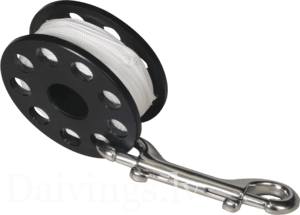
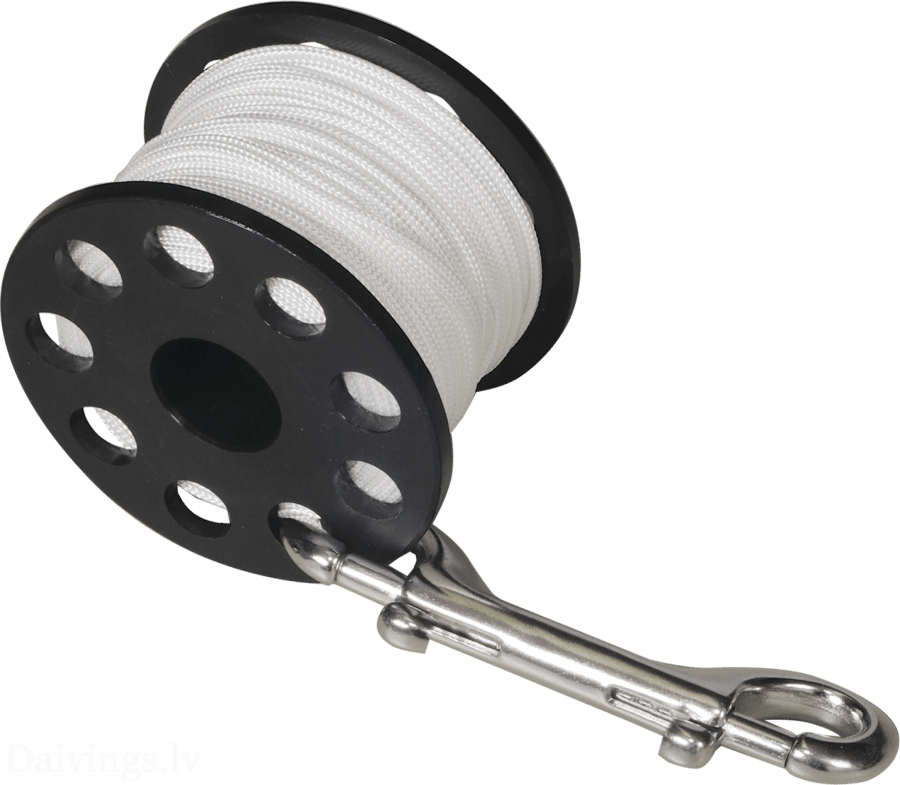
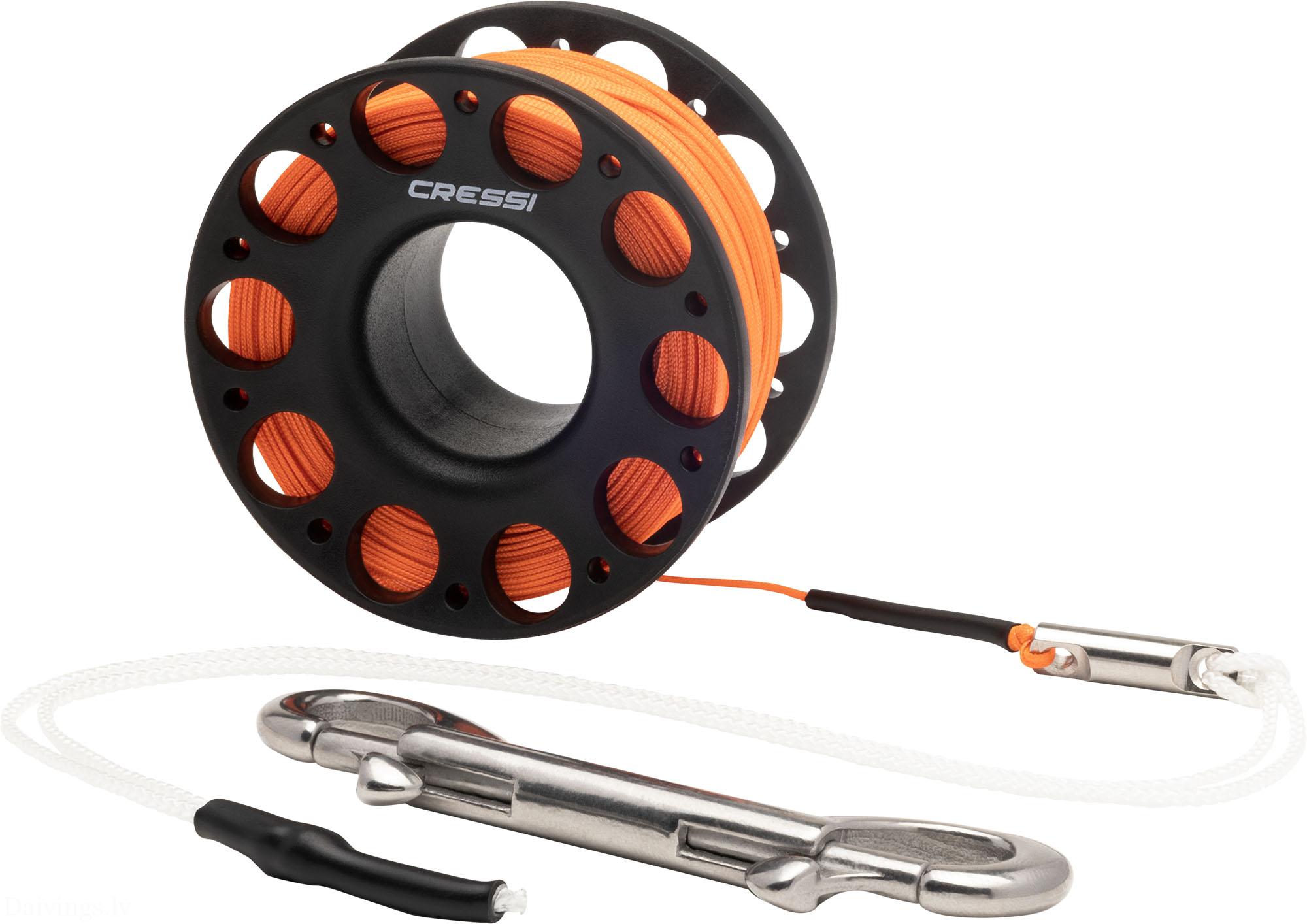
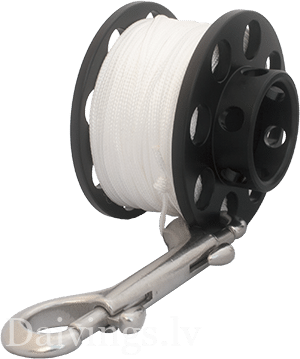
- Finger Spool: A monolithic cylinder with no moving parts, made of machined Delrin or aluminum. The rope is wound and unwound manually, controlled with your fingers through the central hole and secured with a double-sided carabiner (double-ender bolt snap).
- Pros: Impossible to damage mechanically, no gears or axles to jam; minimal size for pocket or D-ring use.
- Cons: Slow and awkward rope winding with thick drysuit gloves in cold water; limited rope length (usually 15–45 meters).
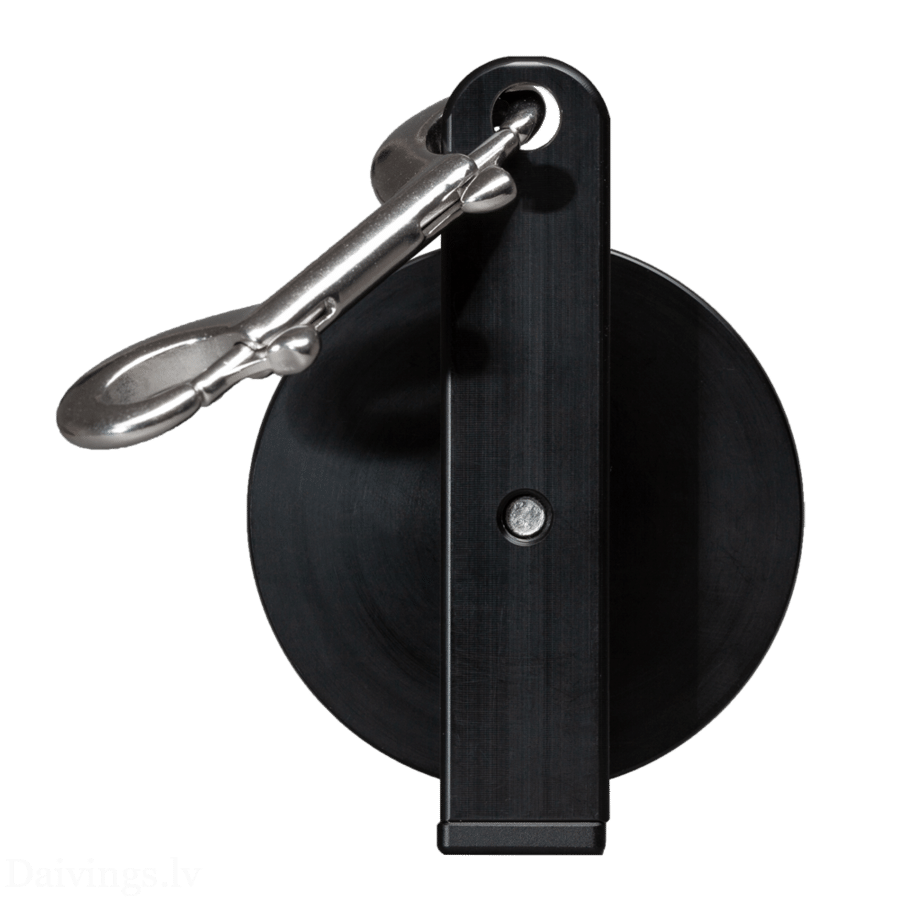
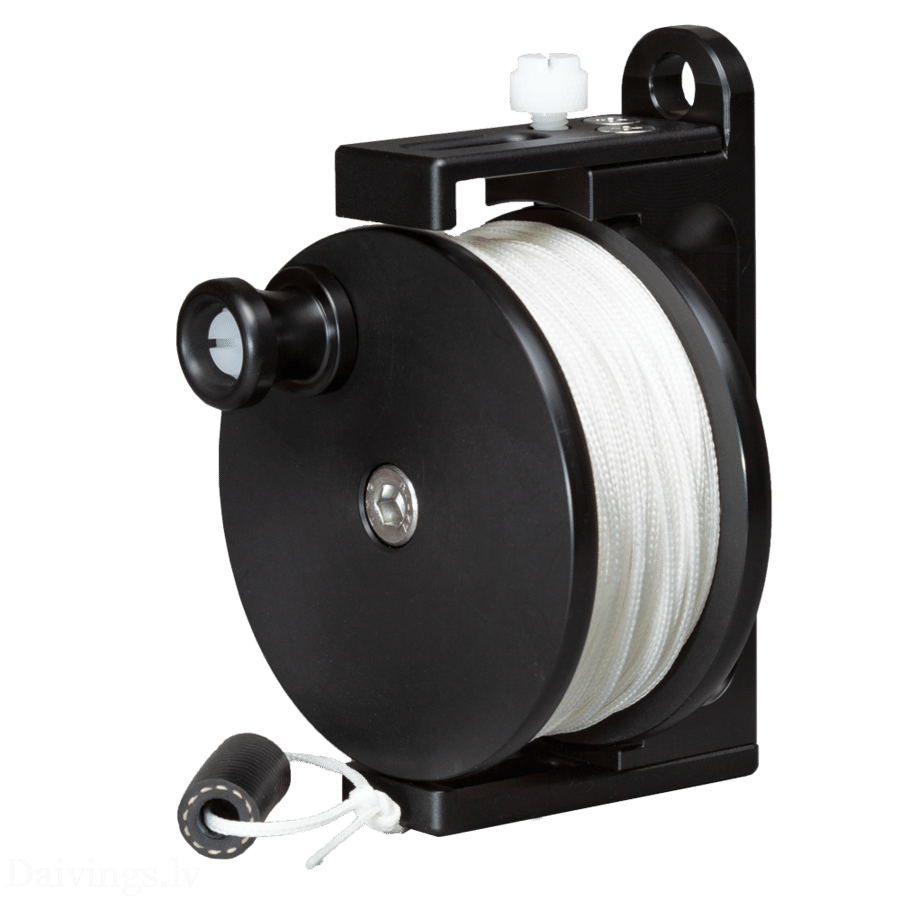
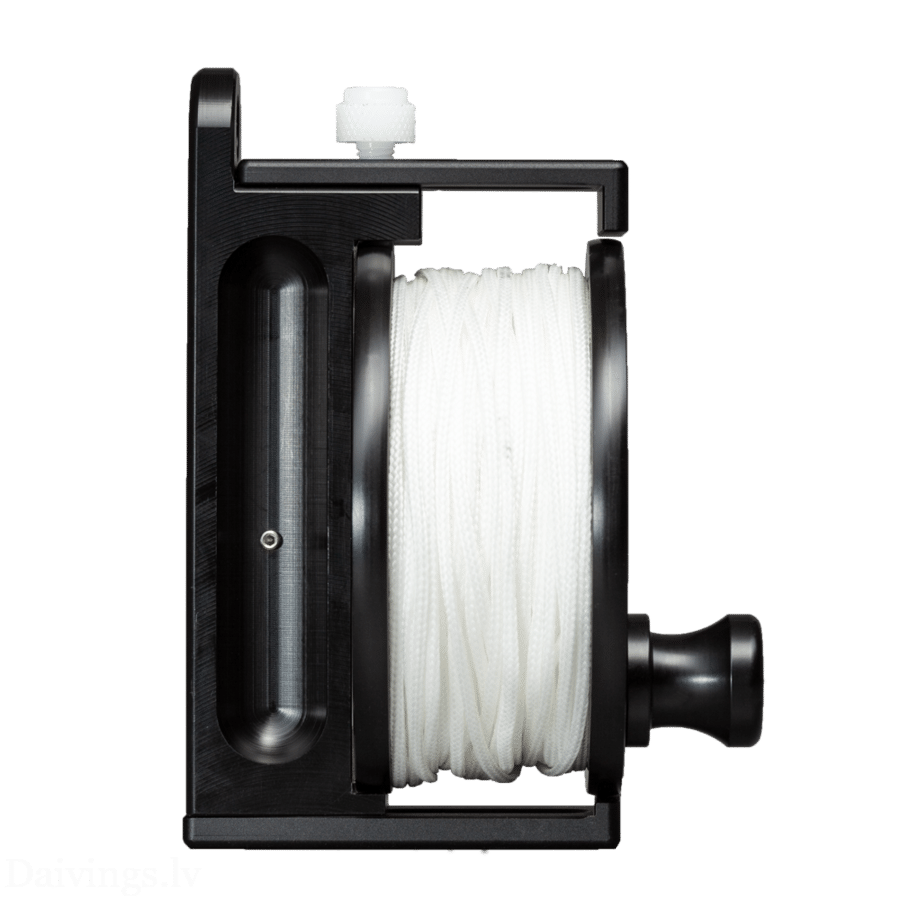
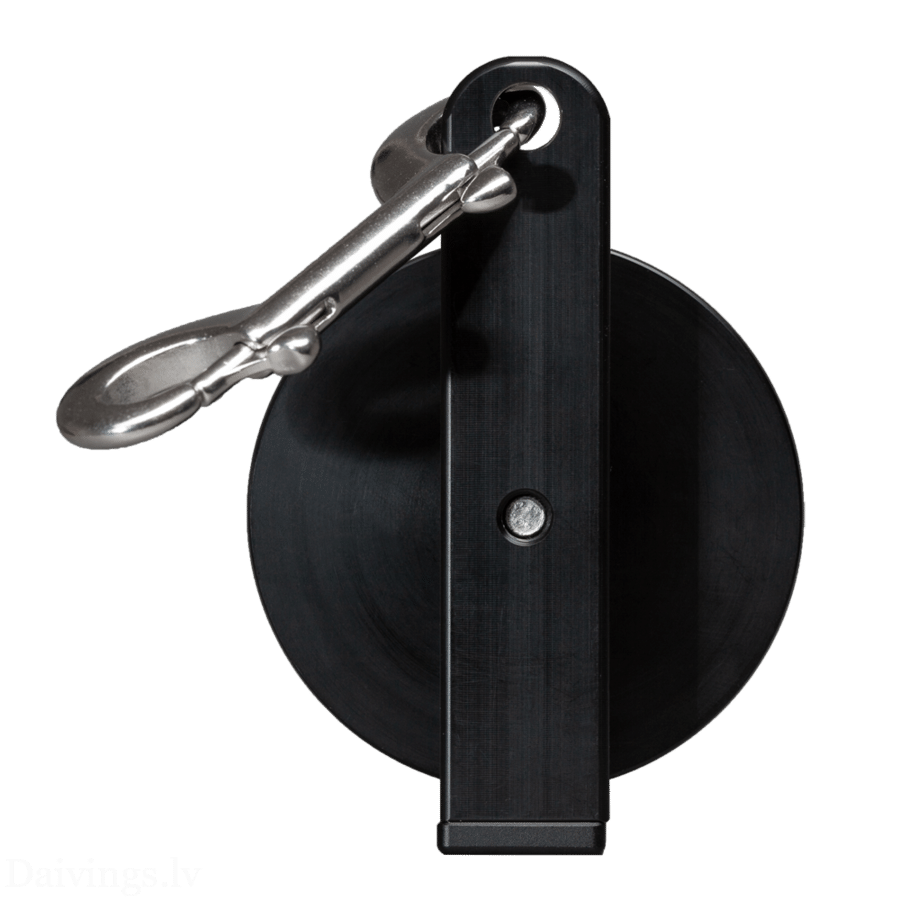
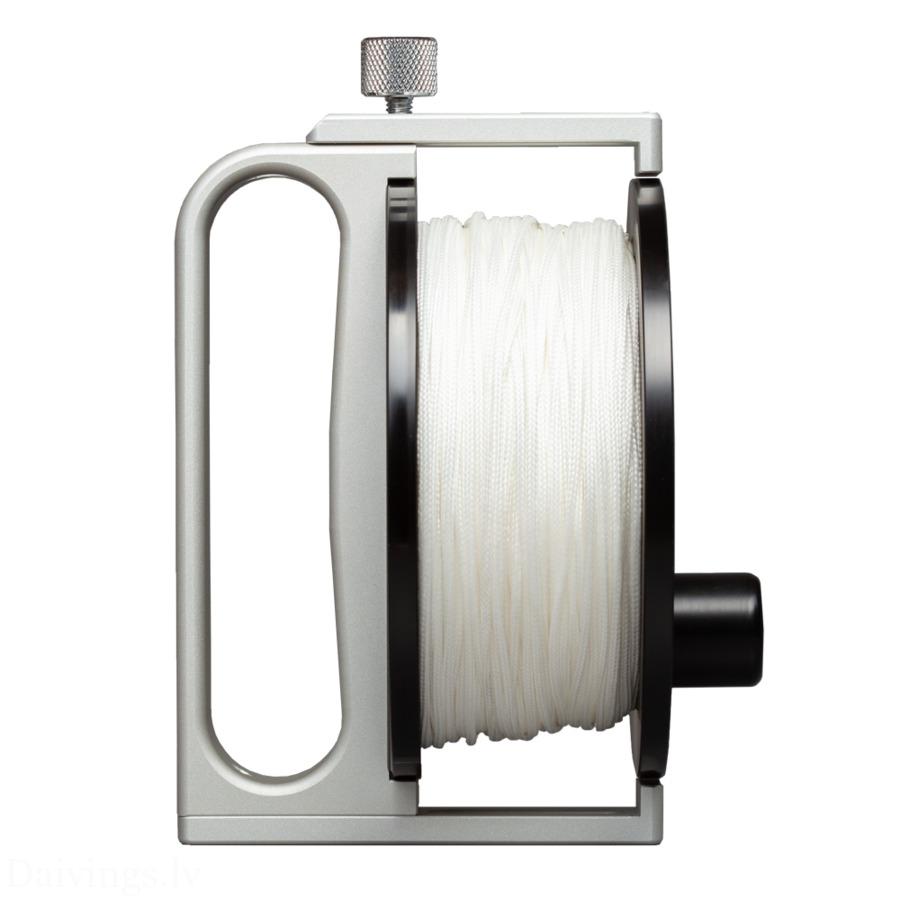
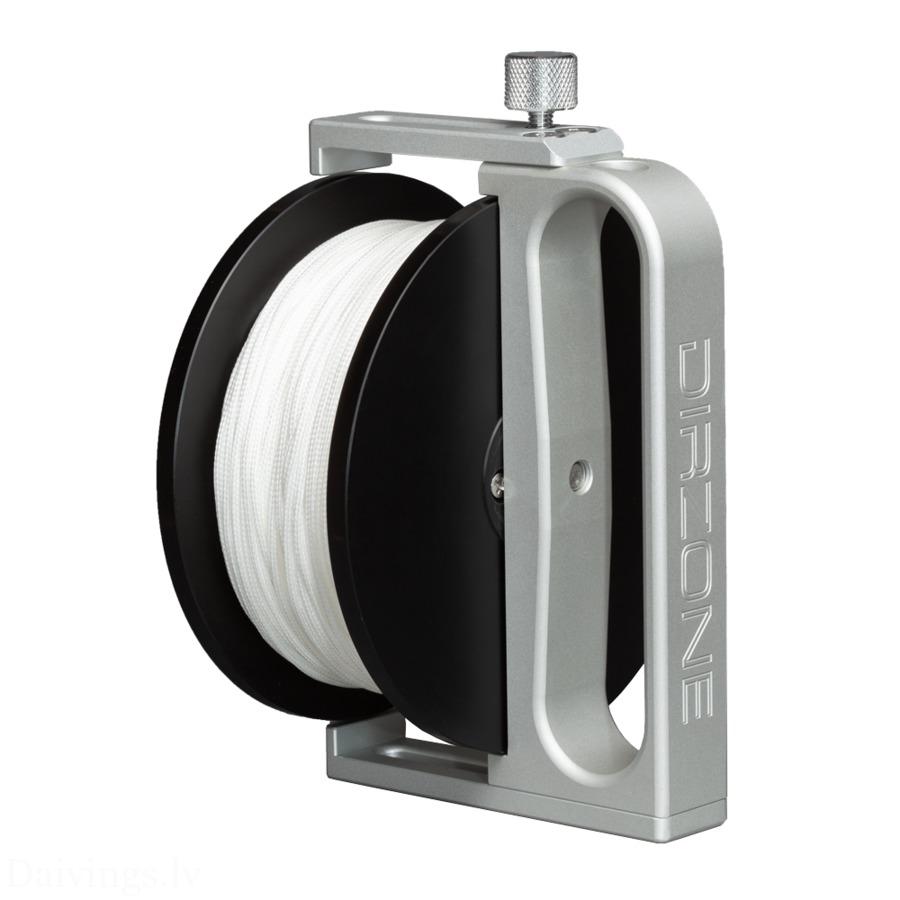
- Primary / Exploration Reel (Mechanical reel with handle): A body with a handle (usually a “sidewinder” or “top handle” style), a rotating drum, a locking screw, and a winding crank.
- Pros: Fast winding of large amounts of rope (60–250+ meters); comfortable grip even with 3-finger neoprene or dry gloves; integrated braking mechanism.
- Cons: Risk of mechanical failure - the rope can slip behind the drum and get stuck around the axle (rat's nest), the fixing screw may become lost or become jammed if overtightened.
 |  |
 |  |
Rope management in different diving environments
Sport diving, SMB release and safety stops
In sport diving from a boat buoy release is critical for transmitting the signal to the master. In standard profiles, the safety stop occurs at a depth of 5 meters.
- Recommended tool: Little finger coil (Finger Spool) with 15–30 meters of rope.
- Why: There is no need for a complicated mechanism. The finger reel has no moving parts that could get caught when the buoy quickly pulls the rope to the surface. If the rope does get tangled, the reel is simply released - it will not pull the diver into an uncontrolled ascent, unlike a heavy mechanical reel, whose handle can get caught on equipment.
- Practical note: Never attach the coil tightly to your BCD before inflating the SMB. Only hold it in your fingers with a light grip.
Technical diving, deep decompression and rescue bags (Lift Bags)
There is a strict principle in technical diving: only take with you underwater what you actually plan to use or what is needed for emergency procedures.
- Decompression marking from depth: When performing deep Trimix or decompression dives (open-circuit or CCR), the team often needs to perform SMB release from 21-30 meters or deeper, so that surface support can notice the direction of the team's drift in time. In such a scenario, a 60-90 meter reel is a must.
- Lifting bags (Lift Bags) and search: When moving heavier objects or performing lifting operations, the usual plastic carabiner and fine rope are not suitable. A stainless steel body mechanical tool with #24 or even thicker braided nylon rope is used to hold the load.
 |  |
 |  |
 |  |
Cave and wreck diving, continuous line to open water
In the passage through caves and internal wreck spaces (penetration) the main safety law is continuous rope guidance to the free surface.
[Open Water / Anchor] │ (Primary Tie-off at entrance) ▼ [Primary Reel: 60-120 m] ─── (Secondary Tie-off in cavern area) │ ▼ [Permanent Cave Line] │ (Gap / Branch) │ [Jump Spool: 15-30 m] │ ▼ [Side Passage / Target]
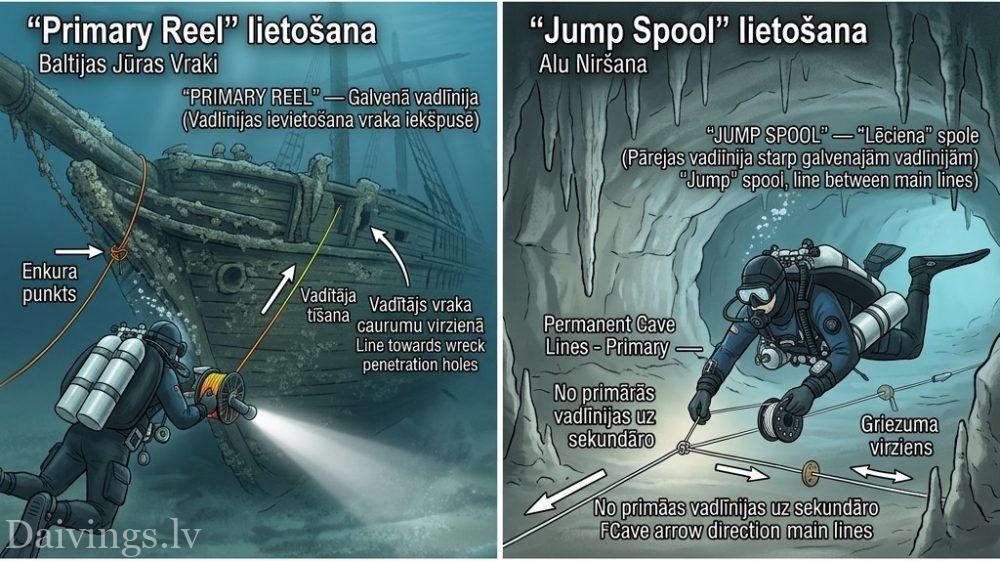
- Primary Reel– Used to connect open water to a permanent water line (main cave line). It contains 60 to 120+ meters of rope. First touchdown (primary tie-off) is performed in an area with free access to the surface, while the second (secondary tie-off) — right at the entrance to the cave to prevent the rope from rubbing against sharp rocks or metal edges of the wreck.
- Jump / Gap Spool– In cave systems, permanent lines are never connected directly at intersections to prevent erroneous navigation (“T-junction” navigation errors). To move from the main line to a side passage, the diver makes jump maneuver using a 15–30 m finger coil and marking the direction with direction indicators (arrows or personalized cookies — non-directional cookiesThis intentional gap (gap) ensures that no diver accidentally turns into the wrong passage in zero visibility conditions; the exit direction always remains clearly defined and physically connected only when the team is actually in the branch.
- Safety Spool– Each team member must have at least one intact spool (30–45 m) with a double carabiner in their pocket, intended solely for emergency situations: searching for a lost line in zero visibility (lost line search) or to search for a teammate (lost diver procedure).
Ropes and materials
The right choice of materials determines whether the rope will last for years, or will also disappoint at the most inopportune moment:
| Parameter | #24 Braided nylon rope (Braided) | #24 Twisted rope (Twisted) | Finger coil material: Delrin | Finger coil material: Cast plastic |
| Durability | ~90–100 kg tensile strength | Similar stretch, but unravels more easily | Impact-resistant, monolithic material | Brittle to impacts, low durability |
| Dynamics | Minimal torsion, fits well on the drum | Tends to twist in loops when rewinding quickly | Withstands temperature fluctuations and friction | Becomes brittle and cracks in cold water |
| Application | For primary coils, cave/wreck lines | Cheap temporary solution | Standard equipment for technical diving | Not recommended for technical dives |
- Carabiners (Bolt-snaps)– Use only marine grade stainless steel (AISI 316). Brass carabiners quickly corrode and warp in salt and cold.
- Maintenance– After each day of diving in salt water, carabiners and mechanical reel axles should be thoroughly rinsed in fresh water. Periodically, the carabiner spring mechanism can be treated with a suitable lubricant, carefully wiping off the excess to prevent sand from sticking to it.
Instructor's practical recommendations
- Avoid the “Christmas Tree” Syndrome. Don't hang a huge research coil from your BCD or fin if you're going on a typical 15-meter coral reef or quarry dive. Each item should have a specific purpose. A large, unnecessary coil creates additional hydrodynamic drag and a significant risk of snagging.
- Distance between drum and frame. When choosing a mechanical reel, check the distance between the rotating drum and the stationary frame. It should be less than the diameter of the rope. If the gap is wider, a loose rope will sooner or later slip into the gap, wrap around the central axis and block the reel when you are at depth.
- Finger coil lock. Learn to lock a finger reel with a double-sided carabiner in one step with one hand: the carabiner is passed through the loop of the rope, through the end hole of the reel and clipped back to the taut line. A loosely inserted lock will result in the rope unwinding in the pocket.
- Pre-purchase consultation. Before purchasing a technical reel from online stores, consult your instructor. Real water experience with specific brands (Dive Rite, Halcyon, Light Monkey) will help you avoid low-quality imitations that tend to fail under load or in cold water.
Recommendations for Baltic and cave divers
Maris, Trimix & Cave diver (Riga):
“For many years I tried to get by with a cheap cast plastic spool, until in the famous Polish quarries it simply split in half under pressure, hitting the metal structure. I switched to a machined Delrin from Halcyon and a metal sidewinder type primary spool. In cold water with thick gloves, the handle of a mechanical reel has to be massive and without sharp edges, otherwise winding turns into a nightmare.”
Jānis, Wreck diving enthusiast (Liepāja):
“In wrecks in the Baltic Sea, visibility can be lost in a split second when the mud rises. A standard finger reel with 30 meters of line is in my left pocket on every dive. If even a small entry into the hold or buoys have to be made release "From 25 meters in decompression, there is no time to think about wedging mechanisms. The finger coil just works - there is nothing to break there."
When choosing between a primary coil and a finger coil, there are basically two factors to consider: required rope length and complexity of the operation. Sports for diving and standard jumps (jump) a simple finger coil made of durable material is the most reliable solution. For deep exploration, long distances and primary anchoring at the entrance to a cave or wreck, a quality mechanical coil with a handle is an indispensable tool.
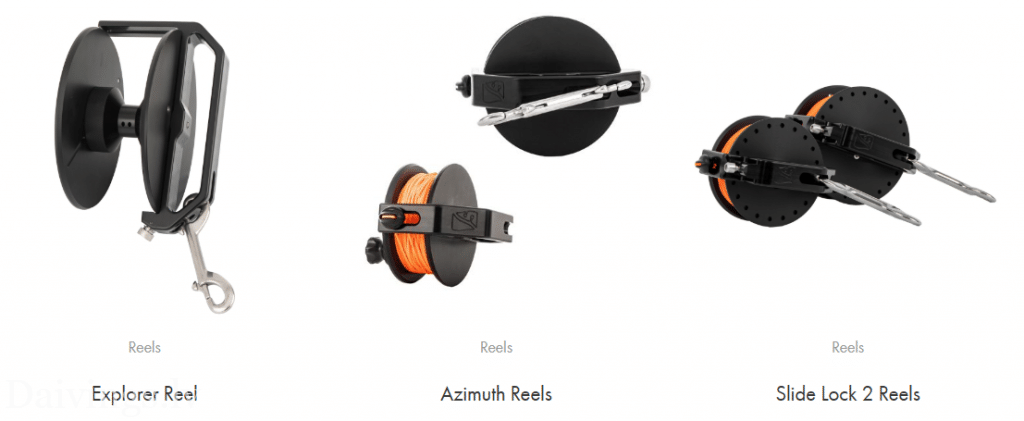
| 1. DiveRite Explorer Reel Construction and design: This is a classic high-capacity primary reel with a durable aluminum or Delrin frame and a metal handle and bolt snap. The reel has a large side lock screw that prevents accidental line rewinding or unwinding. Application: Use as Primary Reel (main spool) when entering caves or inside a wreck where a long line is required (e.g. 120-240 meters). Advantages: Very ergonomic, easy to control with thick drysuit gloves in cold water, and also provides stable line tension control. |
| 2. DiveRite Azimuth Reels Construction and design: A more compact frame reel with a low profile body and built-in line trap protection between the reel disc and frame. A stainless steel carabiner clip is attached to the side for carrying. Application: Used both as Primary Reel for shorter routes, as well as as a safety/reserve spool (Safety Reel or Navigation Reel) in difficult navigation conditions. Advantages: Designed to reduce water resistance and take up less space on the diver's equipment (in the D-ring), while maintaining excellent line capacity and mechanical reliability. |
| 3. DiveRite Slide Lock 2 Reels Construction and design: Innovative reel with quick-release slide lock mechanism (Slide Lock System), which allows you to lock or release the reel with one hand movement, without the use of a traditional screw lock. The reel disc has ventilation/water outlet holes for easier cleaning and weight reduction. Application: Ideal for working with DSMBs (marker buoys) for launching from depth, as well as for use as a primary or connecting coil in cave and wreck diving. Advantages: Quick and easy one-handed operation, which is especially handy in difficult conditions or in cold water with thick gloves. |
There is no one universal answer, they say PADI MSDT instructor Valters PreimanisThe choice depends on the environment, task, and configuration philosophy.
Learn about immediately available diving reels and buoys – https://daivings.lv/shop/nirsana-kategorija/nirsanas-ekipejums/nirsanas-spoles-bojas