
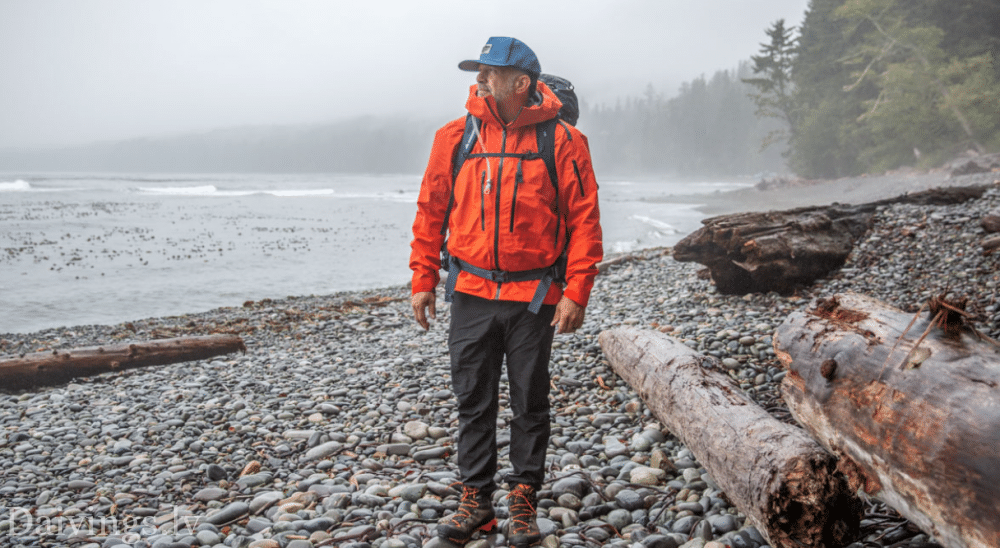
Extreme environments—whether they’re the icy depths of the ocean, storm-swept mountaintops, or high-risk tactical operations zones—leave no room for error. Equipment in these conditions is not just clothing or an accessory; it’s a life support system.
Divers and technical diving specialists know well what it means to rely on the vapor permeability, seam tightness, material elasticity and anatomical cut of a drysuit. Just as in the underwater world, the development of technical clothing on land and in the mountains has also gone a long way in evolution. One of the most striking examples in this area is Canadian brand Arc'teryx and its legendary tactical line LEAF (now integrated Arc'teryx Pro platform).
Warmth and comfort above water, why good clothing is crucial when going diving
When heading to a dive site — whether it’s a boat trip in the open, windy sea or a long preparation on shore in the cold season — the right clothing is as important as the underwater equipment itself. Body cooling and fatigue often begin before entering the water, if the diver is exposed to wind, humidity or insufficient thermal layering on the way and during the preparation phase. High-quality, wind- and water-protective outerwear, together with breathable thermal layers, helps maintain optimal body temperature, ensures freedom of movement and protects against the risk of hypothermia, allowing you to maintain maximum concentration and energy for the entire dive cycle.
In this article, we will take an in-depth look at how a small climbing equipment manufacturer became the most trusted partner of the world's elite special operations units, and what anyone who operates in harsh natural conditions can learn from this evolution of materials.
Roots and evolutionary philosophy, from attachment systems to anatomical design
Before the brand gained worldwide fame with its waterproof jackets and tactical systems, it all started in 1989 in North Vancouver. Originally known as Rock Solid Manufacturing, the company produced mountaineering equipment. In 1991 it became Arc'teryx — in honor of the prehistoric reptile/bird Archaeopteryx lithographica, symbolizing transition and continuous evolution.
This evolutionary philosophy was based on a simple realization: Equipment should not be something separate from the human body, it should be an extension of the body.
Three-dimensional cut
Traditional waterproof clothing in the late 20th century was heavy, straight, and restrictive, relying on wide seams and heavy flaps over zippers. Arc'teryx changed the rules of the game by introducing three-dimensional (3D) cuts adapted to the human anatomy in motion.
Key technological innovations that influenced both mountaineers and later tactical operators:
- Thermoformed and laminated materials: Provided weight distribution without unnecessary bulk and additional layers of padding.
- Tapered Seam Tape: Reduced the weight of the garment, increased breathability and elasticity at the seams.
- Waterproof zippers: Made it possible to dispense with heavy external protective sheets, reducing the overall weight of the garment and facilitating access to occupied areas.
- the legendary one created in Alpha SV (Severe Weather) jacket became the standard for extreme protective clothing. Its minimalist design was not an aesthetic whim, but the result of strict utility - everything superfluous was removed.
How Special Forces Saw the Technology of Extreme Sports
Initially, the brand did not plan to enter the military or defense sector. The initiative came from the professionals themselves. Special forces fighters and tactical police officers began to purchase civilian equipment from local retailers.
Why did special forces choose mountaineering clothing?
- Weight to protection ratio: Every extra gram of inventory causes fatigue during long missions.
- Freedom of movement: The low-profile cut allowed for freedom of movement, climbing, and taking up shooting positions.
- Reliability in extreme climates: Mountain fabrics were able to withstand strong winds, rain, and freezing humidity.
Initially, the requests were simple - small changes in colors or minimal adjustments to the world's leading units. But the real breakthrough in the military sector came with the development of load-bearing and backpack systems.
ILBE program
- In the early 1990s, the US Marine Corps (USMC) was looking for a new backpack system — ILBE (Improved Load Bearing Equipment). In cooperation with the manufacturer Propper, a system was created based on civilian mountain Finnish technologies:
- Adjusted hip belt for more efficient weight transfer to the skeletal system.
- Low profile integration with body armor.
- Modular and durable structures that withstood the rigors of marches, obstacle courses and combat operations.
This project proved that top-class civilian technology can not only withstand military loads, but also significantly improve the effectiveness and durability of a fighter.
LEAF creation, specification and tactical ergonomics
Understanding that the military and law enforcement sectors have unique requirements, a line was officially established around 2005 LEAF (Law Enforcement and Armed Forces).
Under operational conditions, conventional clothing quickly revealed its shortcomings:
- Pockets that are convenient in civilian clothing become inaccessible as soon as a body armor or tactical vest is put on.
- Synthetic fabrics can melt when exposed to direct heat or flame.
- Hoods that are not secured can obstruct your vision or get caught on equipment.
Technical solutions LEAF in the series
- Moving pockets: The pockets were moved to the bicep area and upper chest, which can be accessed even when wearing a body armor or waist belt.
- Materials synthesis (No-Melt / No-Drip): For shock mission shirts (Assault Shirt) highly breathable fabrics without the risk of melting were used in the chest area, and abrasion-resistant materials were used in the sleeves.
- Integrated guards: Knee and elbow protection pockets were built directly into the suit, eliminating the need for additional external straps that would compress and restrict blood circulation.
- Tactical color palette: Specific shades were developed, such as Crocodile (muted khaki/green tone) and Wolf (the gray tone of the urban environment, which prevents the formation of a distinct silhouette in the dark).
LEAF series clothing — from base layers (Nail) and insulation layers (Atom LT) to the harsh environmental winds (Cold WX) and Alpha hardshell layers — became the gold standard for units such as the Canadian Special Forces (CANSOFCOM), US Air Force Rescue Services (212th Rescue Squadron) and other elite units of the North Atlantic Alliance.
What can divers and extreme sports enthusiasts learn from this evolution?
Although Arc'teryx and LEAF gained its fame on land, in the air and in the mountains, the principles of this development are directly transferable to the water and underwater environment. In technical diving, working in the harsh conditions of the Baltic Sea or on long-term boat expeditions, the requirements for equipment are identical.
Parallels between tactical equipment and diving equipment:
- The principle of the layering system (Layering System):Just as in the tactical field, base layers, interlayer insulation and outer protective layer are used, in dry diving, thermal comfort is ensured by properly selected underwear (base layer), thick insulation and a tight drysuit. If even one layer doesn't breathe or restricts movement, the whole system suffers.
- Ergonomics and freedom of movement:The cut of the drysuit or diving harness should be such that the diver can easily reach the cylinders, ventilators, additional tanks (stage) or equipment pockets. The anatomical 3D cut and elastic inserts prevent “excess material accumulation” in the joint areas.
- Material wear resistance and weight:In underwater work or wreck exploration, the fabric's resistance to abrasion is crucial. At the same time, excess weight outside the water increases fatigue before the actual dive.
- Critical infrastructure reliability:Reliable zippers, thoughtful seam taping, and a minimalist cut reduce the points where gear can fail or get caught on aquatic plants, cords, and debris.
Conclusion
- reported in LEAF integrating the line into a wider Arc'teryx Pro The structure represents another step in the evolution of this equipment. The transition from simple mountaineering harnesses to complex military and extreme environment protection systems proves one fundamental truth: True innovation is born where a deep understanding of human anatomy and uncompromising demands for quality meet.
When choosing clothing and equipment for your next challenge—whether it’s boating on a windy day, diving in cold waters, or long-term expeditions—always pay attention to construction details, material compatibility, and functionality. Engineered, anatomically tailored, and built for long-term use, gear lets you focus on what matters most: completing the task and returning safely to shore.