
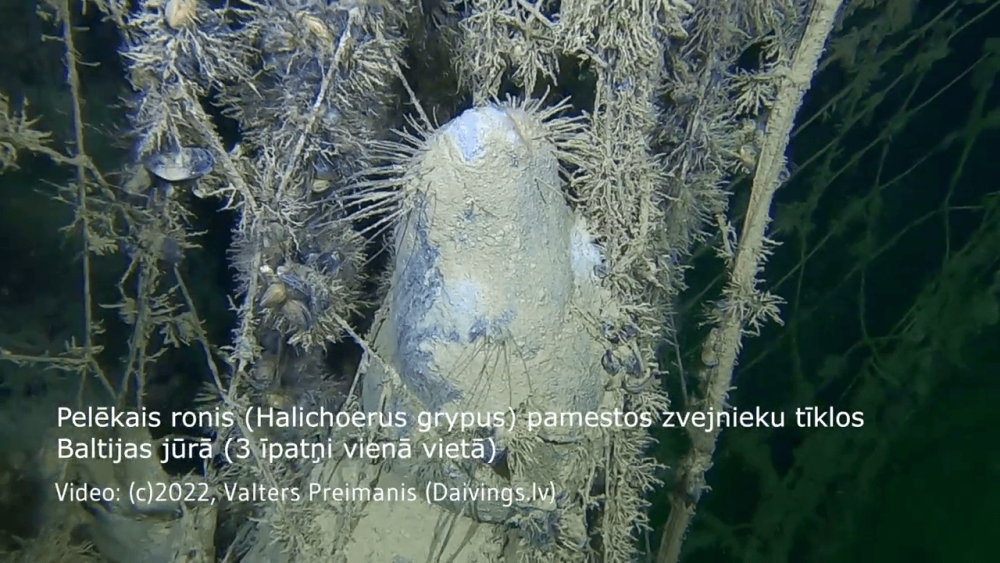
Nets are the silent killers of the ocean
The Baltic Sea is our treasure, but an invisible and deadly legacy lies in its depths. “Ghost nets” There are lost or abandoned fishing gear that continues to “fish” decades after they were last touched by humans. This article provides insight into the scale of the problem and how we – divers and the public – can clean up our seas.
What are ghost networks and how do they arise?
Ghost nets are not just trash; they are self-sustaining traps. They most often end up in the sea during storms, getting caught on shipwrecks or rocks, or are deliberately abandoned due to damage. Modern synthetic materials (nylon, polyethylene) do not decompose in the environment for hundreds of years. Once they reach the seabed, they continue their destructive cycle, attracting and killing fish, seals and seabirds.
Specifics of the Baltic Sea
The Baltic Sea is shallow, closed and full of thousands of shipwrecks. These wrecks act as “magnets” for nets. The low water exchange and low temperatures mean that instead of breaking down, the nets become covered in sediment and become part of a toxic environment. In addition, the Baltic Sea is one of the most heavily fished seas in the world, which only adds to the accumulation of “lost” gear.
Divers' role - with shears and lifting bags
Divers are the first line of defense. Lifting nets is physically demanding and dangerous work that requires special training:
- Wreck diving: Most nets are caught in wrecks, which requires excellent buoyancy and accuracy.
- Safety: The risk of entanglement for the diver himself is enormous, so the presence of sharp cutting tools (knives, scissors) and a partner is mandatory.
- Technique: Special lifting bags are used (elevator bag) to safely bring the heavy, muddy nets to the surface without damaging the historic structure of the wreck.
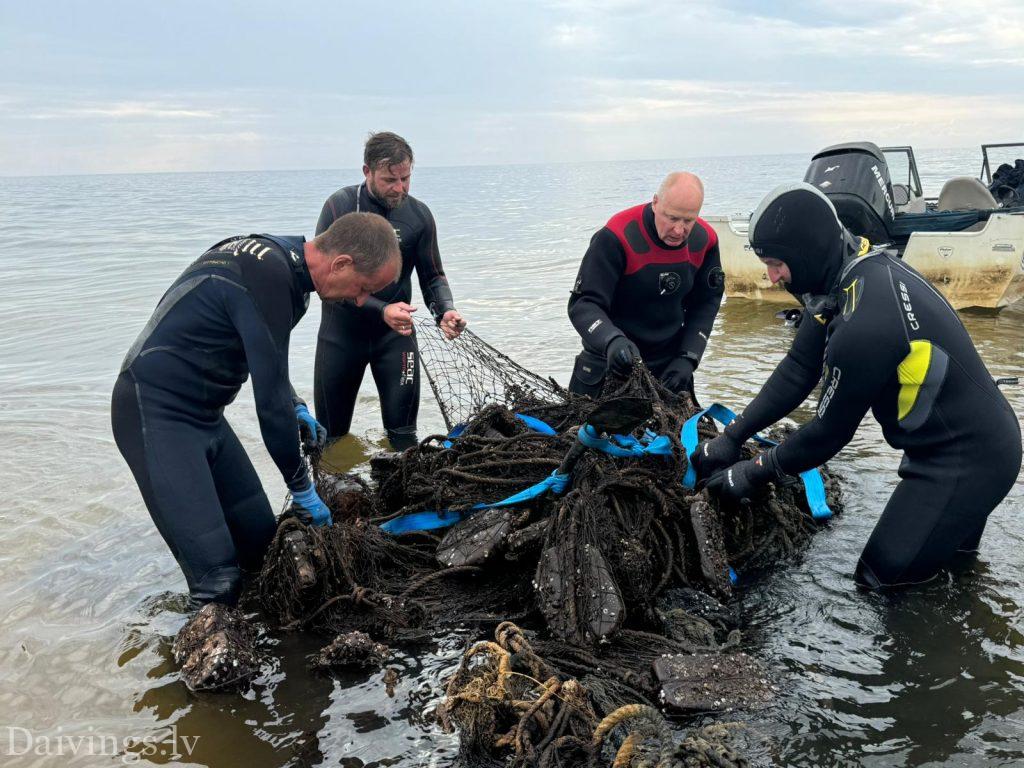
From the bottom of the sea to a new carpet
Highlighting is only half the battle. What to do with tons of smelly, sludge- and lead-covered net?
- Sorting: The nets are cleaned of biomass and metal elements.
- Regeneration: Innovative companies (e.g. Healthy Seas partners) recycle nylon nets into high-quality yarn.
- New life: This yarn is used to produce swimwear, socks, and even designer rugs, thus closing the circle of the circular economy.
What can you do?
You don't have to be a technical diving instructor to help:
- Reports: If you see nets while diving, record the coordinates and report to organizations (for example, through GhostDiving.org, VesalaJura.lv or local environmental associations).
- Supports: Donate or get involved in campaigns that fund ship rentals and equipment for net-casting expeditions.
- Educated: Choose sustainable seafood to reduce the demand for industrial fishing gear, which often becomes "ghosts."
Joint collective work
A clean sea is not something that can be taken for granted – it is a collective effort. Every meter of net pulled from the water means lives saved underwater and a safer environment for us all. The Baltic Sea gives us a lot, it's time to give back to it by freeing it from these silent, synthetic traps.
The underwater world belongs to fish, not plastic traps!
Daivings.lv and local diving activists
DaIVINGS.LV unites the Latvian diving community, which regularly organizes volunteer underwater workshops.
Initiative: Follow the forums, website Vesalajura.lv and Facebook groups (e.g. “Diving in Latvia"), where joint trips to wrecks are announced, which also include cutting and raising nets.
International partners in the Baltics
Since we share the same sea, Latvian divers often cooperate with their neighbors:
Ghost Diving Foundation: An international volunteer diving organization with chapters in the Baltic Sea region (e.g. Poland and Germany).
Healthy Seas: An initiative that ensures the recycling of discarded nets into textiles.
Practical tool: The “Environmental Alert” app
If you, as a diver or boater, suspect illegal or abandoned nets, the fastest way to inform the responsible services is the State Environmental Service mobile app.
How it works: Take a photo, record GPS coordinates, and send a report. This helps services plan future cleanup operations.
Ghost Net Reporting Protocol, a Guide for Divers
If you notice abandoned fishing gear (ghost net) while diving, follow this plan. Remember – your safety comes first, lifting the net without special equipment and a team is dangerous!
Safety Assessment (Safety First)
- Don't attack the network alone! If you are not specially equipped to cut the net, do not attempt to release or uncoil it.
- Keep your distance: Stay at least 1-2 meters away so that an unexpected current or your movement doesn't throw you into the net.
- Check the equipment: Make sure you have a sharp knife or special scissors available (EEZYCUT or similar) in an easily accessible place.
Location
- GPS coordinates: If the net is on a wreck, record the name of the wreck or the coordinates from the boat's echo sounder/GPS after surfacing.
- Depth: Mark the depth (in meters) at which the net is located (top and bottom edge).
- Labeling: If possible and safe, attach a DSMB to the net so that the surface team can see the exact location (only if it does not interfere with navigation).
Visual documentation (Evidence)
If you have an underwater camera, take some shots:
- Network type: Is it a fine nylon net (fish net) or a thick trawl line/net?
- Condition: Is it free-floating (vertical) or tightly wrapped around wreckage/rocks?
- Residents: It records whether animals (fish, seals, birds) are entangled in the net – this helps determine the priority for removal.
Reporting
Once you are on land, send the data:
- “Environmental Alarm” app: Add a photo and coordinates. It will be sent to the State Environmental Service.
- Daivings.lv forum / FB groups: Inform colleagues so that other divers in this area are careful.
- GhostDiving.org: If the network is large, you can report it to the international database, which helps raise funds for expeditions.
What to write in a report? (Checklist)
- [ ] Date and time
- [ ] Exact coordinates (or distance from shore/landmark)
- [ ] Depth (for example, from 15m to 22m)
- [ ] Approximate size of the network (length/width in meters)
- [ ] Hazard level (whether it poses a threat to shipping or other divers)
Tip: If you plan to participate in the networking yourself, apply. “Self-Sufficient Diver“ or “Wreck Diver“ courses to improve buoyancy and emergency response skills.


